
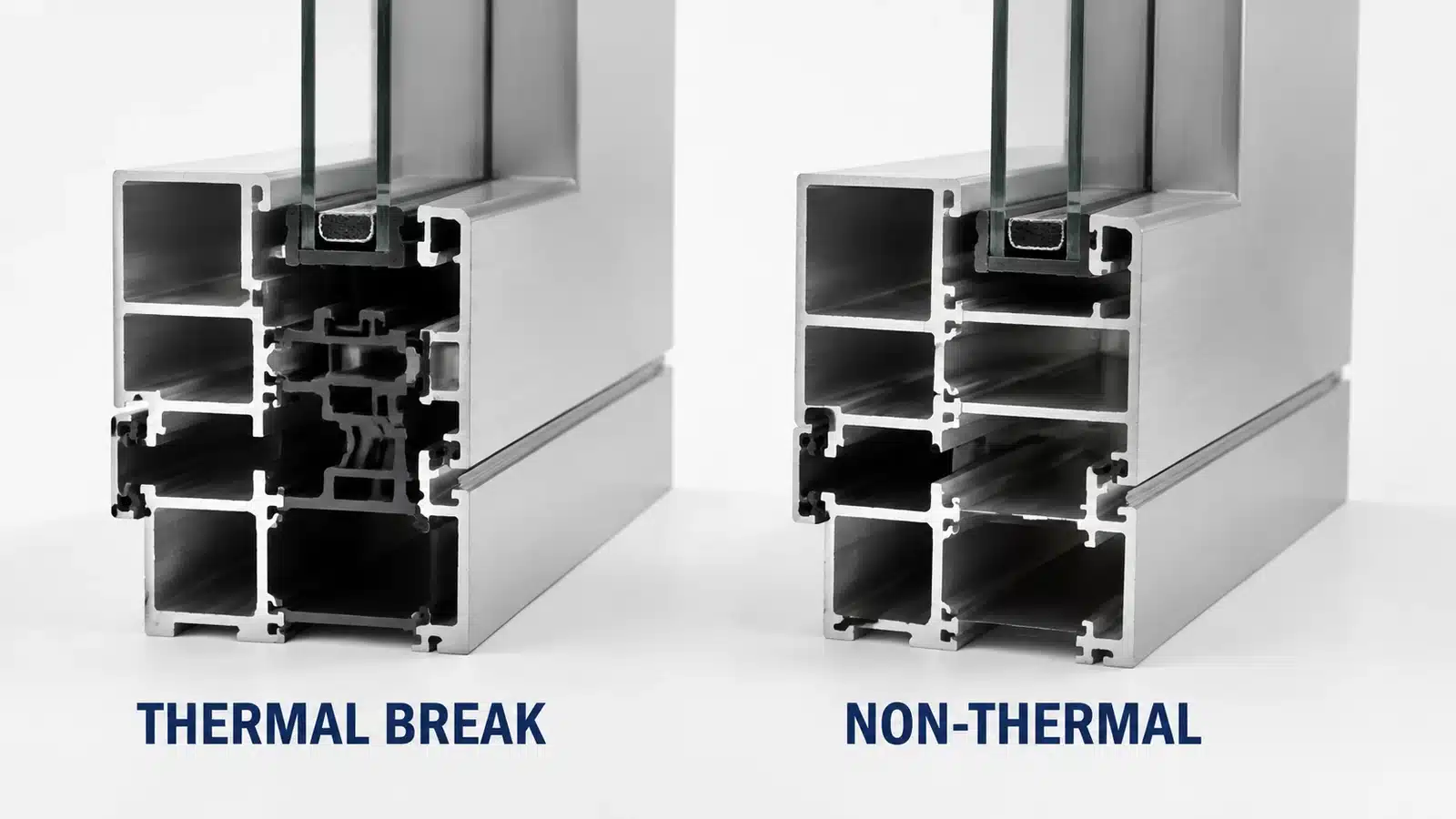
A project-focused comparison of aluminum frame construction, whole-window U-factor, surface temperature, condensation risk, cost, testing, and installation.
The thermal break vs non thermal break windows decision is mainly about conductive heat flow through an aluminum frame. A thermally broken frame separates the room-side and exterior aluminum with a lower-conductivity barrier. A non-thermally broken frame retains a more continuous metal path. The first approach generally improves frame thermal performance and interior surface temperatures; the second is usually simpler and may cost less initially.That distinction does not decide the project by itself. Glazing, spacer, frame area, opening type, seals, air leakage, solar exposure, installation, wall interfaces, indoor humidity, local code, and the exact tested size all affect the result. Compare complete proposed windows—not profile labels or glass-only values—before approving a system.
Written by Winston
Project Director at Skyland Building · 10+ Years of Building Materials Experience
Updated September 2026 · 22-minute read
Key Takeaways
- A thermal break interrupts the direct aluminum path between exterior and interior frame sections; it does not make the complete window automatically efficient.
- Use a certified or otherwise documented whole-window U-factor for comparison. Center-of-glass, glass-only, frame-only, and whole-product values are not interchangeable.
- Thermally broken frames usually provide warmer room-side surfaces in cold conditions and a larger margin against interior condensation, but they cannot control indoor humidity or eliminate every thermal bridge.
- Air leakage, water penetration, structural resistance, acoustic performance, security, and finish durability need separate evidence; the words “thermal break” do not prove them.
- Non-thermal aluminum can remain appropriate for interior, unconditioned, or modest-duty applications when the project requirements and local rules permit it.
- The installed perimeter must connect the frame to the wall’s insulation, air-control, and water-management layers or the intended performance can be undermined.
Thermal Break vs Non Thermal Break Windows: Quick Comparison
| Decision factor | Thermally broken aluminum | Non-thermal aluminum |
| Frame construction | Interior and exterior aluminum sections are separated by a lower-conductivity barrier. | A more continuous aluminum path connects the exterior and room-side frame sections. |
| Conductive heat flow | Generally reduces heat transfer through the frame. | Generally conducts more heat through the frame. |
| Whole-window U-factor | Usually offers a stronger starting point, subject to the exact glass, size, frame area, and operation. | Usually has a weaker frame contribution; the actual result must still be documented for the complete unit. |
| Surface temperature | Typically moderates room-side frame temperatures and can improve condensation resistance. | Provides less separation from exterior temperature and can leave a smaller condensation margin. |
| Air, water, and structure | Not established by the thermal barrier alone. | Not established by the absence of a thermal barrier. |
| Initial cost | Often higher because of additional materials and fabrication steps. | Often lower, although glass, hardware, size, finish, testing, and quantity can reverse the comparison. |
| Typical project fit | Conditioned exterior envelopes, demanding comfort or energy targets, and projects with significant temperature differences. | Interior partitions, unconditioned zones, or exterior applications only where documented performance and local requirements allow it. |
These are design tendencies, not guaranteed outcomes. Product series, frame geometry, glass build-up, operable area, dimensions, fabrication, testing, and installation can materially change the comparison.
What a Thermal Break Changes Inside an Aluminum Frame
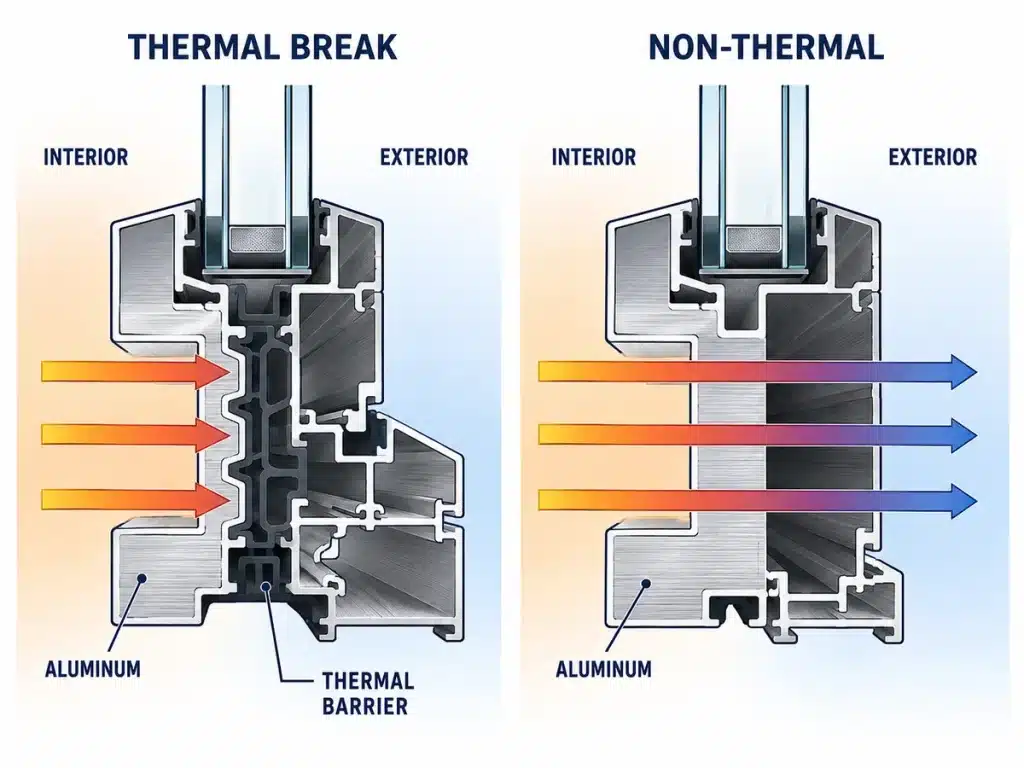
Thermally broken frame
Aluminum is useful for slim, precise and structurally capable window profiles, but it also conducts heat readily. A thermally broken system inserts a lower-conductivity element so the interior and exterior aluminum are not joined by one uninterrupted metal path. The barrier’s material, geometry, continuity, and connection to the glazing pocket vary by system, so the label alone does not describe the final performance.
Non-thermally broken frame
A non-thermal frame generally uses a more continuous aluminum profile. It can still be well fabricated, correctly drained, securely anchored, and fitted with effective gaskets and hardware. Its defining limitation is higher conductive heat transfer through the frame—not automatically poor structural or weather performance.
Thermal break versus thermal bridge
A thermal break is the intentional low-conductivity separation within the frame. A thermal bridge is an unintended or unavoidable conductive route through or around the enclosure. The window may contain a thermal break while the surrounding jamb, sill, subframe, reinforcement, anchor, or uninsulated gap still creates a local bridge. Frame design and perimeter detailing therefore need to be reviewed together.
What the thermal-break label does not prove
It does not prove a specific U-factor, condensation rating, glass specification, air leakage rate, water resistance, design pressure, acoustic rating, impact classification, security level, or finish durability. Those properties require product-specific documentation for the relevant series and configuration. Treat “thermally broken” as a construction description, not a complete performance certificate.
Performance Differences That Matter
Whole-window U-factor
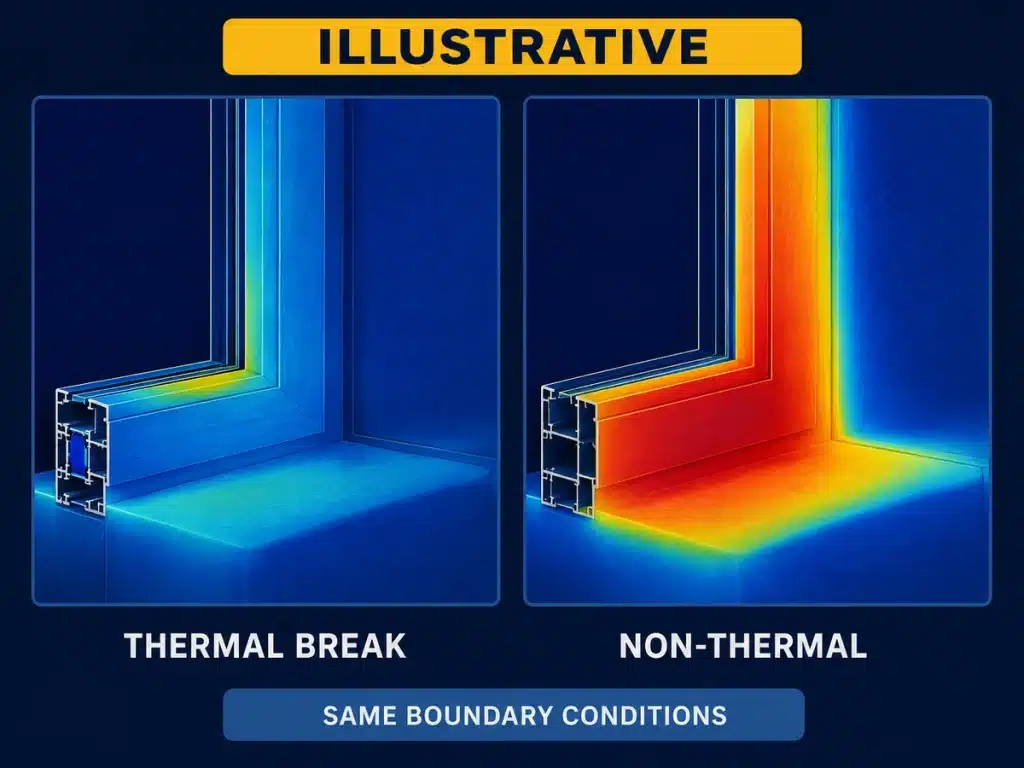
U-factor describes heat transfer through the complete window; lower values indicate lower heat transfer. A thermal barrier can improve the frame contribution, but the whole-window result also changes with glass coatings, gas fill, spacer, frame-to-glass ratio, sash construction, mullions, and opening type. A small fixed unit and a large operable unit from the same product family may not have the same rating.
When quotations show a thermal value, identify whether it applies to the complete window, the frame, the center of glass, or a modeled reference size. Compare equivalent values based on the same unit size, operation, glass build-up, standard, unit system, and rating conditions.
Room-side surface temperature and condensation
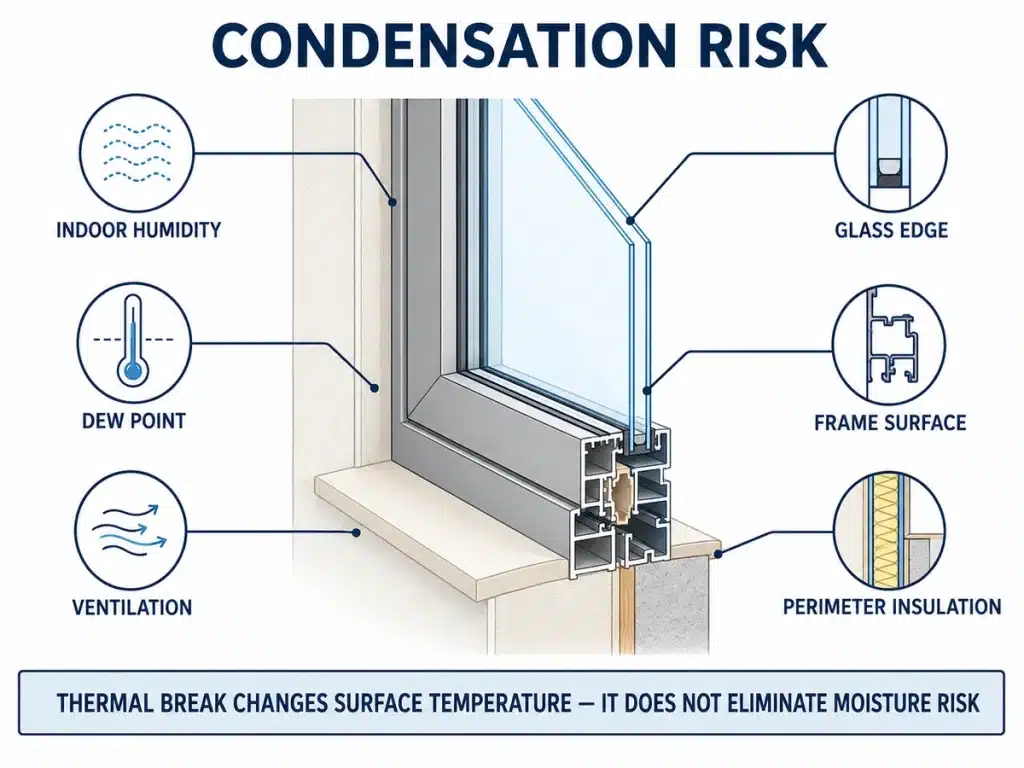
Condensation occurs when a surface temperature falls below the dew point of the adjacent air. In cold outdoor conditions, a thermally broken frame generally keeps the room-side aluminum warmer than a comparable continuous-metal frame, increasing the margin before interior moisture condenses. It can reduce risk, but it cannot guarantee a dry window.
Indoor humidity, ventilation, glass-edge temperature, spacer design, air leakage, curtain position, local cold bridges, wall insulation, and installation all affect condensation. Exterior condensation can also occur under different temperature and humidity conditions. Use project climate and indoor design assumptions rather than a generic “condensation-proof” claim.
Solar heat gain and cooling demand
A thermal break reduces conductive transfer through the frame; it does not replace solar-control glazing or shading. Solar heat gain coefficient (SHGC), orientation, glass area, exterior shading, interior blinds, and cooling strategy can dominate summer performance. In a hot or cooling-led climate, specify the required whole-window U-factor and SHGC separately instead of assuming a thermal break solves both.
Air, water, structural, and acoustic performance
Thermal construction and weather performance are related only through the complete product design. Gaskets, corner joints, drainage paths, hardware, sash alignment, fabrication, and installation control air and water movement. Section depth, reinforcement, anchors, mullions, glass, and size influence structural resistance. Acoustic results depend on the complete assembly, especially glass build-up, seals, air paths, frame junctions, and the surrounding wall.
A non-thermal frame can have strong air, water, or structural test results, while a thermally broken product can be unsuitable if the proposed size, sill, glass, or configuration falls outside the supporting evidence. Compare each requirement separately.
Which Window Type Should You Specify?
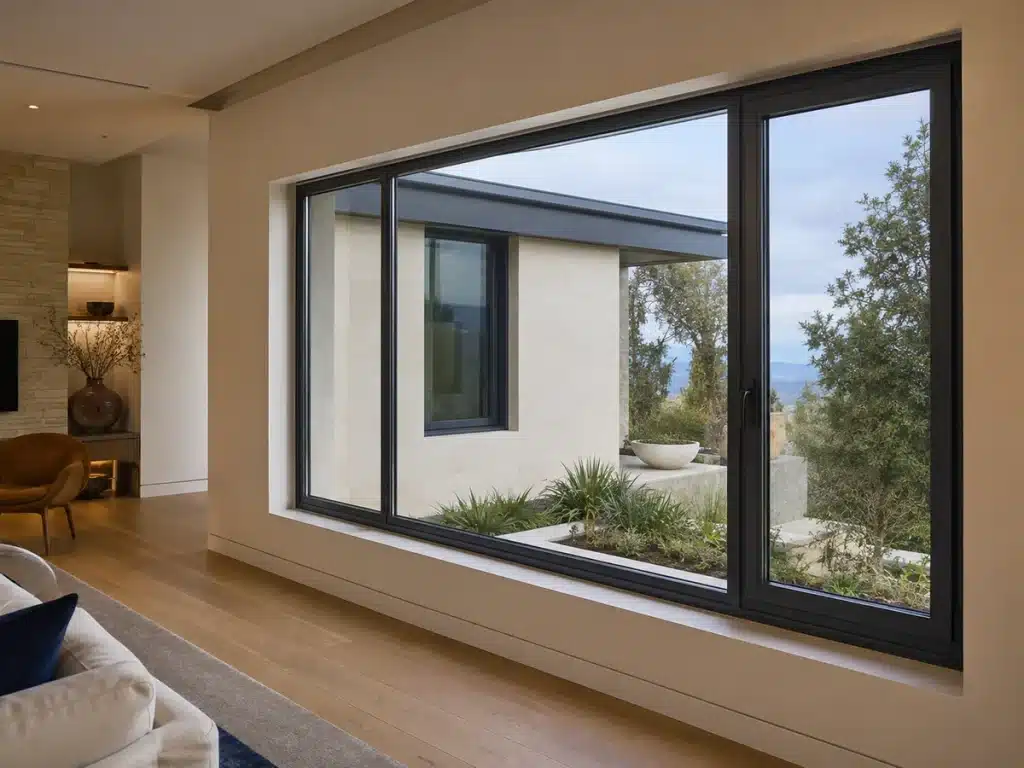
There is no universal winner in the thermal break vs non thermal break windows comparison. Start with the project’s required performance and use the frame type as one input. The following matrix is a shortlisting tool, not a substitute for local design approval.
| Project condition | Practical starting point | Confirm before approval |
| Conditioned exterior envelope | Evaluate a thermally broken system first. | Whole-window U-factor, SHGC, condensation risk, glass, air/water/structural evidence, and perimeter detail. |
| Cold winter or high indoor humidity | Thermally broken frame is normally the safer starting point. | Interior design humidity, winter temperature, glass edge, frame surface temperature, ventilation, and local thermal bridges. |
| Hot or strongly solar-exposed façade | Evaluate thermal break together with solar-control glass and shading. | SHGC, U-factor, orientation, frame color, glass area, cooling strategy, air leakage, and exterior exposure. |
| Large glazed areas or premium occupied zones | Prioritize documented surface temperature, comfort, and whole-window performance. | Exact dimensions, mullions, operable portions, replacement access, structural support, and delivery constraints. |
| Interior partition or unconditioned zone | Non-thermal aluminum may be sufficient. | Whether the assembly separates different temperatures or humidities; required safety, acoustic, hardware, and finish performance. |
| Budget-led exterior application | Do not select by frame price alone. | Local code, hours of conditioning, long-term comfort, condensation consequences, installation scope, and equivalent test evidence. |
How to Compare Specifications and Quotations
Quotations are comparable only when suppliers price the same opening schedule and performance basis. A cheaper offer may use a different glass build-up, smaller thermal barrier, narrower test scope, lower design pressure, different hardware, excluded subframes, or a glass-only thermal value.
| Comparison item | Information to request |
| Product identity | Manufacturer, series, operation, frame depth, section drawings, thermal-break construction, and proposed dimensions. |
| Thermal and solar | Whole-window U-factor and SHGC for an applicable size/configuration; state the standard, unit system, glass, spacer, and rating basis. |
| Condensation | Applicable condensation-resistance data or project surface-temperature analysis, plus stated indoor and outdoor design assumptions. |
| Weather and structure | Air leakage, water penetration, structural or design-pressure evidence for the proposed operation, size, glass, sill, and hardware. |
| Glass and safety | Glass make-up, coating position, cavity, gas fill, spacer, heat treatment, safety or impact requirements, markings, and replacement method. |
| Interfaces | Head, jamb, and sill details; subframes, anchors, shims, perimeter insulation, air seal, flashing, drainage, sealants, and tolerances. |
| Commercial scope | Finish, screens, hardware, samples, drawings, tests, packing, delivery, installation, protection, commissioning, spare parts, and warranty exclusions. |
Installation Details That Can Change the Result
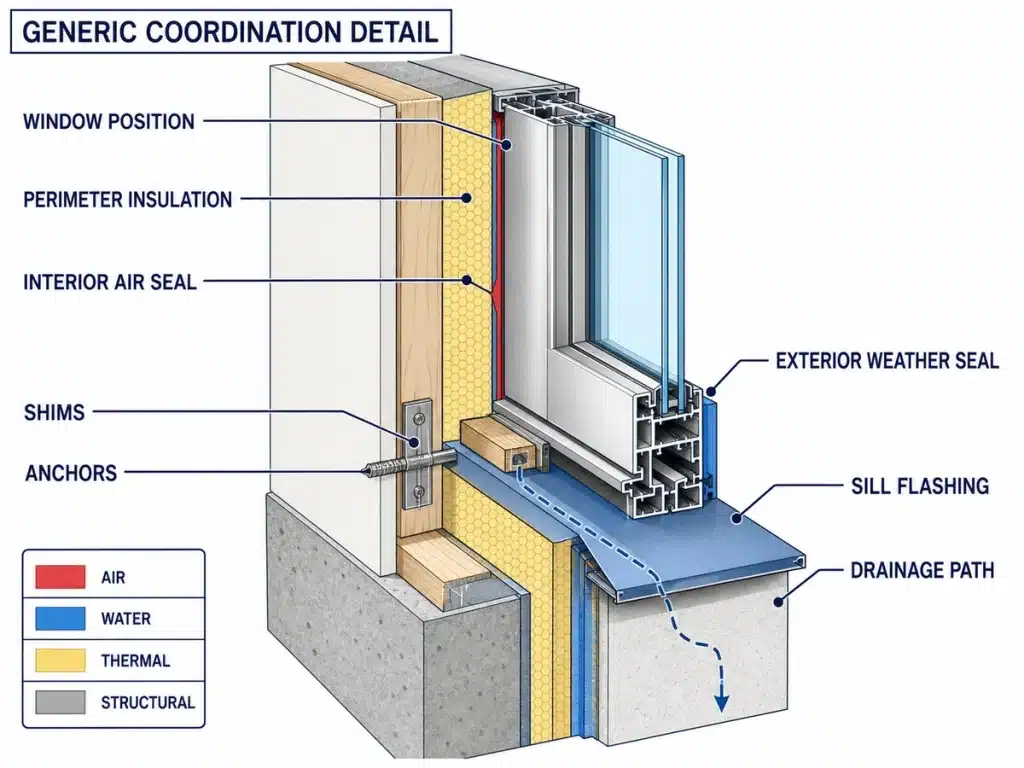
A strong laboratory rating does not compensate for an uncoordinated opening. The frame must be installed plumb, level, square, and within the manufacturer’s tolerances, while the surrounding enclosure continues its thermal, air, and water-control layers.
- Align the frame with the wall’s insulation strategy and return insulation toward the frame where the approved detail requires it.
- Maintain a continuous interior air seal and a compatible exterior weather seal without blocking designed drainage or weep paths.
- Coordinate sill pan or flashing, end dams, membrane returns, exterior falls, and drainage outlets with the wall and interior floor levels.
- Review subframes, anchors, brackets, fasteners, shims, and reinforcement so structural load paths do not create avoidable perimeter thermal bridges.
- Confirm sealant, gasket, coating, spacer, membrane, and cleaning-product compatibility before bulk installation.
- Use approved shop drawings, mock-ups, first-installation reviews, and field testing where the project specification requires them.
Evidence and Rating Systems
Rating systems vary by market. In North America, NFRC labels and certificates provide comparable energy-performance information such as U-factor and SHGC, with condensation resistance available in relevant programs. The U.S. Department of Energy also identifies carefully integrated thermal breaks as important for limiting conductive heat flow in mostly metal frames.
Thermal certification should not be confused with air, water, and structural certification. FGIA explains that these are separate performance areas and that supporting evidence should be checked for the applicable product. For international projects, the architect, façade consultant, energy specialist, engineer, and authority having jurisdiction should confirm the local standard, code edition, calculation method, and acceptance path.
Official references: NFRC energy-performance ratings · U.S. DOE purchasing guidance · FGIA product-performance FAQ
Frequently Asked Questions
What is the main difference between thermal break and non-thermal break windows?
A thermally broken aluminum frame includes a lower-conductivity separation between the exterior and interior aluminum sections. A non-thermal frame has a more continuous conductive metal path.
Are thermally broken windows always more energy efficient?
They normally improve the frame’s thermal contribution, but the complete window still depends on glass, spacer, frame area, operation, size, seals, air leakage, and installation. Compare documented whole-window U-factor values.
Can non-thermal aluminum windows be used in warm climates?
Possibly, but “warm climate” is not enough information. Cooling demand, solar exposure, indoor temperature, humidity, hours of conditioning, local energy rules, glass, and whole-window performance still need review.
Does a thermal break prevent condensation?
No. It can raise room-side frame temperatures and improve the condensation margin, but humidity, dew point, glass edge, air leakage, wall details, and installation also determine whether condensation occurs.
Does a thermal break improve sound insulation?
Not by itself. Acoustic performance depends on the complete window, including glass build-up, cavity, seals, air paths, frame junctions, operable portions, installation, and the adjacent wall.
Are non-thermal windows always cheaper?
They are often simpler and may have a lower initial frame cost, but total price changes with glass, size, operation, hardware, finish, testing, quantity, subframes, shipping, and installation.
What documents should be checked before ordering?
Check the exact product sections, opening schedule, shop drawings, whole-window thermal and solar data, air/water/structural evidence, glass specification, finish and hardware samples, installation details, approved deviations, and quotation inclusions.
Conclusion
For most conditioned exterior envelopes, a thermally broken aluminum system is the stronger starting point because it reduces direct frame conduction and generally improves room-side surface temperatures. Non-thermal aluminum can still be appropriate where the window does not separate demanding temperature conditions and where the documented product meets every project and local requirement.
The final thermal break vs non thermal break windows decision should be based on the exact whole-window rating, glass and spacer, condensation assumptions, air/water/structural evidence, opening size, wall interface, installation scope, and lifecycle priorities. Approve a coordinated assembly—not a marketing label.
Next Steps for Your Project
Topic hub: Product Selection Guides
Relevant product pages: Aluminum Windows · Aluminum Doors · Structural Glass Facades
Related guides: Windows and Doors for Different Climates · uPVC vs. Aluminum Windows
Related service: Drawing & Sample Coordination