
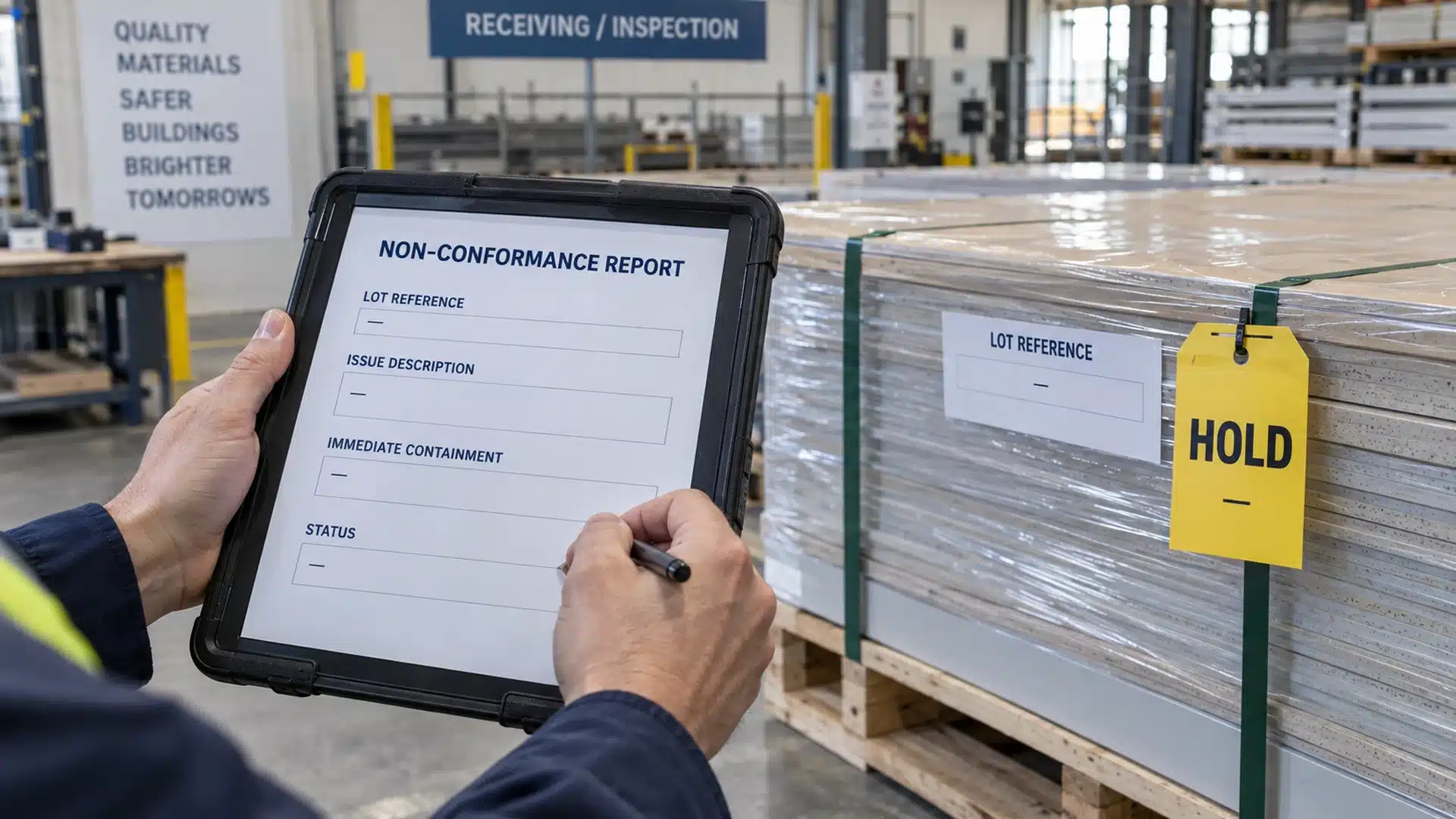
A non conformance report template should identify the exact requirement that was not met, preserve objective evidence, control the affected material or work, assign an authorized disposition, and show who verified closure. The free Excel workbook supplied with this guide includes a fillable NCR form and a multi-record NCR register for construction and building-material quality control.
Customize the form to the project contract, quality plan, document numbering, approval matrix, and local requirements. For the wider inspection framework around an NCR, use the construction quality control checklist and the building material quality control hub.
Download the Free Excel NCR Template
Written by Winston
Project Director at Skyland Building · 10+ Years of Building Materials Experience
Updated September 2026 ·14-minute read
Key Takeaways
- Record the observed condition separately from the requirement, cause, and proposed solution.
- Identify the project, location, material or work item, supplier, batch, affected quantity, and controlled document revision.
- Apply a visible hold or containment action before the affected material is installed, concealed, released, or mixed with accepted stock.
- Assign the correction, disposition, corrective action, owner, due date, approver, and verification evidence explicitly.
- Close the NCR only after the authorized verifier confirms the agreed work and supporting records are complete.
- Use the NCR register to find overdue actions, repeat suppliers, recurring defect types, and inspection controls that need improvement.
Download the Free Excel NCR Template
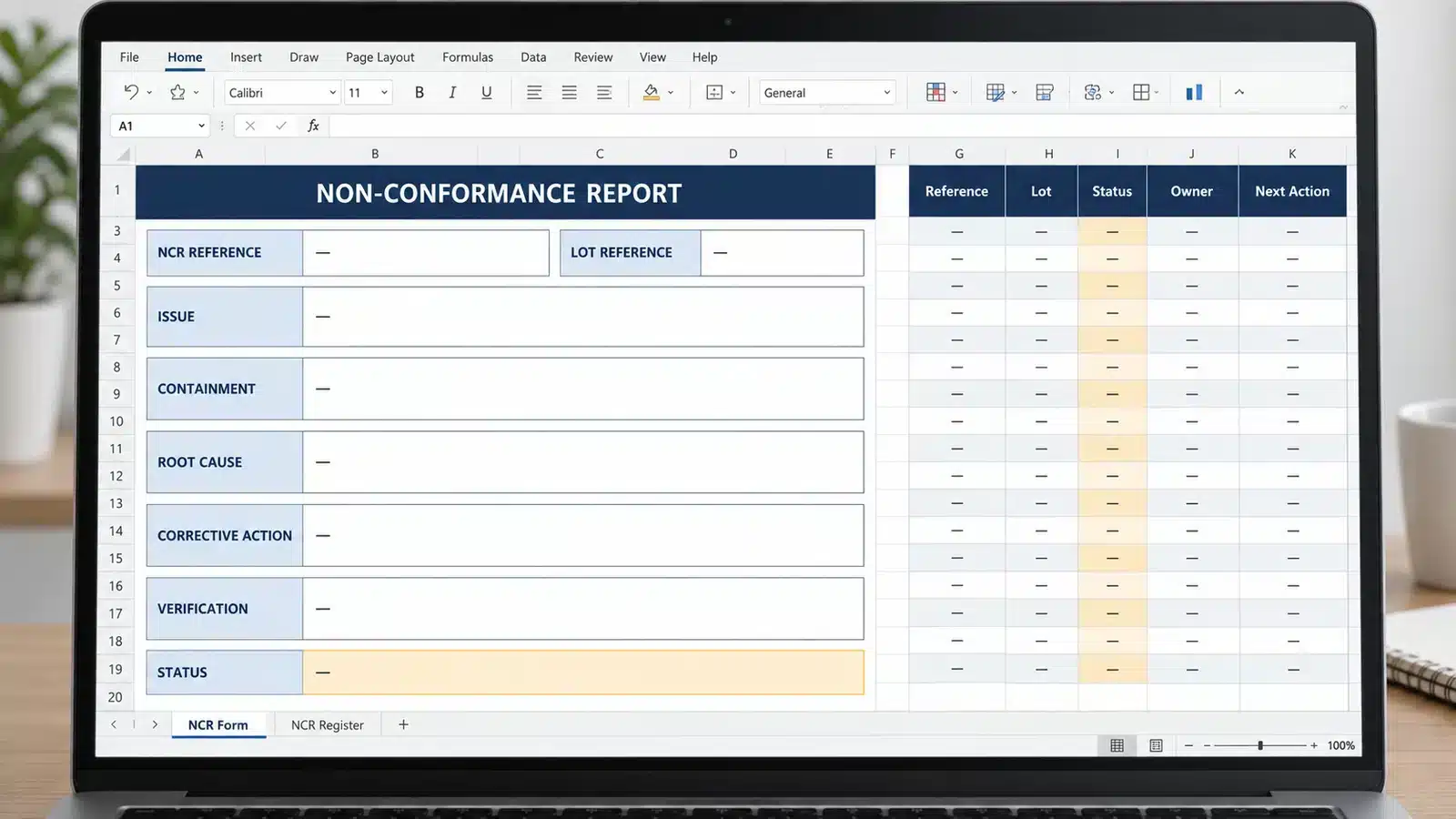
The downloadable workbook is designed for two related tasks. Use the NCR Form tab for one issue and the NCR Register tab to monitor multiple open and closed records. The workbook includes editable input cells, status and disposition lists, due-date checks, days-open calculations, filters, and conditional formatting for overdue actions.
| Workbook tab | Use it for | Included controls |
|---|---|---|
| NCR Form | Document one nonconformance from discovery through containment, action, approval, verification, and closure. | Project and material identity, requirement reference, evidence, disposition, actions, approvals, and final closeout. |
| NCR Register | Track multiple NCRs across projects, suppliers, packages, or quality meetings. | Status and disposition lists, action owner, due date, days open, overdue status, verification date, close date, and evidence reference. |
Use the form as a starting point, not as an automatic approval process. The contract and controlled quality procedure determine who may issue, review, accept, reject, or close an NCR.
What Is a Non Conformance Report
A non conformance report, usually shortened to NCR, is a controlled record of a product, material, installation, work activity, process, or document that does not meet a defined requirement. The requirement may come from a drawing, specification, approved submittal, material sample, purchase order, method statement, inspection and test plan, manufacturer instruction, contract clause, or applicable regulation.
The report should let a reviewer who was not present understand four things: what happened, what requirement applies, how the affected scope was controlled, and what evidence supports the final decision. An NCR is not a general complaint, a substitute for a technical review, or proof that the supplier is responsible before the cause has been investigated.
When to Issue an NCR
Issue an NCR when a deviation requires formal containment, traceability, technical evaluation, contractual disposition, corrective action, approval, or verified closure. Typical triggers include incorrect material identity, dimensions outside tolerance, damaged deliveries, missing certificates, unapproved substitutions, failed tests, incorrect installation, repeated workmanship defects, or use of a superseded drawing.
A minor observation can remain a site note only when the project procedure allows it, the condition can be corrected immediately, and the issue does not affect approved work, safety, performance, traceability, concealment, cost, schedule, or formal acceptance. If the team cannot identify the governing requirement, affected scope, and release authority, a controlled record is safer than an informal message.
NCR Compared With Other Construction Records
| Record | Primary purpose | Use when |
|---|---|---|
| NCR | Control a deviation from a defined requirement and document disposition and closure. | The issue needs a formal quality decision, action, approval, or traceable closeout. |
| Site observation | Record a field observation or minor correction. | The project procedure allows prompt correction without a formal NCR. |
| Punch item | List incomplete or defective work found near completion or handover. | The work is generally complete and the item is managed through the agreed punch process. |
| RFI | Request clarification of unclear, conflicting, or missing information. | The requirement is uncertain and a design or contract answer is needed before work proceeds. |
Fields Every NCR Template Should Include
A useful template follows the decision trail from identification to verified closure. Keep the observation, requirement, cause, proposed action, approval, and verification in separate fields so an untested assumption cannot be mistaken for a fact.
| Field group | Minimum information |
|---|---|
| Report control | NCR number, revision, status, date raised, project, contract or package, discipline, organization, and related inspection record. |
| Location and scope | Building, level, room, grid, elevation, warehouse, production area, work activity, and confirmed or suspected affected quantity. |
| Material traceability | Product or work item, supplier, manufacturer, model, PO, delivery note, package ID, batch, lot, heat, serial, and storage or installation location. |
| Observed condition | What was seen, measured, counted, tested, or found, including actual values, units, sample basis, date, and inspector. |
| Requirement | Current drawing, specification clause, approved submittal, sample, purchase requirement, ITP, method, standard, or authority condition. |
| Evidence | Photographs, marked-up drawings, measurements, test reports, certificates, delivery records, inspection notes, and attachment references. |
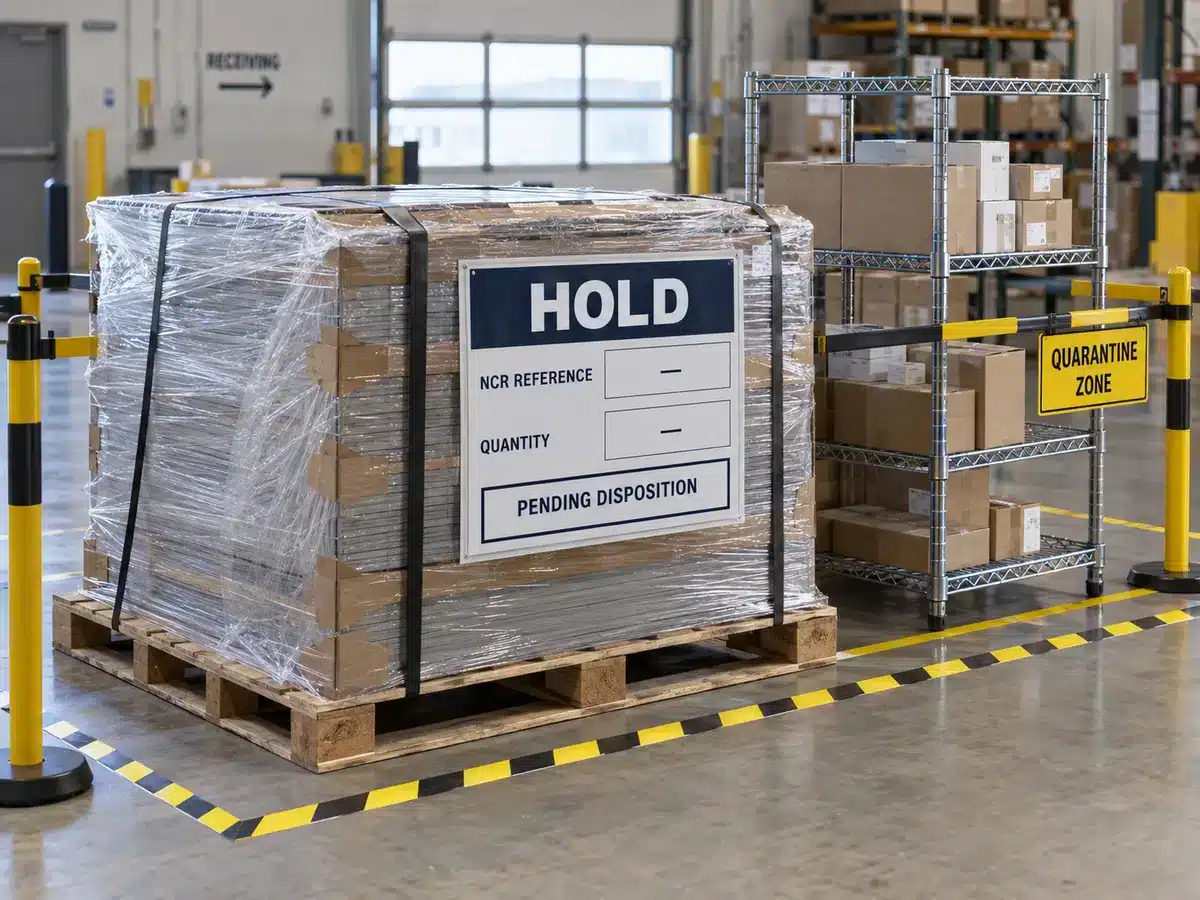
| Containment | Stop-work, hold, quarantine, segregation, labeling, protection, access restriction, responsible person, date, and release condition. |
| Assessment and cause | Impact, confirmed and suspected scope, investigation, immediate cause, system cause, and evidence supporting the conclusion. |
| Disposition and actions | Rework, repair, replace, return, reject, sort, or approved concession; action owner, due date, acceptance criteria, and required evidence. |
| Approval and closure | Reviewer, approver, conditions, reinspection or retest result, final disposition, verifier, close date, and closeout attachments. |
How to Complete the NCR Template
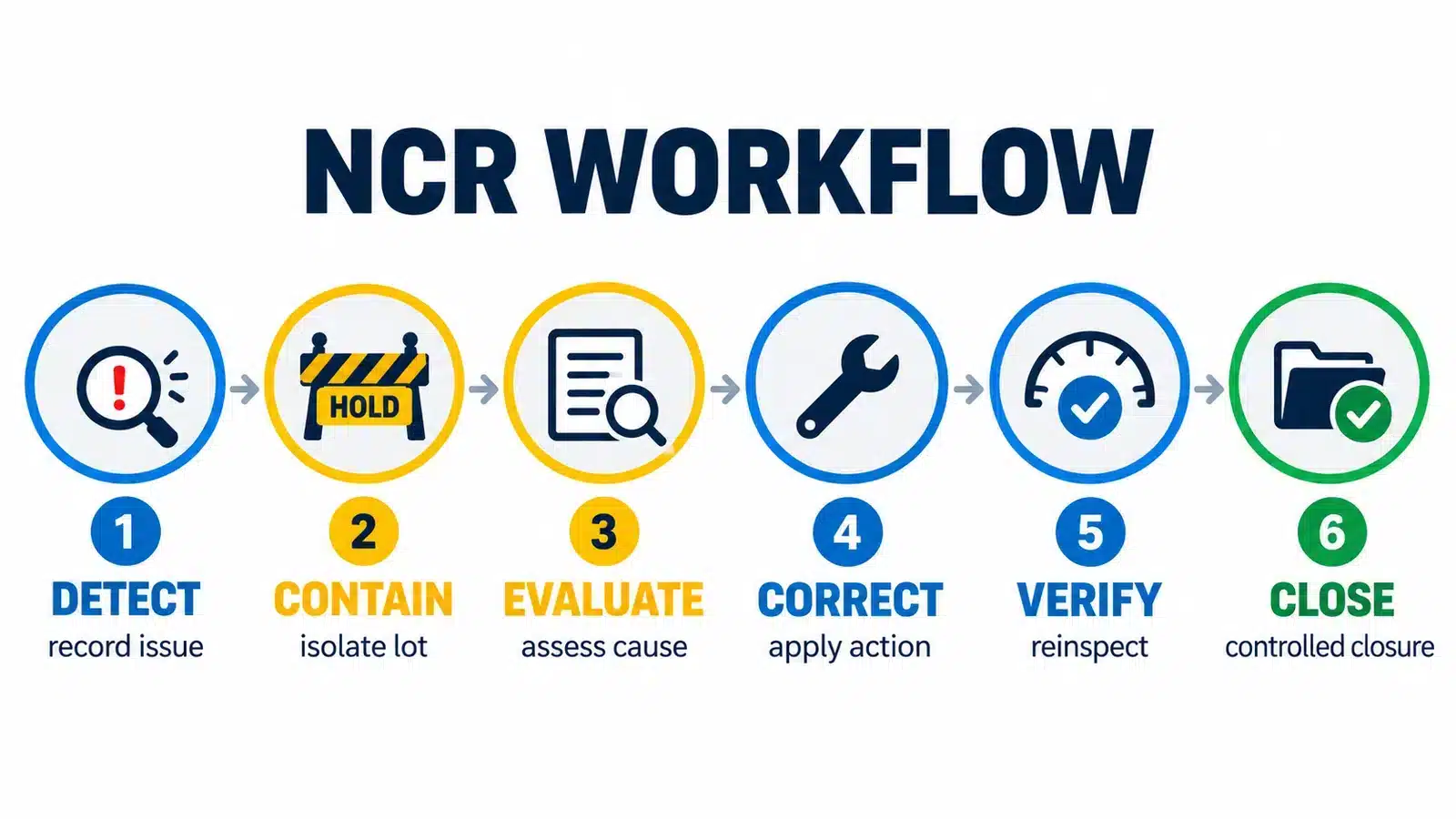
- Assign the report identity. Enter the NCR number, project, package, date, status, reporting organization, issuer, discipline, and exact location.
- Identify the affected material or work. Record the product, supplier, model, batch or lot, delivery or inspection reference, quantity inspected, quantity affected, and current physical status.
- Write the actual condition. State what was observed or measured without assigning blame or guessing the cause.
- Cite the unmet requirement. Include the controlled document number, revision, clause, detail, approved sample, or purchase requirement that the reviewer can verify.
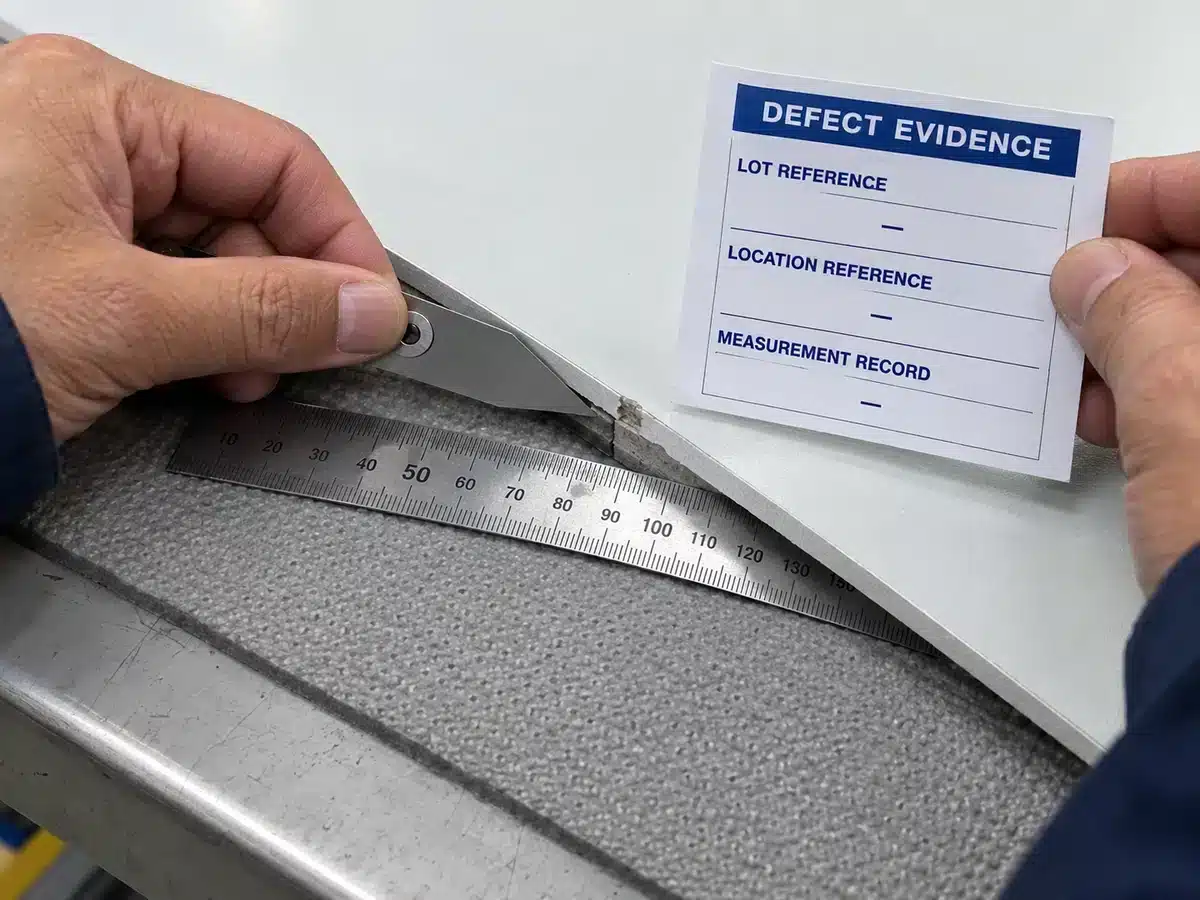
- Attach traceable evidence. Link photographs, measurements, delivery records, certificates, test reports, marked-up drawings, and earlier inspection records to the NCR number.
- Contain the affected scope. Stop use or concealment where required, quarantine or label the item, and record who applied the control and what is needed before release.
- Evaluate and approve the disposition. Define the cause, correction, corrective action, owner, due date, acceptance criteria, required reviewer, and any concession conditions.
- Verify and close. Reinspect or retest the completed action, review the closeout evidence, record remaining conditions, and obtain the authorized closure.
Write an Objective Nonconformance Description
A strong description records the actual condition first. It does not hide the issue behind terms such as poor quality, unacceptable, wrong material, or supplier error. Those phrases do not establish the requirement, extent, evidence, or cause.
| Weak wording | Better wording |
|---|---|
| Tiles are damaged. | Twelve of 120 cartons received under delivery note DN-104 have crushed and wet outer packaging. Eight sampled cartons contain tiles with chipped edges. The affected cartons were moved to the hold area pending a wider inspection. |
| The supplier sent the wrong product. | The model code on 24 cartons is AX-140. The approved material submittal and purchase order specify model AX-145. The cartons remain unopened and quarantined pending document review and disposition. |
| The dimension is not acceptable. | Three of ten sampled frames measured 1,196 mm to 1,198 mm at the stated datum. Approved shop drawing SD-21 Rev C specifies 1,200 mm with the project tolerance. Measurement records and gauge ID are attached. |
The examples above are illustrative. Replace the sample identifiers, quantities, measurements, tolerances, and references with the actual project evidence.
Keep Facts Requirements and Causes Separate
- Fact: an observable condition, measurement, quantity, date, location, document revision, or test result.
- Requirement: the controlled acceptance basis that the actual condition is compared with.
- Cause: the verified reason the condition occurred or escaped earlier control.
- Correction: the action taken to fix or contain the current condition.
- Corrective action: the change made to address the cause and reduce recurrence.
- Verification: evidence that the approved correction and action were completed and met the stated acceptance criteria.
Control the Affected Material or Work
Containment begins when the issue is found, not after the final cause is known. Mark the status visibly and prevent the item from being installed, concealed, shipped, issued to production, or mixed with accepted material. The report should identify who applied the control, when it was applied, the affected and suspected quantity, and the condition for release.
Package references and labels often provide the link between the report and the physical lot. Use the building materials packing and labeling guide when the affected scope must remain identifiable through storage, rework, replacement, or shipment.
Select the Disposition and Corrective Action
The authorized disposition may be rework, repair, replacement, return to supplier, sorting, rejection, or use under an approved concession. The report should state the technical basis, applicable limits, conditions, required evidence, and person authorized to decide. Production urgency, supplier replacement, or an email response does not close the original record.
For inspection planning, connect the NCR to the relevant building material ITP template. If the issue arose from an incomplete product submission or uncontrolled reference, review the technical submittal checklist and the material sample approval form before releasing revised material.
Correction, Corrective Action, and Preventive Action
| Term | Purpose | Construction example |
|---|---|---|
| Correction | Address the detected condition. | Replace damaged cartons or rework an installation to the approved detail. |
| Corrective action | Address the verified cause of the nonconformance. | Revise the purchase description and receiving check that allowed the wrong model to be accepted. |
| Preventive or broader risk action | Reduce a similar risk before another confirmed nonconformance occurs, where the organization uses this category. | Add a supplier hold point for a newly identified high-risk characteristic. |
Verify the Action and Close the NCR
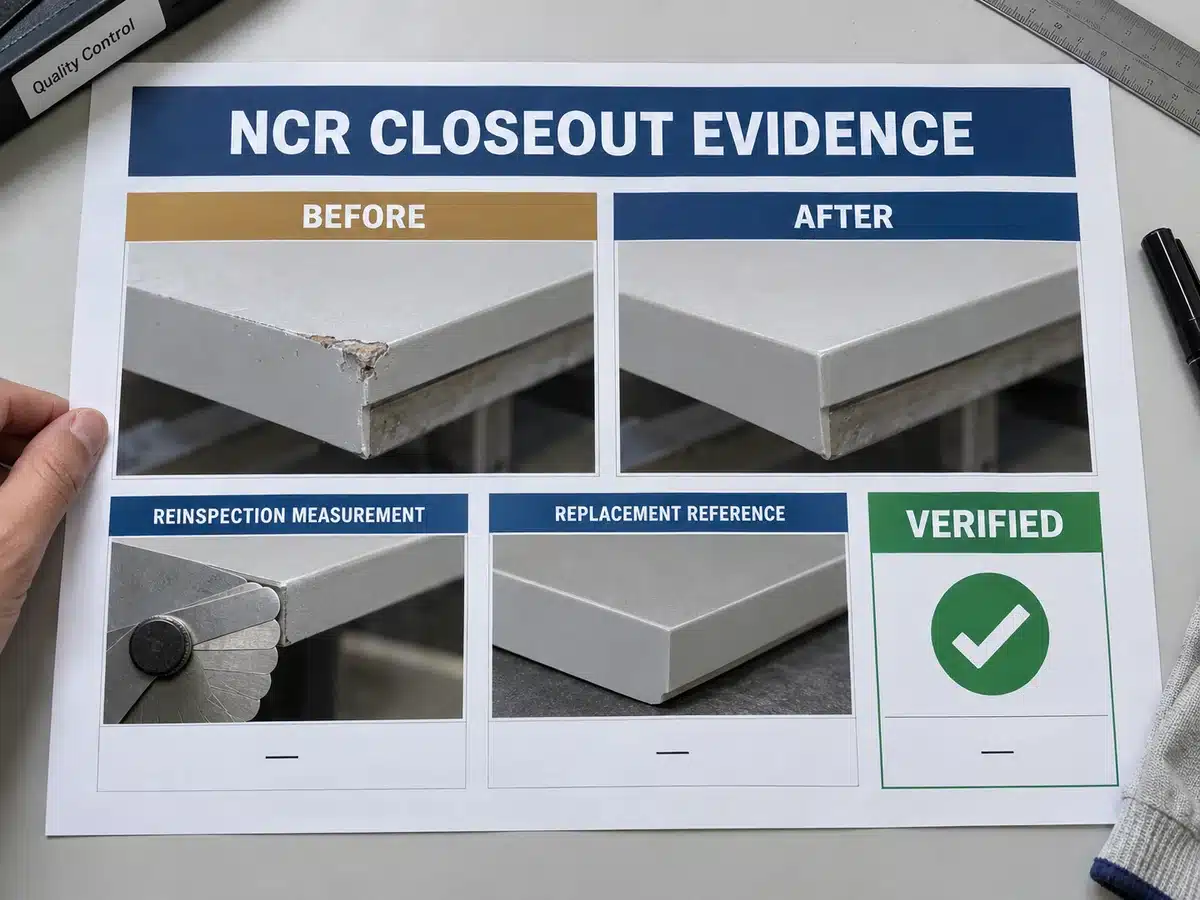
Closure is a verification decision. Compare the completed correction and action with the criteria written in the report. Inspect the reworked area, review replacement traceability, check retest results, confirm revised documents, or verify that rejected material was removed. Record the verifier, date, result, evidence, remaining conditions, and final released or rejected quantity.
Do not close an NCR because a response was received or a new delivery arrived. A replacement lot still needs its required inspection. If the action failed, the scope expanded, or the evidence is incomplete, keep the report open or reopen it under the project procedure.
Construction and Building Material Examples
| Material or work | Possible nonconformance | Useful evidence |
|---|---|---|
| Windows doors and facade components | Incorrect model, dimensions, glass build-up, finish, hardware, drainage detail, damage, or missing label. | Approved shop drawing, schedule, product label, measurement record, sample, photograph, and test reference. |
| Cabinetry millwork and furniture | Incorrect finish, dimensions, edge treatment, hardware, configuration, damage, or room allocation. | Room schedule, shop drawing, approved sample, package ID, hardware list, measurements, and condition photos. |
| Tile stone and finishes | Wrong batch, shade, caliber, thickness, surface finish, damage, staining, or poor storage condition. | Batch label, signed sample, delivery note, dimensions, inspection sample, storage photo, and installation location. |
| Sanitary ware lighting and fixtures | Wrong model, rating, finish, accessories, quantity, damage, or missing technical documentation. | Approved submittal, model label, packing list, functional check, certificate or test report, and room schedule. |
| Waterproofing sealants and coatings | Expired shelf life, wrong formulation, damaged packaging, unsuitable storage, missing batch record, or failed application check. | Batch and expiry label, data sheet, storage log, substrate record, application record, test result, and site photographs. |
Use NCR Data to Improve Quality Control
A closed report is also a source of inspection data. Track category, supplier, product, batch, location, cause, response time, overdue days, disposition, verification result, and repeat occurrence. Review patterns at quality meetings and update the controlled checklist or ITP when a recurring issue shows that a detection point, document review, supplier control, packaging method, or approval handoff is weak.
Use the building material supplier audit checklist for system-level supplier review. Use the AQL sampling plan for building materials when an approved lot-sampling method is appropriate, and use the pre-shipment inspection checklist to define the final-goods review before dispatch.
Standards and Project Requirements
Organizations that use ISO 9001 should align the form with their controlled quality-management procedure and the current edition of the standard. ISO 9001:2026 is the current edition as of September 2026. This downloadable workbook is a customizable project tool; using it alone does not demonstrate compliance or certification.
Construction contracts, local laws, authority procedures, client requirements, and company quality systems can assign different NCR categories, review steps, signatures, retention periods, and approval rights. Replace the generic fields and lists with the project requirements before use.
Common NCR Template Mistakes
- Describing the issue without citing the exact controlled requirement and revision.
- Recording suspected cause or blame as fact before the investigation is complete.
- Failing to identify the affected and suspected quantity, location, batch, or installed scope.
- Using photographs that show a close defect but not the product, location, scale, or package identity.
- Leaving material accessible after marking the spreadsheet status as Hold.
- Treating use as is or accepted with comments as an informal decision without authorized concession conditions.
- Listing an action without an owner, due date, acceptance criterion, or verification evidence.
- Closing the report when a response is submitted rather than when the completed action is verified.
- Keeping isolated forms without a register, which hides overdue actions and recurring supplier or material problems.
- Claiming ISO compliance from a generic template without mapping the form to the organization’s current controlled procedure.
Frequently Asked Questions
What Is an NCR in Construction
An NCR is a controlled quality record for material, work, a process, or documentation that does not meet a defined project requirement. It records the condition, evidence, containment, disposition, corrective action, approval, verification, and closure as required by the project procedure.
Who Normally Raises a Non Conformance Report
The person who detects the condition may start the record, while the contractor or organization responsible for quality normally controls numbering, scope, routing, and status. The supplier, subcontractor, designer, consultant, client, or authority may respond, review, approve, or verify according to the contract.
What Should Be Included in an NCR Template
Include report control, project and location details, material or work traceability, observed condition, unmet requirement, affected quantity, evidence, containment, cause, disposition, actions, owners, dates, approvals, verification, final status, and closeout attachments.
What Is the Difference Between an NCR and Corrective Action
The NCR records and controls the nonconformance. A correction addresses the detected condition. Corrective action addresses the verified cause that allowed the condition to occur or escape detection. One NCR may require both.
Can Nonconforming Material Be Accepted
It may be accepted only when the contract and controlled procedure allow that decision and the authorized reviewer confirms suitability. The concession should state the scope, basis, limits, conditions, evidence, and approval.
When Can an NCR Be Closed
Close it after the approved disposition and required actions are complete, the affected scope has been verified, the evidence and approvals are recorded, and the authorized closer confirms that any remaining conditions are controlled.
Is This NCR Template ISO 9001 Compliant
No generic spreadsheet can establish compliance by itself. Organizations using ISO 9001 should map the form to the current standard, their certified or internal quality-management system, applicable procedures, record controls, responsibilities, and audit requirements.
How Should NCRs Be Tracked
Use a central register with the NCR number, project, supplier or responsible party, category, action owner, due date, status, verification date, closed date, days open, overdue flag, and evidence reference. Review open and repeat issues at defined intervals.
Conclusion
A practical non conformance report template connects a specific deviation to the controlled requirement, physical scope, evidence, containment, authorized decision, corrective action, and verified closure. The accompanying Excel form and register provide that structure while remaining editable for the project’s quality procedure and approval matrix.
For building-material inspections, defect records, corrective-action follow-up, protective packing, and release information, review Skyland Building’s Inspection and Packing service. For multi-category projects that need scope, approvals, production, packing, and delivery records kept together, see Project Material Coordination or contact Skyland Building.