
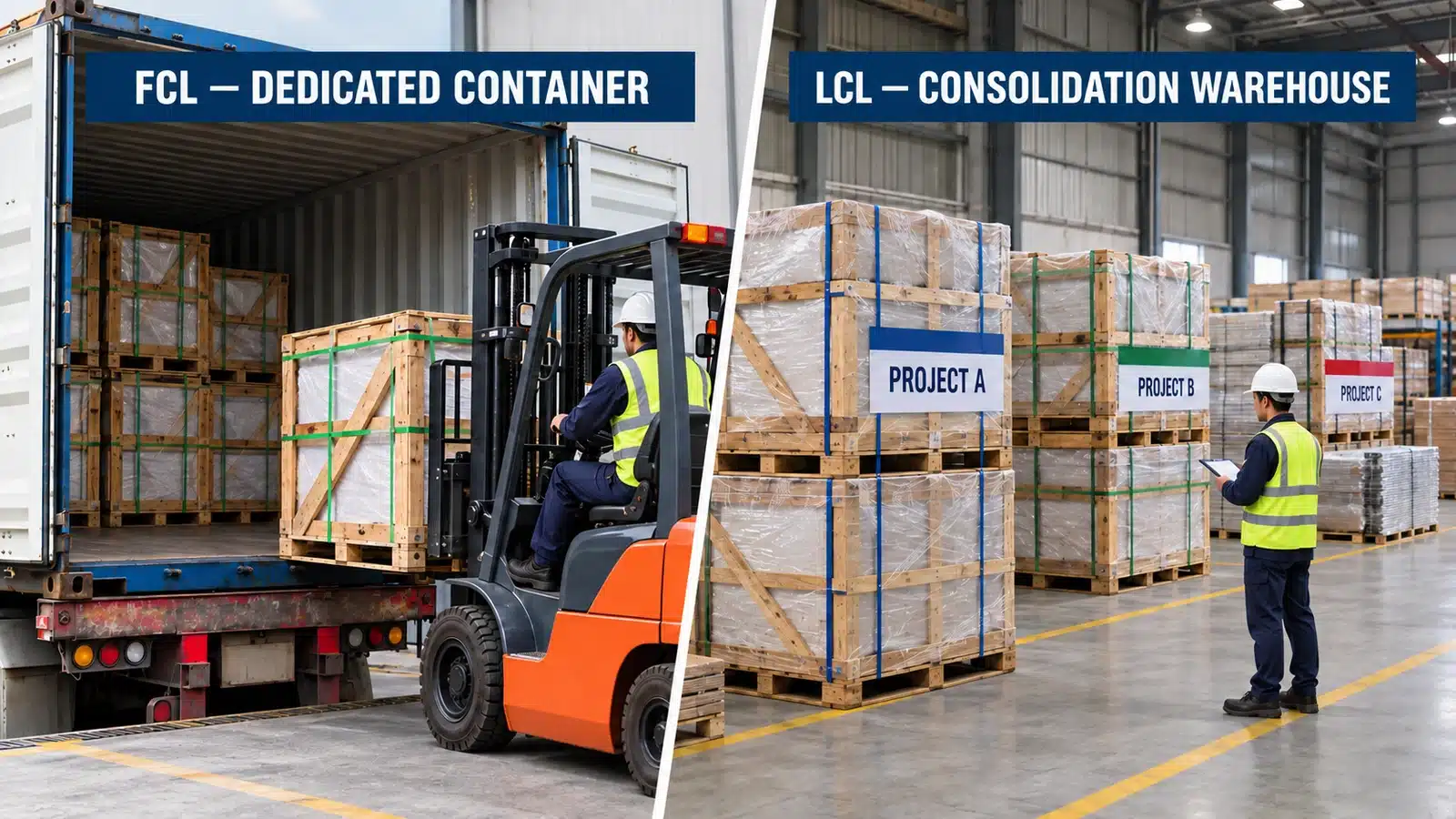
FCL (Full Container Load) gives one shipper exclusive use of a container, while LCL (Less than Container Load) combines separate consignments in shared container space. For building materials, the right choice depends on finished package dimensions, gross weight, stackability, handling sensitivity, supplier readiness, route, full destination charges and the required-on-site date. FCL often gives more control over loading, securing and release, while LCL can suit smaller loads that tolerate consolidation and deconsolidation. Neither option is automatically cheaper or faster. Compare like-for-like door-to-site quotations and match the mode to packaging, customs, schedule and site receiving constraints before booking.
Written by Winston
Project Director at Skyland Building · 10+ Years of Building Materials Experience
Updated September 2026 ·16-minute read
Key Takeaways
- Use final packed dimensions and gross weights, not product quantities or preliminary estimates, to compare FCL and LCL.
- Compare the complete delivered scenario. A low ocean rate can be outweighed by origin handling, deconsolidation, destination fees, storage or inland delivery.
- FCL normally gives the project team more control over the load plan and involves fewer shared-cargo handling stages, but it does not guarantee faster or damage-free delivery.
- LCL can be practical for smaller, well-packed consignments, but the quote must state its charging basis, minimums, cutoffs, handling stages and destination charges.
- Do not use one universal volume breakpoint. Route, cargo density, container type, service scope and current quotations can change the economical choice.
- Treat the shipping mode, Incoterms rule, insurance, customs responsibilities and site delivery plan as separate decisions that must work together.
FCL vs LCL Shipping at a Glance
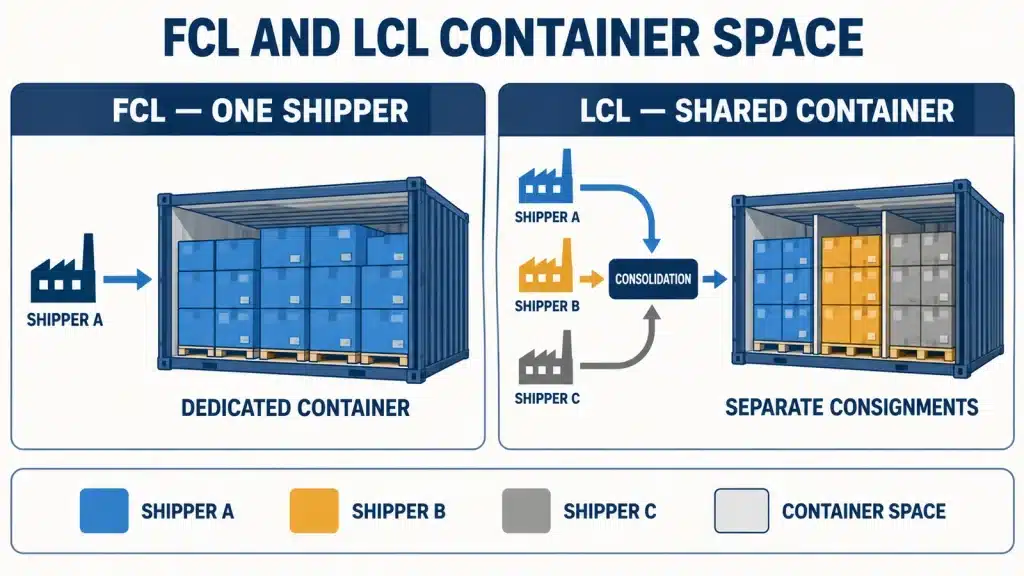
This comparison fits within the wider building material shipping and delivery workflow. Ask the freight provider to describe the physical service and every included charge rather than relying on the FCL or LCL label alone.
| Factor | FCL | LCL | What to verify |
| Container use | One shipper books exclusive use of the container; it does not need to be completely full | Several consignments share container space under a consolidator or carrier service | Actual equipment, usable limits and parties shown on the booking |
| Typical charging basis | Container, equipment, route and service scope | Chargeable volume or weight, minimums and service-specific fees | Written calculation basis and all origin and destination line items |
| Handling pattern | Usually loaded as one project unit and released without shared-cargo deconsolidation | Received at a warehouse, consolidated, unpacked and separated at destination | Number of transfers, warehouse points and custody records |
| Schedule | Often fewer consolidation dependencies | Requires cargo-receipt cutoffs and deconsolidation before final release | Sailing, cutoffs, transshipment, availability and delivery milestones |
| Load control | More control over compatibility, position, restraint and unloading sequence | Control is limited to the submitted packages; adjacent cargo is managed by the provider | Packing acceptance, no-stack rules and special-handling instructions |
| Packaging demand | Packaging must withstand the full route and forces within the planned container load | Packages must also tolerate repeated handling and shared warehouse operations | Crate, pallet, moisture, surface and internal-restraint requirements |
| Destination process | Container release, inland movement, unloading and empty return may apply | Deconsolidation, CFS or warehouse release and last-mile delivery may apply | Free time, appointments, storage, access and unloading responsibility |
| Best use | A useful comparison for coordinated, substantial or handling-sensitive project cargo | A useful comparison for smaller, robust and clearly identified consignments | Quote both when cost, risk or timing is close |
What FCL and LCL Mean
Full Container Load
FCL means one shipper books the container for its consignment. The word full describes the service arrangement, not a requirement to use every cubic metre. The project can plan where compatible packages sit, how mass is distributed, what must remain accessible and which items should be unloaded first. A seal and loading record can support chain-of-custody control, although customs, security or other authorized inspections may still require the container to be opened.
Less than Container Load
LCL means a consignment occupies only part of a container shared with other shippers. The provider normally receives the packages at an origin facility, consolidates them, moves the shared container, deconsolidates it at destination and releases each consignment for final delivery. This can avoid paying for exclusive container use when the shipment is small, but it creates additional warehouse, handling and release steps that must be included in the cost and schedule comparison.
FCL and LCL describe the freight arrangement; they do not decide who pays each stage or when commercial risk transfers. Review the named place and responsibilities separately when comparing FOB and CIF for building materials, and confirm the final contract and transport plan with qualified logistics, customs and insurance advisers for the route.
Collect the Right Data Before Comparing Quotes
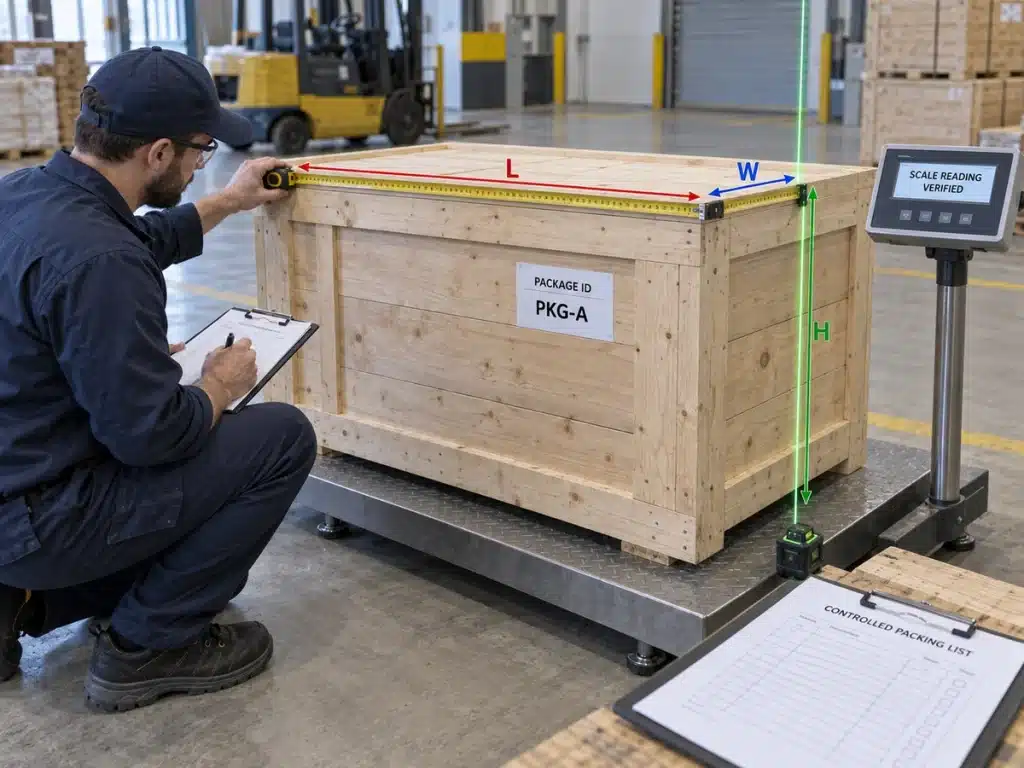
A freight comparison is only as reliable as the cargo data behind it. Early estimates may support budgeting, but the booking decision should use the finished shipping units and the current project programme.
1. Verify every package. Record package type, count, external length, width, height, gross weight, stackability, orientation, lifting points and pickup location. Identify dimensions that may change after final packing.
2. Describe the cargo risk. State fragile finishes, glass edges, stone corners, moisture sensitivity, high-density loads, long items, restricted stacking, dangerous-goods status and any separation requirement.
3. Map supplier readiness. Use realistic factory-ready dates, inspection status, document readiness and warehouse cutoffs. One late category can change a planned consolidated FCL load into a split shipment.
4. Define the required milestone. Distinguish port arrival, customs release, warehouse delivery and required-on-site dates. Add time for unloading, inspection, storage and movement to the installation area.
5. Fix the comparison boundary. Ask for the same origin, destination, route assumptions, Incoterms basis, insurance scope, customs responsibility and final-delivery requirement in every quotation.
6. Check receiving constraints. Confirm road and gate access, appointment rules, container positioning, crane or forklift capacity, labor, weather protection, storage space and empty-container return requirements.
Connect cargo readiness and the booking decision to the construction procurement schedule. For multi-category orders, use one set of package and location codes throughout project material coordination so the factory, warehouse, forwarder and site team work from the same records.
Compare Total Landed and Project Cost
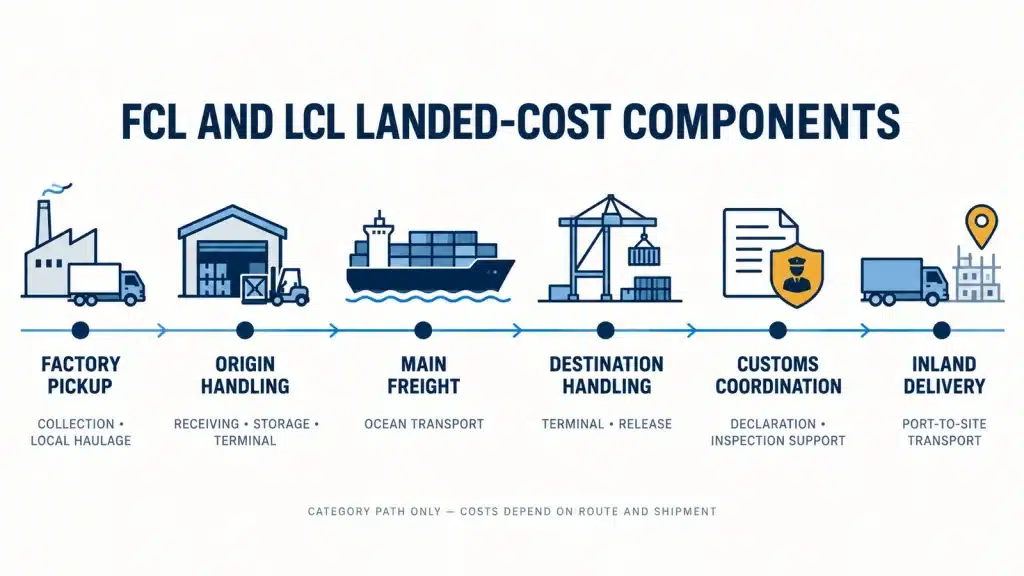
The cheapest headline freight rate is not necessarily the lowest project cost. Build one FCL scenario and one LCL scenario from the same verified cargo list, route and delivery window. Request the currency, validity period, assumptions, exclusions and trigger for each variable charge. Taxes, customs valuation and duties are jurisdiction-specific and should be confirmed for the actual importer, goods and destination.
| Cost area | Items to compare | Question for the quotation |
| Factory to origin | Pickup, loading, export packing, warehouse receipt, inspection, repacking and storage | Which supplier locations, equipment and free-storage assumptions are included |
| Main freight | FCL equipment and ocean rate or LCL chargeable basis, minimums and surcharges | How is chargeable volume or weight calculated and what can change it |
| Documents and clearance | Documentation, export formalities, customs brokerage, examinations and required supporting records | Which party prepares, submits and pays for each item |
| Destination handling | Terminal or CFS handling, deconsolidation, release, security, storage and appointment fees | Which charges are prepaid, collect, estimated or excluded |
| Inland delivery | Drayage or truck, chassis or equipment, permits, waiting time, redelivery and empty return | Is the price port-to-port, door-to-door or another defined scope |
| Project exposure | Extra handling, damage, replacement, split delivery, site delay and temporary storage | Which risk differs between the two realistic scenarios |
Why There Is No Universal FCL Breakpoint
Published rules of thumb can be useful for an initial enquiry, but they are not a booking rule. A dense shipment can reach payload or road limits before it uses the available volume. Long or unstackable packages can consume usable space quickly. LCL minimums and destination charges differ by provider, while FCL rates, equipment availability and inland costs change by route and date. Ask for both complete scenarios when the decision is close, then compare cost, schedule and cargo exposure together.
Compare Schedule and Handling Risk
FCL often removes the need to wait for unrelated cargo at an origin consolidation point and avoids destination deconsolidation of a shared container. That can reduce shared-cargo handling stages and give the project more control over the loading record and unloading sequence. It does not guarantee a shorter end-to-end delivery: vessel schedules, transshipment, port congestion, customs action, documentation, inland capacity and site access can delay either mode.
LCL needs a realistic cargo-receipt cutoff, consolidation window and destination release allowance. The finished packages may be moved through forklifts, warehouses and shared transport interfaces more than once. Ask how the provider handles long, heavy, fragile, non-stackable or moisture-sensitive cargo and whether the service accepts the required package size and handling method. A robust small consignment can still be a sensible LCL movement; a fragile small consignment may justify quoting FCL or a specialized alternative.
Use the broader construction material transport guide to connect ocean freight with inland movement, site access, unloading and receiving. These downstream steps can determine the workable option even when the ocean quotations look similar.
Plan Packing Labels and Loading for the Mode
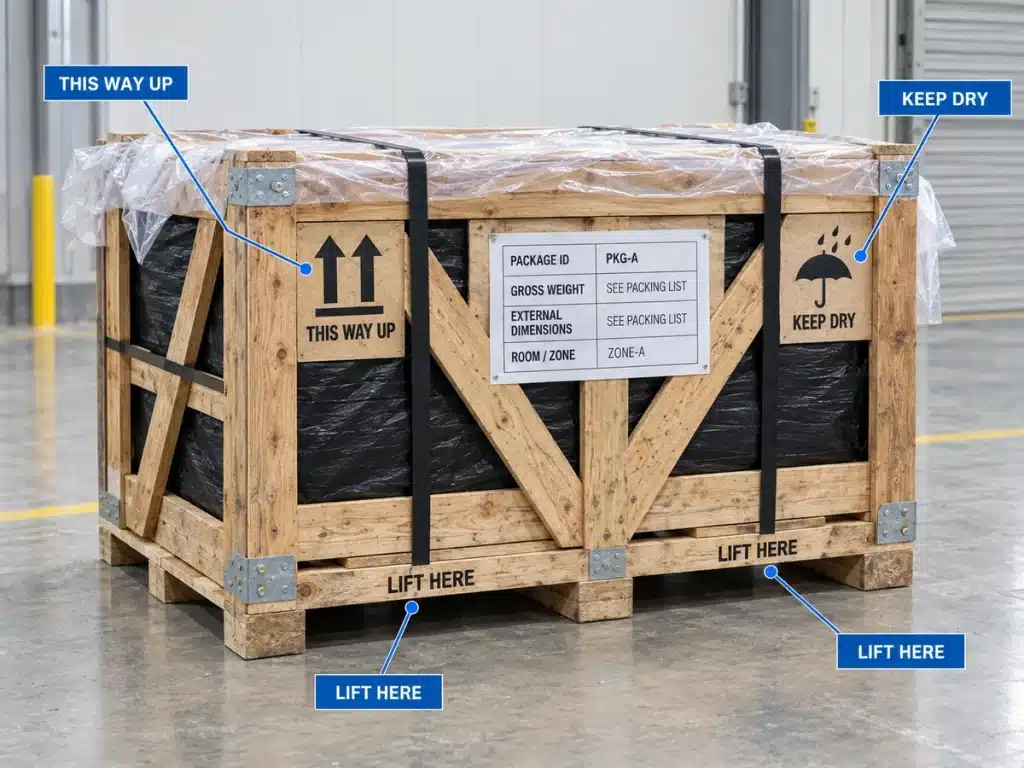
Both modes require packaging designed for the complete route. The difference is where the project team has control. With FCL, the team can develop a container load plan around mass distribution, cargo compatibility, restraint and reverse unloading sequence. With LCL, each package must remain identifiable and stable through independent warehouse handling and placement beside other consignments.
FCL Controls
- Inspect the container or transport unit condition before loading and record agreed exceptions.
- Verify actual package mass, floor loading, concentrated loads, container limits and inland road constraints with competent parties.
- Plan position, blocking, bracing, lashing and void control for the expected transport forces and package design.
- Keep vulnerable faces, glass, stone edges, finished panels and moisture-sensitive goods isolated from damaging contact.
- Record package condition, loading order, restraint, photographs and seal reference where applicable.
LCL Controls
- Use stable crates, pallets or other accepted units that can tolerate repeated mechanical handling.
- Protect against abrasion, impact, moisture and pressure from permitted stacking or adjacent freight.
- Show a unique package ID, purchase order, destination, package sequence, external dimensions and gross weight.
- Place orientation, lifting, fragile, keep-dry and no-stack instructions where they remain visible, using only verified marks.
- Match every physical package to the controlled packing list and retain dispatch photographs.
Apply the detailed controls in the building materials packing and labeling guide and close the agreed checks with the pre-shipment inspection checklist. If the project needs coordinated verification, the inspection and packing service can align product references, package condition, labels and shipment records within the agreed scope.
Choose a Starting Option for Common Project Cargo
The matrix below identifies which scenario to quote first. It is not an automatic booking recommendation. Finished packages, current route quotations, provider acceptance, customs requirements and site conditions remain controlling.
| Cargo situation | Starting comparison | Critical checks |
| A substantial coordinated load is ready for one destination and delivery phase | Quote FCL first, then compare LCL if the load is not space-efficient | Equipment, payload, load plan, destination access and empty return |
| A small, robust and clearly labeled consignment has schedule flexibility | Quote LCL first, then check the complete destination cost | Minimums, CFS handling, cutoffs, package acceptance and delivery scope |
| A small shipment contains fragile, high-value or finish-sensitive items | Quote both FCL and LCL; consider specialized service where appropriate | Handling stages, packing, custody, insurance scope and claim evidence |
| Stone, tile or other dense packages are heavy for their volume | Quote both and validate engineering and road constraints before selecting | Gross mass, point loads, pallet or crate strength, lifting and legal limits |
| Long, oversized, unstackable or irregular packages are proposed | Request a specialist equipment and route review; standard LCL or FCL may not fit | Door opening, internal dimensions, loading method, permits and site access |
| Suppliers become ready at different times and one item is on the critical path | Compare staged LCL or direct shipment with waiting for a later FCL load | Required-on-site dates, split rules, storage and extra handling |
| Several compatible categories can reach one warehouse within the same window | Consolidate the cargo data, then compare a project FCL load with LCL | Traceability, compatibility, loading sequence and late-supplier contingency |
Use FCL and LCL Together for Multi Supplier Orders
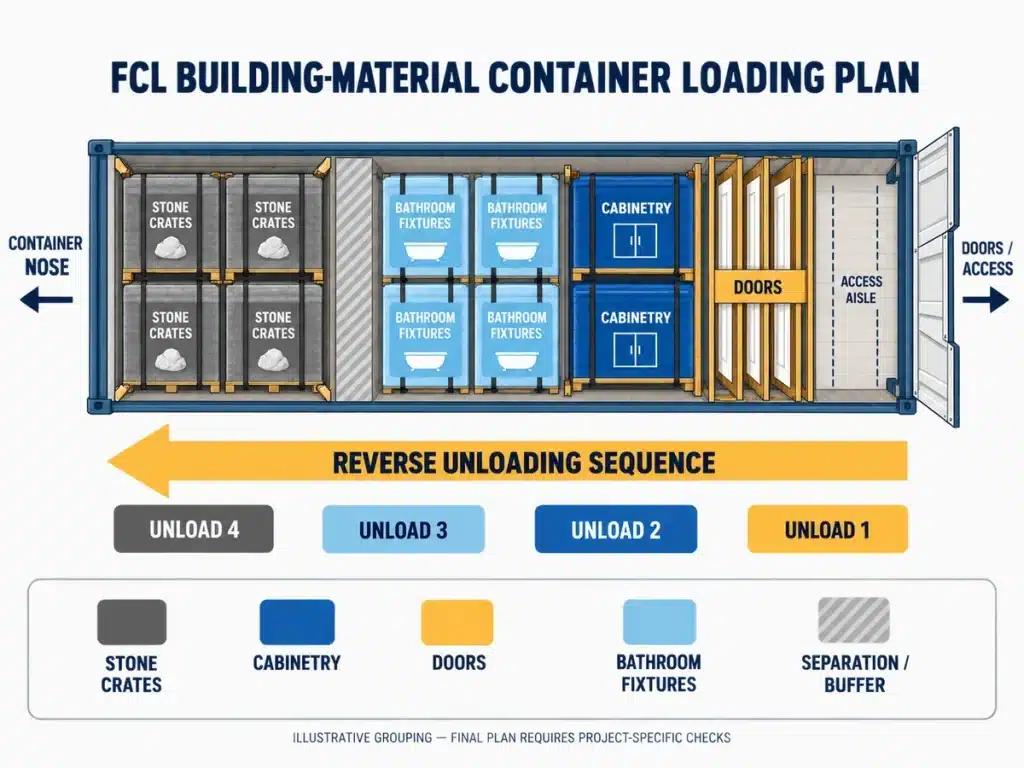
A project does not need to choose one mode for every package. The consolidated shipping guide for building materials explains how supplier lots can be received, reconciled and staged before the outbound mode is selected. A common plan may use one coordinated FCL load for compatible categories, LCL for an approved small balance and a separate movement for oversized or critical-path cargo.
Set a firm cargo cutoff and a written exception rule. If one supplier misses the date, decide whether that lot moves later, ships separately or changes the approved delivery stage. Do not hold released critical cargo indefinitely only to improve container utilization, and do not add an unidentified late package at the warehouse without recalculating space, mass, documents and unloading order.
Skyland’s consolidation and shipping coordination service can connect supplier arrivals, warehouse records, package references, loading information and delivery requirements around the confirmed project schedule.
FCL vs LCL Quote Checklist
Send the same controlled enquiry to each freight provider. Request assumptions and exclusions in writing so the comparison can be updated when a package, date or route changes.
☐ Origin pickup addresses, destination address and named ports or terminals
☐ Agreed Incoterms rule and exact named place for each relevant purchase
☐ Final package count, type, external dimensions, gross weight and photographs
☐ Stackability, orientation, lifting, center-of-gravity or handling restrictions where applicable
☐ Fragility, moisture sensitivity, finished surfaces, regulated or dangerous-goods status
☐ Supplier ready dates, inspection release, warehouse cutoffs and required-on-site date
☐ Requested equipment or the information needed for the provider to recommend equipment
☐ FCL rate and equipment charges or LCL chargeable basis, minimums and rounding rules
☐ Origin, documentation, terminal, destination, deconsolidation, storage and delivery charges
☐ Route, expected transshipment, validity period, schedule assumptions and exception terms
☐ Exporter, importer, customs broker, document and clearance responsibilities
☐ Cargo insurance responsibility, scope to review and claim-notification procedure
☐ Site access, appointment, unloading equipment, waiting time and empty-return requirements
☐ Free-time assumptions and potential storage, demurrage, detention or redelivery exposure
Common FCL and LCL Shipping Mistakes
- Choosing from product quantity or factory estimates before the final packaging is known
- Using one generic cubic-metre threshold without route-specific quotations
- Comparing an FCL port rate with an LCL door rate or another mismatched service boundary
- Ignoring LCL minimums, deconsolidation and destination handling charges
- Assuming FCL is sealed against every authorized opening or guarantees damage-free delivery
- Treating LCL as suitable because the cargo is small without checking package strength and provider acceptance
- Confusing the freight mode with Incoterms, insurance, customs or ownership terms
- Waiting for maximum container utilization while a critical installation package becomes late
- Failing to connect the load plan with site access, unloading equipment and installation sequence
Frequently Asked Questions
Which Is Cheaper FCL or LCL
There is no universal answer. LCL may avoid the cost of exclusive container use for a small shipment, while FCL can become more economical when cargo uses a substantial share of the equipment or when extra LCL handling and destination charges are significant. Compare both complete delivered scenarios using the same cargo, route, dates and service boundary.
Is There a Fixed Volume for Choosing FCL
No fixed volume works for every route or cargo. Weight, usable dimensions, stackability, minimum charges, current rates, equipment, inland transport and destination fees can change the crossover. Use published thresholds only for an initial enquiry and confirm the decision with current like-for-like quotations.
Is FCL Always Faster Than LCL
FCL often has fewer consolidation and deconsolidation dependencies, so it may offer a simpler schedule. It is not always faster end to end. Sailing availability, transshipment, port conditions, customs, documentation, inland delivery and site appointments affect both modes. Ask for milestone dates and assumptions, not only a port-to-port transit estimate.
Does FCL Prevent Cargo Damage
No. Exclusive container use can reduce shared-cargo contact and give the project more control over loading, but damage can still result from weak packaging, poor mass distribution, inadequate restraint, moisture, container condition, handling, unloading or route events. Use cargo-specific packing and competent loading controls.
Can Building Materials From Several Suppliers Use One FCL
Yes, if the supplier lots are properly received, identified, documented, compatible and ready within the agreed window. A consolidation point can reconcile the cargo and prepare one project load. The underlying seller, product, origin, value, classification and document information must still remain accurate.
Can Fragile Building Materials Move by LCL
They may be accepted when the provider, route and packaging are suitable, but small size alone is not enough. Review repeated handling, stacking restrictions, crate design, moisture protection, adjacent-cargo exposure, insurance and claim requirements. Quote FCL or a specialized alternative when the risk is not acceptable.
What Documents Are Needed for FCL or LCL
Requirements vary by goods, parties and route. Common records may include a commercial invoice, packing list and transport document, plus classification, origin, license, safety, insurance or compliance records where applicable. The exporter, importer, carrier, freight forwarder and customs broker should confirm the final structure and filing responsibilities.
Conclusion
The practical FCL vs LCL shipping decision is not simply full container versus a few pallets. It is a comparison of verified package data, complete landed cost, schedule dependencies, handling exposure and the receiving plan. Quote both modes when the result is close, keep assumptions visible and use a mixed shipping strategy when one method cannot serve every project package safely or on time.
If you need help coordinating multi-supplier building materials for international delivery, contact Skyland Building with the product list, supplier locations, available package data, destination and required delivery stages.
Technical References
- Maersk FCL vs LCL shipping guide — Industry reference for the basic FCL and LCL service distinction. Published volume thresholds were not treated as universal project rules.
- IMO ILO UNECE Code of Practice for Packing of Cargo Transport Units — Primary international reference describing non-mandatory guidance for packing, loading, securing, receiving and unpacking cargo transport units.
- ICC Incoterms rules overview — Primary reference explaining that Incoterms rules allocate specified tasks, costs and risks in contracts for the delivery of goods.