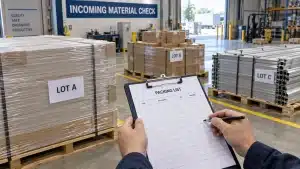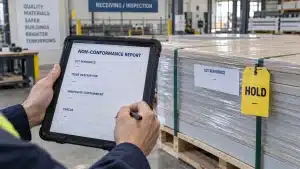

How to plan, pack, secure, document, deliver, and inspect building-material shipments from supplier to project site.
Written by Winston
Project Director at Skyland Building · 10+ Years of Building Materials Experience
Updated July 2026 · 23-minute read
Transporting construction materials is not simply a matter of booking a truck or sea container. It is a coordinated process that links the project schedule, packed dimensions and weights, transport equipment, material-specific protection, cargo securement, documentation, site access, unloading, and receiving inspection. A gap in any one of these areas can create damage, delay, unsafe handling, or unplanned cost.
This guide gives project owners, contractors, designers, and procurement teams a practical framework for domestic and international building-material delivery. Because legal requirements and safe-working methods vary by route and shipment, use it as a planning guide and confirm the final method with qualified carriers, freight forwarders, customs professionals, engineers, and site safety personnel.
Key takeaways
- Plan from the installation sequence backward: delivery dates should match site readiness, storage capacity, and lifting resources.
- Select transport equipment from the packed cargo data—not catalogue dimensions—including total weight, center of gravity, lifting points, stackability, and environmental sensitivity.
- Treat packaging and cargo securement as two connected controls: packaging protects the product, while blocking, bracing, and rated restraints keep the load from moving.
- Confirm route, permit, dangerous-goods, customs, and wood-packaging requirements for the actual origin, destination, and transport mode.
- Create an evidence trail with package labels, loading photos, seal records, transport documents, receiving inspection, and a defined damage-claim process.
What does transporting construction materials involve?
Construction material transportation covers the movement of structural products, finishes, fixtures, and custom-made components between factories, warehouses, ports, consolidation points, and project sites. The cargo may range from dense steel sections and stone to fragile glass, tiles, sanitary ware, lighting, cabinetry, flooring, doors, and furniture. Each category behaves differently under vibration, moisture, impact, compression, and repeated handling.
A complete transport plan therefore answers five linked questions: when each package is needed, which route and equipment can carry it, how the product will be packed, how the load will be distributed and secured, and how it will be unloaded and accepted at the destination. The cheapest freight quote is not automatically the lowest-risk or lowest-total-cost option if it excludes essential handling, protection, permits, or final delivery.
1. Build the logistics plan before booking transport
Confirm shipment data at package level
Prepare a package schedule before asking for freight prices. Record each crate, pallet, bundle, rack, or loose item separately, including external dimensions, gross weight, package ID, product contents, center-of-gravity or lift-point information where relevant, stacking limits, and any moisture, temperature, shock, or orientation restrictions. Final packed data is more useful than product-only dimensions because packaging can materially change the space, payload, and handling plan.
- Identify long, wide, tall, heavy, top-heavy, non-stackable, fragile, or high-value packages early.
- Confirm whether chemicals, adhesives, coatings, aerosols, batteries, or other products require dangerous-goods classification and mode-specific handling.
- Separate installation-critical items, spares, tools, and accessories so they can be located without unloading unrelated packages.
- Use package marks that match the packing list, drawings, room or floor allocation, and receiving checklist.
Sequence deliveries around construction readiness
Link the procurement schedule to design approval, production, pre-shipment inspection, transit, customs clearance, local delivery, and installation. Delivering too early can expose finished materials to weather, theft, repeated movement, or overcrowded storage; delivering too late can stop dependent trades. A practical plan uses delivery lots that follow the work sequence—such as façade, wet-area, joinery, lighting, and furniture packages—rather than sending everything as one undifferentiated shipment.
Survey route, access, and unloading constraints
The destination must be checked before the truck or container leaves. Confirm gate width and height, approach roads, turning space, bridge or road limits, overhead obstructions, gradients, ground bearing condition, permitted delivery hours, traffic controls, staging space, and the distance from the unloading point to protected storage. For oversized or heavy loads, the carrier and relevant authorities should validate the route and permits.
Also confirm who supplies the crane, forklift, telehandler, pallet jack, spreader beam, lifting frame, slings, or labor. Equipment capacity alone is not enough: the planned lifting points, reach, ground setup, operator competence, and exclusion zone must suit the actual package.
Define responsibility and an exception plan
Name the party responsible for booking, export clearance, import clearance, insurance, permits, loading, securement, seal control, delivery appointments, unloading, and receiving. Add escalation contacts for weather disruption, customs holds, missed delivery windows, damaged packaging, or site access failure. These responsibilities should agree with the sales contract, transport contract, insurance terms, and the chosen Incoterms rule where one is used.
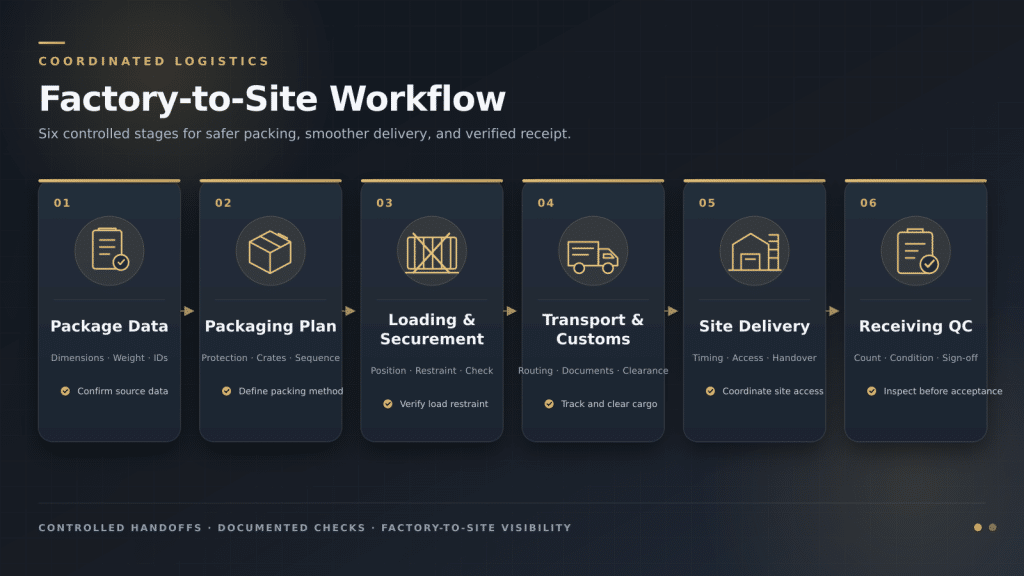
2. Choose the right transport method and equipment
Match the transport method to cargo size, weight, value, sensitivity, route, delivery window, loading method, and site access. Do not select a vehicle or container only from nominal volume: door openings, internal geometry, payload, axle restrictions, lifting access, and the need for blocking or bracing can reduce usable capacity.
| Equipment / mode | Often suitable for | Verify before booking |
| Dry van / enclosed trailer | Cabinetry, flooring, doors, insulation, packaged fixtures, and moisture-sensitive finishes | Verify internal dimensions, floor rating, loading access, package stackability, and protection from condensation or trapped moisture. |
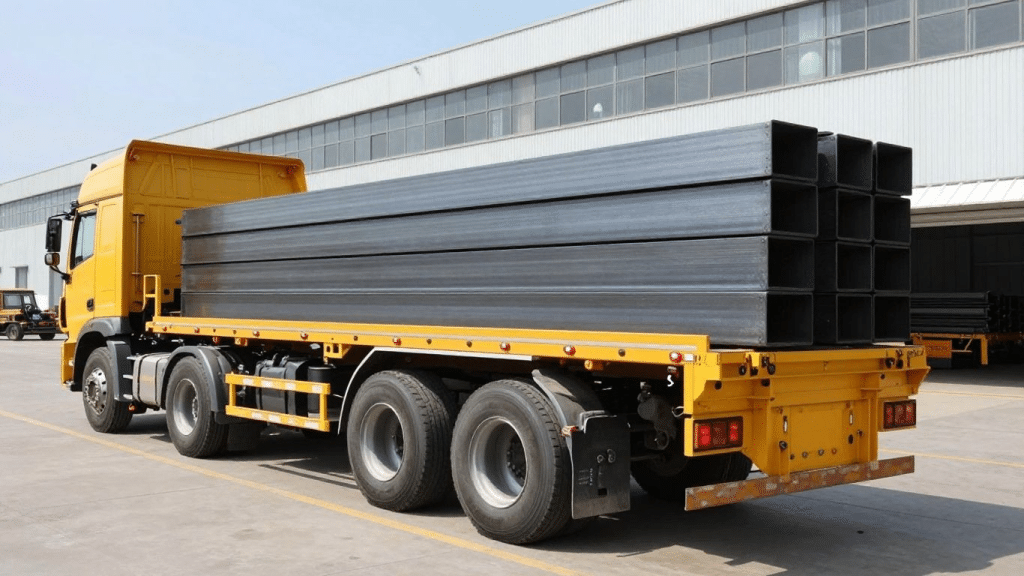
| Curtain-side or flatbed trailer | Steel, long profiles, palletized materials, and cargo requiring side or top loading | Confirm weather protection, blocking, rated anchor points, securement plan, overhang, and route restrictions. |
| Low-bed / extendable trailer | Heavy machinery, long fabricated sections, oversized modules, and high or concentrated loads | A specialist carrier should confirm permits, route survey, axle loads, escorts, lifting method, and site access. |
| Standard dry sea container (FCL) | Consolidated project materials that fit the door opening and can be safely packed and restrained | Check payload, weight distribution, floor loading, condensation risk, loading sequence, destination handling, and CTU securement. |
| Open-top / flat-rack container | Over-height, over-width, top-loaded, or unusually shaped cargo | Expect special handling, possible out-of-gauge charges, weather exposure, lashing requirements, and terminal restrictions. |
| Air freight / courier | Urgent samples, replacement hardware, controls, documents, or small critical parts | Usually unsuitable for bulky materials; confirm dangerous-goods rules, dimensional weight, protective packaging, and customs requirements. |
Domestic, international, and multimodal delivery
Road transport commonly handles factory pickup and final site delivery, even when the main journey uses ocean, rail, or barge. Ocean freight is often considered for high-volume international shipments, while air freight is usually reserved for smaller urgent items. Rail or barge may be practical where terminals, schedules, and final-mile arrangements support the project. Compare total door-to-site time and handling events—not only the main transit leg.
For ocean freight, full-container-load (FCL) and less-than-container-load (LCL) services create different trade-offs. FCL can provide more control over loading and reduce intermediate handling, while LCL may suit smaller volumes but generally introduces consolidation and deconsolidation steps. Neither is automatically cheaper or safer; assess cargo compatibility, handling sensitivity, schedule reliability, destination charges, and available loading control.

3. Package materials according to their damage risks
One packaging method cannot protect every construction product. Design the package around the material’s likely failure mode—impact, edge damage, vibration, moisture, corrosion, abrasion, compression, incorrect orientation, or loss of small accessories—and around the planned lifting and restraint method. Packaging should also remain stable during customs inspection and site handling.
Windows, doors, and glass
Use manufacturer-approved stillages, A-frames, crates, separators, corner protection, and bracing appropriate to the assembly. Protect exposed hardware and finished profiles, identify the correct orientation and lift points, and avoid applying straps or forks to unsupported glazing or decorative surfaces. Package labels should link each unit to the opening schedule or room code.
Tiles, stone, and brittle finishes
Tiles are commonly unitized on reinforced pallets or in crates with edge and corner protection, while large stone slabs require engineered supports and controlled handling. Keep package weights within the capacity of the pallet, rack, vehicle floor, and unloading equipment. Stone-slab handling creates serious struck-by and crushing hazards, so the rack, lifting method, exclusion zone, and receiving sequence require competent planning rather than improvised site handling.
Cabinetry, flooring, furniture, and finished woodwork
Use clean, dry, enclosed protection with corner guards, internal separation, and support that avoids point loading. Where the route or climate creates moisture risk, the packaging engineer or manufacturer may specify vapor barriers, desiccants, ventilation, or environmental limits. Avoid trapping moisture inside the package, and follow the manufacturer’s storage and acclimatization instructions after delivery.
Sanitary ware, lighting, hardware, and accessories
Use compartmentalized cartons or crates, shaped inserts, crush protection, and clear package IDs. Keep accessory kits, fixing hardware, control modules, drivers, and spare parts traceable to the main product. ‘Fragile’ labels support communication but do not replace impact-resistant packaging or a controlled loading plan.
Steel, aluminum profiles, stairs, and long fabricated components
Support long pieces at planned dunnage points, separate finished surfaces, protect sharp edges, and prevent bundles from telescoping or rolling. The vehicle and securement system must address the component’s length, weight distribution, center of gravity, overhang, and potential movement in every direction. Custom stairs or architectural metalwork may need dedicated frames and clearly marked lifting points.
Adhesives, coatings, aerosols, and batteries
Do not assume a product is non-hazardous because it is used on a construction site or packed in a small container. Review the current safety data and obtain the transport classification from the responsible shipper or qualified dangerous-goods professional. Packaging, quantity limits, marks, labels, shipping papers, segregation, and carrier acceptance can differ by road, sea, rail, and air.
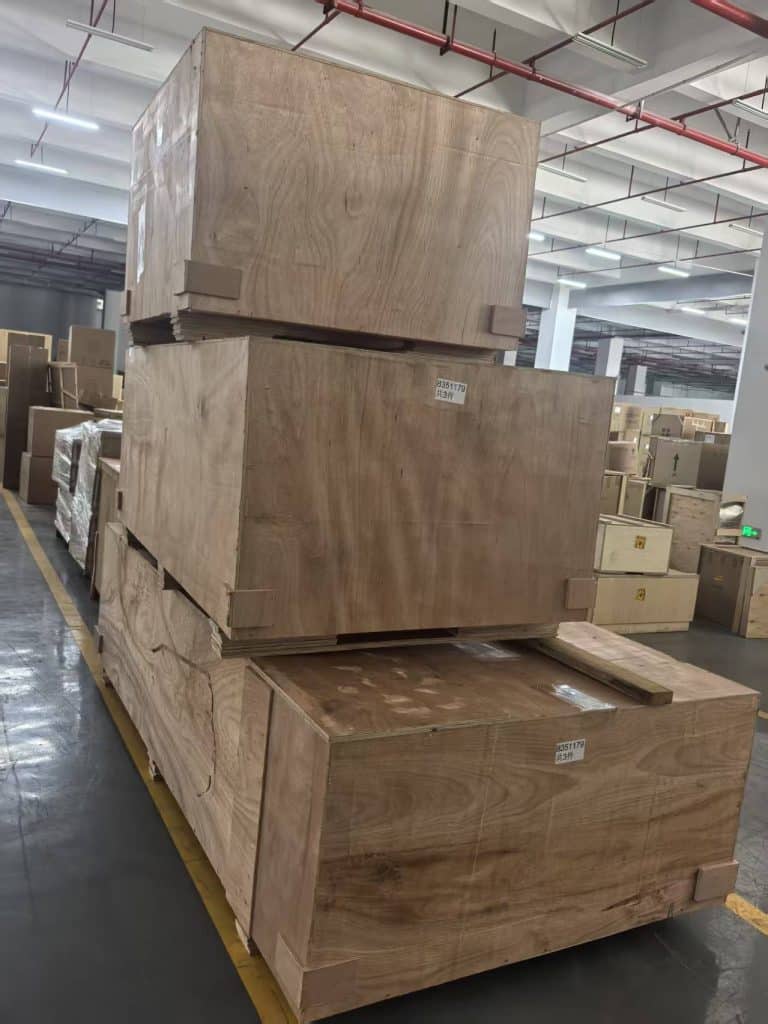
4. Load, distribute, and secure the cargo
Inspect the truck, trailer, or container before loading
Confirm that the cargo space is the booked type and is clean, dry, structurally suitable, and free from protrusions or damage that could affect the load. Check the floor, doors, seals, anchor points, weather protection, and any residue or odor that could contaminate finishes. Record the inspection with photos before the first package enters.
Create a weight-distribution and loading sequence
Use actual package weights and centers of gravity to keep the load within vehicle, container, floor, axle, route, and lifting limits. Place heavy packages only where the structure and loading plan allow; do not load on top of fragile products unless the lower package is explicitly rated for it. The loading order should support weight balance, securement access, customs inspection if required, and the planned unloading sequence at the site.
Block, brace, lash, and protect contact points
Cargo should be restrained against movement in the directions and conditions expected during transport. Use an engineered combination of tight stow, blocking, bracing, dunnage, chocks, rated lashing equipment, and suitable anchor points. Edge protectors can protect both the cargo and the restraint, while anti-slip material may support—but not replace—the required restraint system. Do not tighten a strap across glass, finished joinery, or unsupported edges unless the approved package design provides a protected load path.
Regulatory note: For cargo packed in transport units, the IMO/ILO/UNECE CTU Code provides international good-practice guidance. U.S. road shipments are also subject to FMCSA general and commodity-specific cargo-securement rules. The carrier must apply the rules and calculations that govern the actual vehicle, commodity, and route.
Close, seal, and document the load
Before dispatch, verify package count and IDs, restraint condition, remaining voids, door clearance, prohibited or undeclared items, and the final gross weight. Photograph the load at meaningful stages, including the rear before door closure. Record the container or vehicle number, seal number where used, date, location, responsible parties, and any approved exception to the loading plan.

5. Prepare transport, customs, and insurance documents
A document set should let the supplier, forwarder, carrier, broker, insurer, and receiver identify what is moving, who is responsible, how it is packed, and what to do if an exception occurs. Requirements differ by country and mode, but the following records are commonly considered.
- Commercial invoice for international trade, with consistent seller, buyer, product description, value, currency, and agreed trade terms.
- Packing list showing package IDs, contents, quantities, dimensions, gross and net weights where required, and total package count.
- Transport document, such as the applicable bill of lading, sea waybill, air waybill, road consignment note, or carrier delivery document.
- Package schedule, loading plan, lift instructions, drawings, and photo record for unusual, heavy, fragile, or custom components.
- Origin, conformity, permit, inspection, or product documents required by the destination market or the specific goods.
- Customs classification and importer information reviewed by the importer or customs professional responsible for entry.
- Cargo insurance certificate or policy evidence, insured value, exclusions, deductible, notice requirements, and claim-contact details.
- Dangerous-goods declaration, shipping description, marks, labels, packaging certificates, or emergency information where the classification and mode require them.
- Delivery appointment, unloading instructions, delivery note, proof of delivery, and receiving inspection report.
Clarify Incoterms and insurance rather than assuming coverage
If the sales contract uses an Incoterms rule, state the exact rule, named place or port, and version. The rule helps allocate specified tasks, costs, and transit risk between buyer and seller, but it does not by itself settle every issue in the sales contract, transport contract, insurance policy, customs entry, or title transfer. Confirm separately who books each leg, who is insured, the insured amount, covered risks, exclusions, and claim deadlines.
Check regulated wood-packaging requirements
Crates, pallets, dunnage, or bracing made from regulated raw wood may need treatment and compliant marking under ISPM 15 for international trade. Requirements and exemptions can vary by material and destination, so verify them before the packaging is built. A non-compliant crate can create delay, treatment, re-export, or disposal risk at the border.

6. Coordinate site delivery, unloading, and receiving
Final delivery is a handoff between transport and construction operations. Reconfirm the delivery window, driver instructions, site contact, gate access, unloading area, lifting equipment, competent personnel, weather protection, and storage destination at the agreed lead time. If the site is not ready, use the pre-agreed exception process rather than forcing an unsafe or unprotected unload.
Inspect before and during unloading
Before opening or moving the load, photograph the vehicle or container, seal, doors, visible package condition, and any leaning, water ingress, impact, or restraint failure. Establish an exclusion zone and use the approved lifting points and equipment. In the United States, OSHA requires construction rigging equipment to be inspected before use on each shift and to carry legible safe-working-load identification; other jurisdictions have their own requirements.
Count, inspect, record, and protect
- Match the vehicle or container number, seal where used, package count, and package IDs to the transport and packing documents.
- Record visible damage or shortage using the carrier’s and contract’s required procedure before giving an unqualified receipt where the procedure permits notation.
- Move packages to the planned inspection area without discarding protective packaging or evidence needed for a claim.
- Open and inspect priority or suspect packages with the appropriate parties present; compare contents with drawings, schedules, and approved samples.
- Quarantine damaged or incomplete items, preserve packaging and photos, and notify the supplier, carrier, insurer, and project team within the applicable deadlines.
- Move moisture- or weather-sensitive products into suitable protected storage and follow the manufacturer’s storage, stacking, and acclimatization instructions.
7. Transporting construction materials checklist
Use this checklist as a project template. Add cargo-specific acceptance criteria, responsible parties, dates, and records required by the contract, carrier, insurer, and local regulations.
Planning and booking
| Status | Checkpoint |
| ☐ | Final packed dimensions, gross weights, package count, and package IDs are confirmed. |
| ☐ | Fragile, high-value, moisture-sensitive, long, heavy, top-heavy, and non-stackable packages are identified. |
| ☐ | Dangerous-goods status has been verified by the responsible shipper or qualified professional. |
| ☐ | Transport mode, vehicle or container type, payload, openings, and handling access suit the cargo. |
| ☐ | Route, road or bridge limits, permits, escorts, terminal restrictions, and delivery hours are confirmed where applicable. |
| ☐ | Site gate, turning area, ground condition, overhead clearance, staging space, and protected storage are ready. |
| ☐ | Crane, forklift, rigging, operators, exclusion zone, and offloading sequence are confirmed. |
| ☐ | Responsibilities, Incoterms rule if used, insurance, customs, contacts, and exception procedures are documented. |
Packaging and loading
| Status | Checkpoint |
| ☐ | Packaging is approved for the product, route, lifting method, handling events, and environmental risks. |
| ☐ | Package labels match the packing list, room or floor allocation, drawings, and receiving plan. |
| ☐ | Truck, trailer, or container is clean, dry, suitable, and inspected before loading. |
| ☐ | Package weights and centers of gravity are reflected in the loading and unloading sequence. |
| ☐ | Cargo stays within vehicle, container, floor, axle, route, and lifting-equipment limits. |
| ☐ | Heavy cargo is not placed on fragile or unrated packages, and incompatible goods are segregated. |
| ☐ | Blocking, bracing, dunnage, edge protection, anchor points, and rated restraints follow the approved plan. |
| ☐ | Securement does not load unsupported glass, finished edges, hardware, or decorative surfaces. |
| ☐ | Loading-stage photos, final load photos, package count, weight, vehicle or container number, and seal are recorded. |
Dispatch and transit control
| Status | Checkpoint |
| ☐ | Commercial, packing, transport, customs, insurance, permit, and dangerous-goods documents are complete as applicable. |
| ☐ | Driver, carrier, forwarder, broker, and site contacts have the delivery instructions and escalation contacts. |
| ☐ | Tracking milestones and responsibility for delay, hold, transloading, inspection, or re-delivery are defined. |
| ☐ | Any required in-transit load checks are performed by the carrier under the governing rules and safe procedures. |
| ☐ | Changes to route, equipment, seal, schedule, or cargo condition are reported and documented. |
Delivery and receiving
| Status | Checkpoint |
| ☐ | Delivery appointment, site readiness, unloading equipment, storage area, and competent personnel are reconfirmed. |
| ☐ | Vehicle or container, seal, packaging, visible load condition, and possible water or impact damage are photographed before unloading. |
| ☐ | The unloading exclusion zone and approved lifting method are in place before packages move. |
| ☐ | Package count and IDs are checked against the packing list before release or dispersal around the site. |
| ☐ | Visible shortages or damage are recorded using the contract and carrier procedure, with evidence preserved. |
| ☐ | Suspect items are quarantined and notifications are sent within applicable contractual and insurance deadlines. |
| ☐ | Products are transferred to suitable protected storage and handled according to manufacturer instructions. |
| ☐ | Receiving status is updated against the project schedule, with replacement or corrective actions assigned. |
8. Common mistakes that increase damage, delay, or cost
Booking from product dimensions instead of packed dimensions. Use final package-level data, including gross weight and loading orientation.
Treating packaging as a substitute for cargo securement. Design packaging, blocking, bracing, and restraints as one transport system.
Combining heavy and fragile products without a load hierarchy. Use compatible loading zones, rated supports, separation, and an unloading sequence.
Assuming the site can unload whatever arrives. Confirm access, lifting points, equipment reach and capacity, ground setup, people, and storage before dispatch.
Using an Incoterms label as the entire logistics plan. Document each leg, named place, costs, risk transfer, customs, insurance, and handoff responsibilities.
Signing, unpacking, or discarding packaging before documenting an exception. Follow the applicable carrier, contract, and insurance procedure and preserve evidence.
Choosing the lowest freight line without comparing exclusions. Compare total door-to-site scope, handling events, destination charges, permits, storage, unloading, and claim support.
9. What determines construction material transport cost?
Transport cost depends on more than distance. Quotes can change with packed weight and volume, non-stackable space, cargo value, transport mode, vehicle or container type, route and permits, fuel and market conditions, loading and unloading equipment, packaging, consolidation, storage, terminal or destination handling, customs services, insurance, and final-mile access. Oversized, high-value, fragile, or time-critical materials usually require more planning and control even when the main freight rate looks similar.
Compare total landed logistics scope: main freight + pickup + export handling + packaging + terminal and documentation charges + permits or special equipment + insurance + import clearance and applicable duties/taxes + final delivery + unloading + storage or delay exposure. Ask each provider to state inclusions, exclusions, validity, free-time assumptions, and responsibility for exceptions.
10. How Skyland Building coordinates material shipments
Skyland Building works with project teams and qualified logistics providers to coordinate the movement of multiple product categories, such as windows and doors, cabinetry, flooring, tiles, sanitary ware, lighting, stairs, furniture, stone, and soft furnishings. The objective is to connect procurement, packing, quality control, loading information, shipment timing, and site receiving rather than treating freight as an isolated final step.
- Review the bill of quantities, drawings, product scope, destination, delivery priorities, and site constraints.
- Create a package and delivery matrix by product, room, floor, installation sequence, and shipment lot.
- Coordinate product-specific packaging, labels, accessory control, and pre-shipment quality records with the relevant factories.
- Prepare consolidation and loading information for review with the freight forwarder, carrier, and project team.
- Support the commercial document set and handoff information while the importer, broker, and licensed transport parties manage their regulated responsibilities.
- Provide receiving, storage, and installation-reference information so the site team can identify and protect delivered products.
Scope boundary: Skyland Building’s coordination does not replace licensed carriers, freight forwarders, customs brokers, engineers, rigging specialists, insurers, or the site’s legally responsible safety personnel. Final methods and compliance remain shipment- and jurisdiction-specific.
Planning an upcoming project shipment? Send the bill of quantities, drawings, product list, destination port or site address, target delivery window, access restrictions, and required standards to Skyland Building. Clear inputs make it easier to coordinate packaging, consolidation, transport, and site receiving from the start.
Frequently asked questions
What is the safest way to transport construction materials?
There is no single safest vehicle for every load. The safest practical method matches the packed cargo data, route, equipment, packaging, securement, competent handling, and receiving plan, then complies with the rules governing the actual shipment.
How should fragile construction materials be transported?
Use product-specific crates, racks, separators, corner and surface protection, controlled lifting points, and a loading plan that prevents crushing, impact, vibration, abrasion, and moisture exposure. Fragile labels alone are not sufficient.
Which vehicle is best for building materials?
Enclosed trailers protect moisture-sensitive finishes; flatbeds or curtain-siders support side or top loading; low-bed or extendable trailers suit many oversized loads; standard or special containers support international freight. Final selection depends on packed size, weight, handling, route, and site access.
How are transport costs for construction materials calculated?
Providers consider packed weight and dimensions, distance, mode, equipment, handling, route restrictions, permits, packaging, consolidation, insurance, terminal and customs services, and final delivery. Compare the same door-to-site scope rather than only the headline freight rate.
What documents are needed for international construction material shipping?
Common records include a commercial invoice, packing list, transport document, customs information, origin or conformity documents when required, cargo insurance, and dangerous-goods documents where applicable. Exact requirements depend on the origin, destination, product, and transport mode.
How should oversized or long building components be moved?
A specialist carrier should confirm packed dimensions and weight, vehicle and axle configuration, support points, securement, permits, route clearance, escorts if required, lifting, and site access. Do not rely on a standard truck booking without this review.
Who is responsible if materials are damaged in transit?
Responsibility depends on the sales contract, transport contract, agreed Incoterms rule if used, point of risk transfer, carrier liability, insurance policy, evidence, and claim procedure. Define these before dispatch and follow notice deadlines after any incident.
Is packaging the same as cargo securement?
No. Packaging protects and unitizes the product; cargo securement restrains the packages or articles within the vehicle or transport unit. Both must work together.
Can different building materials share one container?
They can when the loading plan confirms compatible weights, shapes, environmental needs, dangerous-goods status, handling sequence, and protection from cross-damage. Heavy, leaking, odorous, wet, or sharp items should not be placed where they can damage sensitive finishes.
What should the site team inspect at delivery?
Check vehicle or container identity, seal where used, package count and IDs, visible packaging condition, water or impact evidence, shortages, and priority contents. Record exceptions before dispersing the shipment and preserve photos and packaging for any claim.
Authoritative guidance used for this article
Transport rules vary by origin, destination, vehicle, cargo, and mode. The following official resources support the planning principles in this guide; they do not replace shipment-specific advice from the carrier, freight forwarder, customs broker, engineer, or local authority.
IMO/ILO/UNECE Cargo Transport Units (CTU) Code — international guidance on packing and securing cargo transport units.
FMCSA Cargo Securement Rules — U.S. road-transport rules, including general and commodity-specific securement requirements.
PHMSA Hazardous Materials Training Publications — current official U.S. resources on hazardous-material classification, packaging, marking, labeling, and shipping papers.
OSHA Loading and Unloading — U.S. worker-safety guidance for loading and unloading operations.
OSHA 1926.251 — Rigging Equipment for Material Handling — U.S. construction rigging inspection and safe-working-load requirements.
IPPC Adopted Standards (including ISPM 15) — international phytosanitary standards relevant to regulated wood packaging material.
Next Steps for Your Project
Topic hub: Shipping & Delivery Guides
Relevant product pages: Structural Glass Facades · Luxury Sanitary Ware Systems · Architectural Marble
Related guides: Building Materials Packing and Labeling · Consolidated Shipping for Building Materials
Related service: Consolidation & Shipping