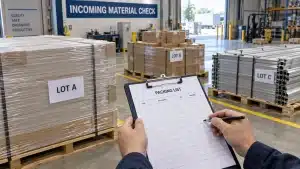
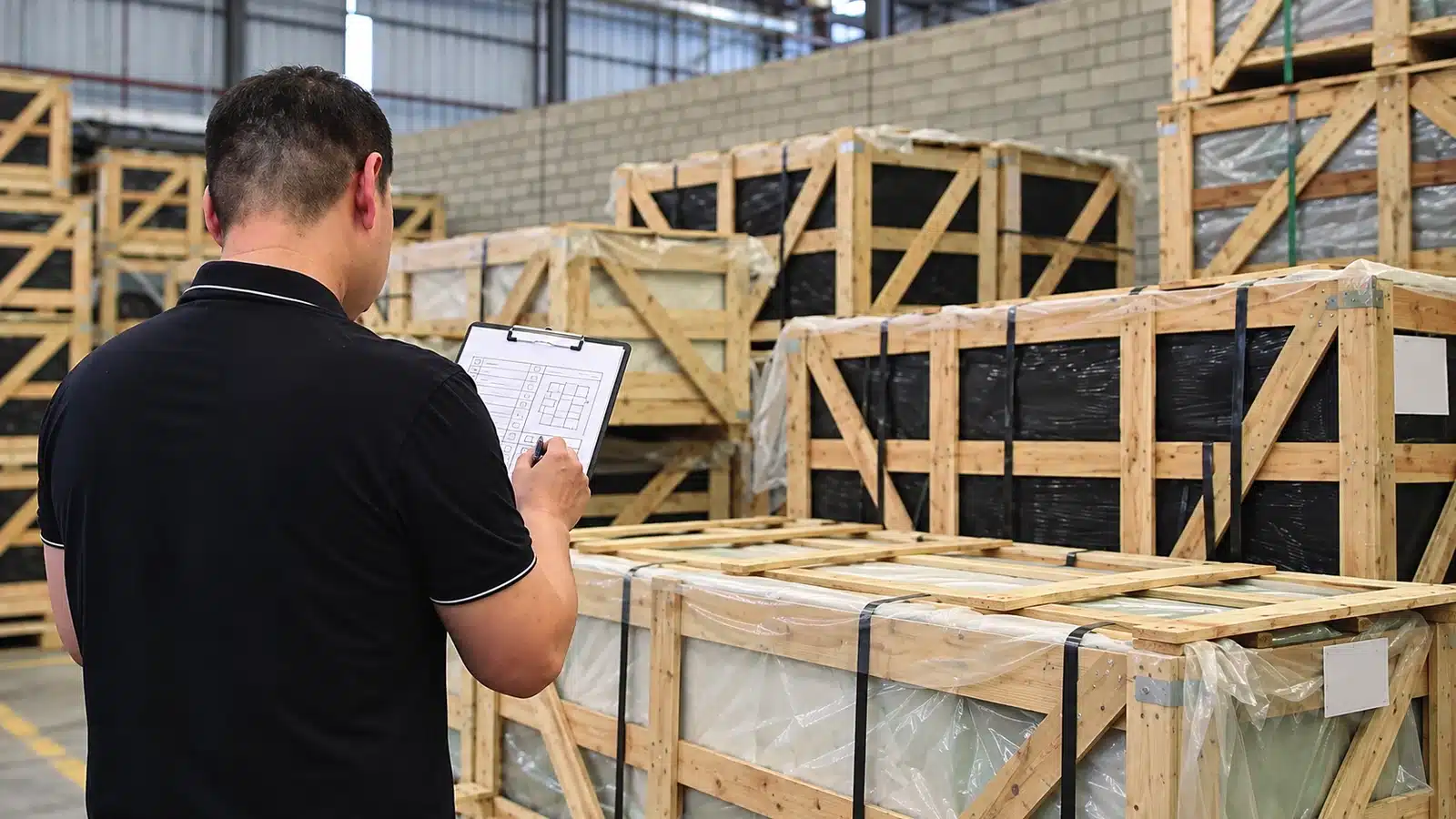
How to define a lot, record an approved sampling plan, inspect representative units and document a release decision
An AQL sampling plan for building materials defines how a project team will select a sample from an identified lot, count agreed defects and apply acceptance or rejection numbers taken from the contract or the applicable sampling standard. It supports a consistent lot decision without inspecting every unit. A passing result does not prove that every unit is defect free, and it does not replace mandatory testing, engineering review, certificates or complete checks of critical characteristics.
Use this guide with the project specification, approved submittals and Skyland Building’s building material quality control hub. The downloadable workbook records the plan and the observed result. It intentionally does not reproduce ISO sampling tables; enter the code letter, sample size and decision numbers from the licensed standard or approved inspection instruction that governs the lot.
Written by Winston
Project Director at Skyland Building · 10+ Years of Building Materials Experience
Updated September 2026 · 17-minute read
Key Takeaways
- Define each inspection lot by product identity, factory, batch or production run, specification and traceability reference.
- Agree the counting basis, defect classes, inspection level, sampling scheme and decision numbers before viewing the goods.
- Use a representative selection method that reaches different packages, pallet positions, production periods and lot locations.
- Keep critical, major and minor counts separate and apply the contractually approved rule to each class.
- Treat laboratory tests, regulated characteristics and safety related checks as separate controls when the project requires them.
- Record the original result even when the supplier sorts, repairs or replaces goods, then define the basis for reinspection.
- Use the Excel workbook as an inspection record and decision aid, not as a substitute for the applicable standard or professional judgment.
What an AQL Sampling Plan Means
AQL means acceptance quality limit in ISO 2859-1. The standard organizes lot by lot inspection by attributes into sampling schemes indexed by AQL. The AQL is an index used with the scheme and its operating characteristics. It should not be presented as a guarantee that an accepted lot contains no more than that percentage of defective units.
A practical plan connects commercial identity to the inspection decision. It states what constitutes the lot, which requirements will be checked, how the sample will be selected, how defects will be counted, which table entries control the decision and who may release or hold the goods. The pre shipment inspection checklist explains how this sampling record fits with identity, quantity, packaging, documentation and shipment controls.
Terms Used in an AQL Plan
| Term | Meaning in the inspection plan | What the team must record |
|---|---|---|
| Inspection lot | Units presented together for one acceptance decision | Product, supplier, factory, batch, quantity and traceability boundary |
| Inspection level | The selected relationship between lot size and sampling effort | General or special level specified by the approved instruction |
| Code letter | The table result that leads to a sample size and plan | Letter taken from the applicable standard and edition |
| Sample size n | Number of units selected for the stated plan | Planned quantity, actual inspected quantity and selection method |
| Acceptance number Ac | Highest observed count accepted under that plan | Separate value for each defect class or counting basis |
| Rejection number Re | Observed count that rejects or escalates the lot | Separate value and defined action for each class |
| Counting basis | Whether the plan counts nonconforming units or nonconformities | One consistent rule, including treatment of multiple defects on one unit |
Attributes and Variables
Attribute inspection records a defined outcome such as conforming or nonconforming, damaged or undamaged, or correct or incorrect. Variable inspection records a measured value such as thickness, moisture content, coating thickness or dimensional deviation. The downloadable workbook is designed for attribute based lot decisions and can store measured observations as evidence. A variables sampling plan requires its own approved method and should not be improvised from the attribute worksheet.
When Sampling Is Suitable
Sampling is most defensible when the lot contains comparable units, each unit can be identified, defects can be stated objectively and the selection can represent the lot. It is commonly used for repeatable manufactured items, incoming deliveries and final random inspections.
Use another control when every item is unique, the shipment combines unlike batches, a test destroys expensive items, the characteristic is safety critical, or a code or project specification requires complete verification. Custom facade elements, one off stone pieces and regulated assemblies may need individual review, traceable test specimens or engineering acceptance in addition to any sampled check.
Define the Inspection Basis
Build a Homogeneous Lot
Group units only when their differences are unlikely to change the inspection result. Useful boundaries include product code, model, factory, material grade, dimensions, finish, production date, batch, heat number, shade or caliber, purchase order line and delivery phase. Do not combine several categories merely because they share one container or invoice.
Connect the lot to the current drawing, specification, schedule and approved appearance reference. The material sample approval process explains how an identifiable sample controls finish decisions without being treated as proof of every technical property.
Define Defects Before the Inspection
Write each defect as an observable departure from a requirement. Critical defects may affect safety, legal compliance, identity or fundamental performance. Major defects may prevent installation, impair intended function or require substantial rework. Minor defects generally affect workmanship or appearance without materially impairing use. These descriptions are planning categories, not universal definitions. The contract must state the actual classification and consequence.
State how multiple findings on one sample unit will be counted. One project may count each nonconforming unit by its highest severity. Another may count individual nonconformities. Mixing those bases after inspection changes the meaning of Ac and Re and invalidates the comparison.
Freeze the Standard and Scheme
Record the standard, edition, inspection level, single or other sampling plan, and the starting inspection severity before selecting units. ISO 2859-1:2026 includes normal, tightened, reduced and skip lot arrangements with switching rules for continuing series of lots. Reduced, tightened or skip lot inspection should follow the applicable conditions and history. It should not be selected informally to make one isolated shipment easier or harder to pass.
If the contract cites another national or customer standard, use that document and its stated edition. When the purchase order and a project specification conflict, obtain an authorized clarification before the inspection. The inspector should not resolve the conflict by choosing the more convenient table.
Build the Sampling Plan Step by Step
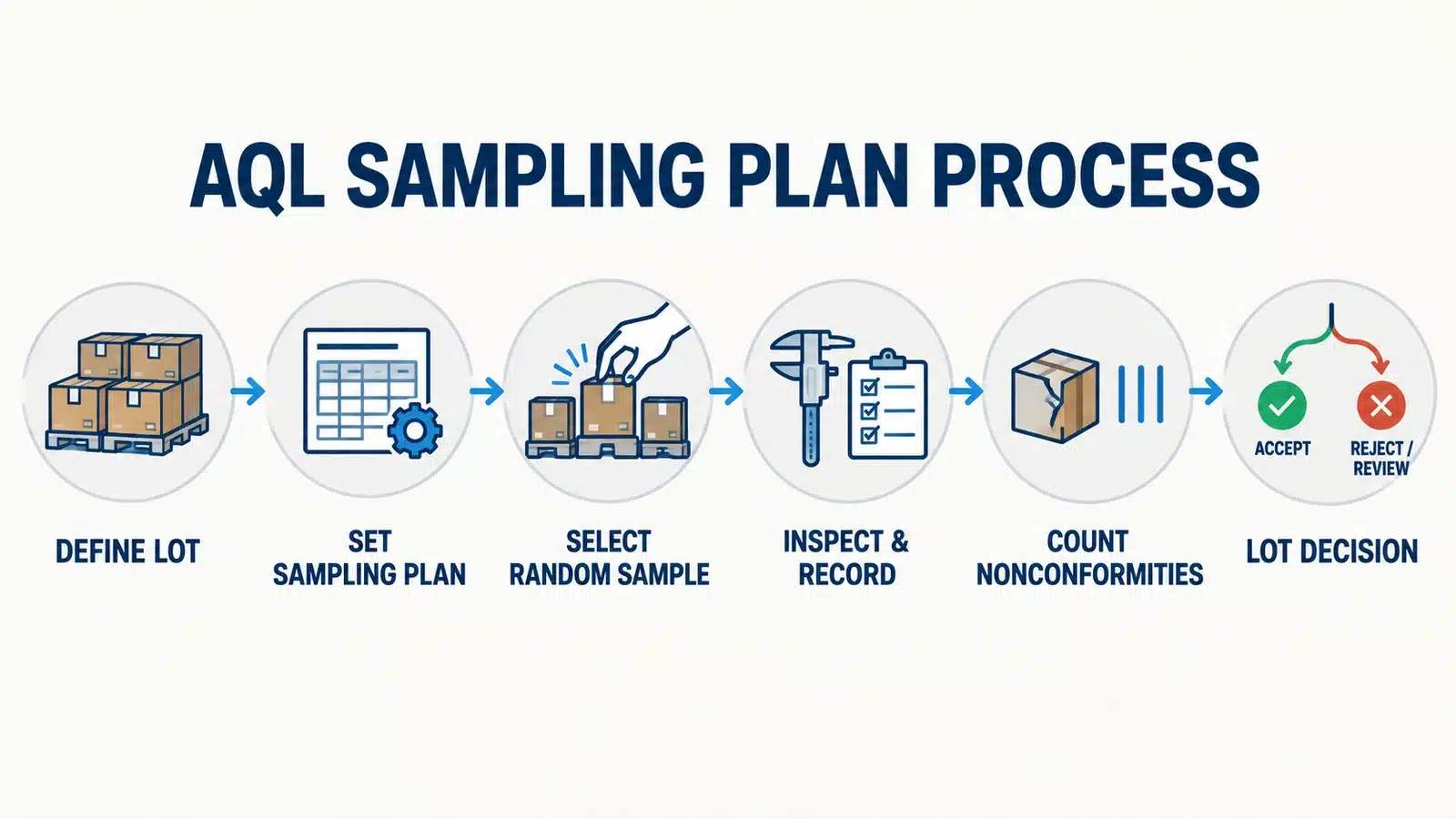
- Identify the decision. State whether the inspection supports factory release, shipment release, receiving acceptance or another controlled stage.
- Define the lot. Record product identity, quantity, supplier, factory, batch, production period and every reason for separating units into different lots.
- Freeze the references. List the current purchase order, drawings, specifications, approved samples, test requirements and prior approved deviations.
- Set defect classes and the counting basis. Describe critical, major and minor conditions in observable terms and state how multiple defects on one unit are counted.
- Enter the approved sampling inputs. Use the applicable licensed standard or written inspection instruction to record the inspection level, code letter, sample size, AQL index where used, and Ac and Re values.
- Select representative sample units. Spread the selection across the accessible lot and record package, pallet, batch or unit references so another person can reconstruct the draw.
- Inspect and decide. Count each class separately, preserve measurements and photographs, identify missing evidence, calculate the sampled result and obtain the authorized release or hold decision.
Select Samples Across the Lot
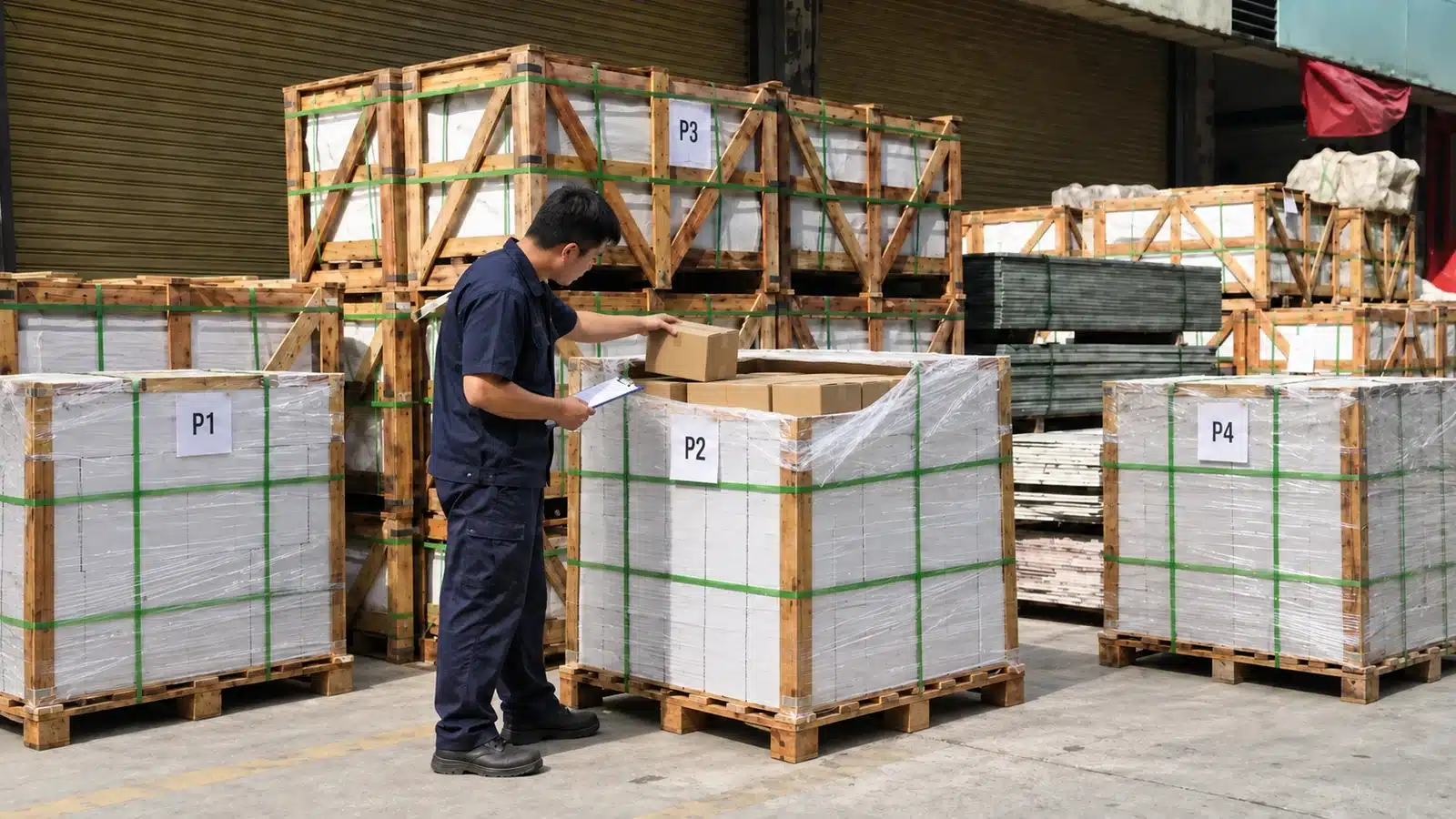
Avoid selecting only front cartons, open packages, top pallet layers or units chosen by the supplier. A documented draw can cover different pallet positions, cartons, production times or serial ranges. If part of the lot is inaccessible, record the limitation and decide whether the presented quantity can support the planned inspection.
Worked Building Material Example
Illustrative example only. The values below demonstrate the workbook logic. They are not copied from an ISO table and must not be used to select a real inspection plan.
A shipment presents 600 glazed tiles from one factory, size, shade, caliber and production batch. The approved inspection instruction states a single sample of 50 units. It counts nonconforming units by the highest observed defect class and gives the following decision numbers.
| Defect class | Illustrative Ac | Illustrative Re | Observed count | Sampled result |
|---|---|---|---|---|
| Critical | 0 | 1 | 0 | Pass |
| Major | 2 | 3 | 2 | Pass |
| Minor | 5 | 6 | 4 | Pass |
The sample meets all three illustrative count rules. However, the specification also requires a lot linked water absorption report, and that report is still missing. The workbook therefore records the sampled result as Pass but the authorized lot decision as Hold pending evidence. This distinction prevents an AQL count from overriding a separate technical requirement.
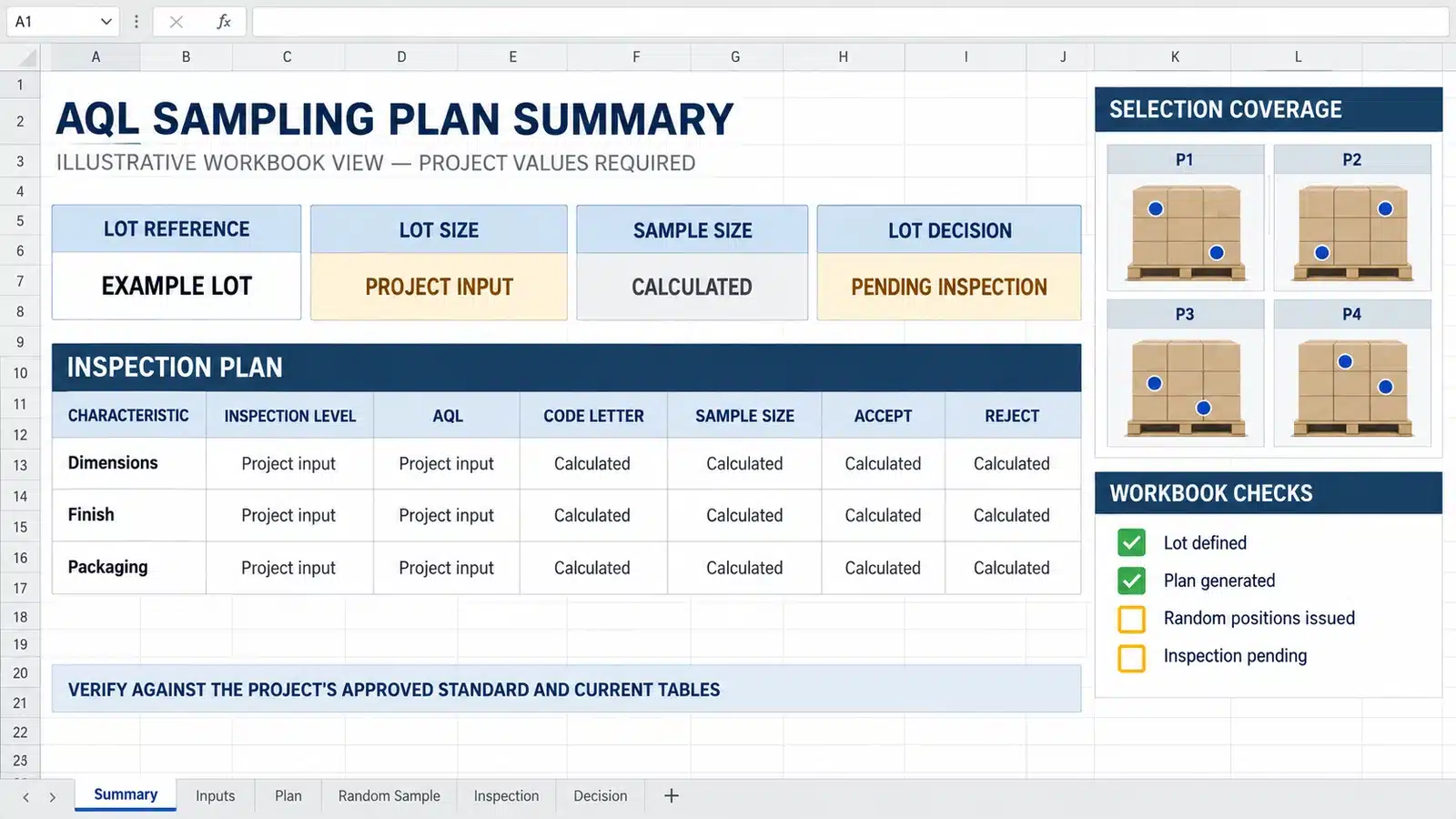
Download the AQL Sampling Plan Excel Template
The workbook supports up to 25 lots and 500 sampled units. It separates approved plan inputs from inspection observations and keeps the calculated sampled result separate from the authorized project decision.
- Summary with planned samples, logged samples, defect counts, class decisions and overall calculated status by lot.
- Lot Plan for project identity, lot definition, governing standard, scheme, inspection level, code letter, sample size, AQL indices, Ac and Re values, references and authorization.
- Inspection Log with one row per sampled unit, traceability fields, critical, major and minor counts, evidence references and duplicate sample warnings.
- Defect Catalog with editable prompts for windows, cabinetry, tile, stone, sanitary ware, metals, glass, finishes, documents and packing.
- Instructions with workflow, status definitions, copyright boundary and authoritative references.
Direct Excel download with no email requirement. Enter sampling values from the approved contract or licensed standard. Delete the clearly marked training example before using the workbook for a live inspection.
How to Use the Excel Workbook
- Read Instructions and confirm whether the workbook is suitable for the agreed attribute sampling plan.
- Delete the training example from Lot Plan and Inspection Log, then enter one unique Lot ID for each inspection lot.
- Copy the approved sample size, AQL index where applicable, and Ac and Re numbers from the governing contract or licensed standard. Do not ask the workbook to choose those values.
- Record one sampled unit per Inspection Log row and keep the Lot ID and Sample No combination unique.
- Enter critical, major and minor counts using the stated counting basis. Add objective observations, measurement values and evidence references.
- Review Summary for incomplete sampling, duplicate records, threshold results and lots requiring manual review.
- Record the authorized disposition in Lot Plan. A calculated Pass does not release the lot while tests, documents or other hold points remain open.
Translate Requirements Into Inspection Checks
Identity Dimensions and Appearance
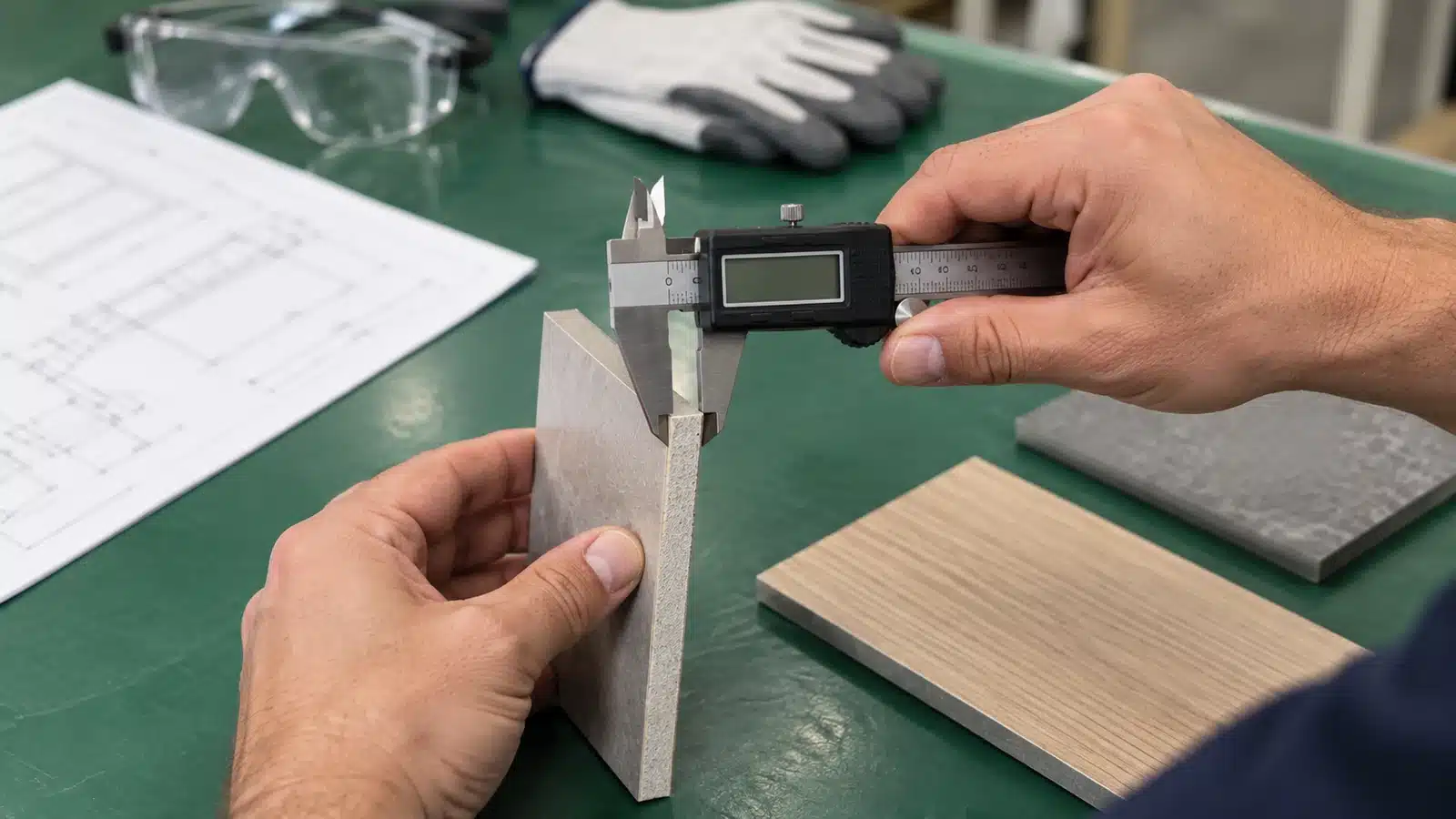
Check product code, model, material, grade, dimensions, handing, finish and required accessories against the controlled schedule. Dimensions need nominal values, tolerances, measurement points and a suitable instrument. Appearance criteria should state viewing conditions, approved range and unacceptable damage rather than using undefined labels such as good quality.
For aluminum window and door systems, sample records can connect opening marks to frame condition, glass identity, hardware operation, seals, drainage details, finish and packaging. Product specific performance still depends on the exact configuration and applicable reports.
Documents and Performance Evidence
A certificate or test report should identify the product, manufacturer, batch or configuration, method, result, issue date and limitations. Record missing or mismatched documents as open findings. A visual pass cannot replace a required mechanical, fire, water, thermal, acoustic, emissions or durability result.
Use the building material ITP template to connect the sampled check with review, witness and hold points across procurement and production. For wider site activities, the construction quality control checklist provides a project specific record structure for materials and completed work.
Photographs and Traceability
Photograph the unit in context, then add a close view and a scale or instrument when size matters. Record the unit, carton, pallet, batch, heat, serial or room reference used to find the sample again. Keep the original inspection evidence when corrected goods are re-presented.
Apply the Plan by Product Category
The sampling logic can be consistent while the unit, defect definitions and evidence change by product. The examples below are prompts only. Replace them with the approved requirement for the specific material and destination.
| Category | Possible sampling unit | Representative checks | Controls outside ordinary AQL counting |
|---|---|---|---|
| Tile and stone | Piece, carton, crate or slab | Size, thickness, shade, edge, crack, chip, finish, marking and packing | Approved range, dry lay review, strength or absorption tests where specified |
| Windows and doors | Opening assembly, frame, sash or package | Dimensions, configuration, glass identity, finish, operation, hardware, seals and labels | Engineering criteria, system test applicability and interface approval |
| Cabinetry | Cabinet, panel, door, drawer or room set | Dimensions, substrate, edge, finish, drilling, joints, hardware and package marks | Approved drawings, emissions evidence, appliance and service interfaces |
| Sanitary ware | Fixture, fitting, carton or coordinated set | Model, finish, dimensions, surface, operation, accessories and protective packing | Water or electrical requirements, test reports and plumbing compatibility |
| Metals and fasteners | Member, bundle, piece or batch | Grade marking, dimensions, coating, corrosion, weld appearance, thread and labels | Mill certificates, heat traceability, mechanical tests and engineering review |
| Glass and facade items | Pane, panel, crate or elevation lot | Type, thickness, dimensions, edgework, coating, markings, damage and crate identity | Safety classification, structural review, heat treatment and system testing |
For finish and machining controls, the custom cabinetry and wardrobe category shows how room and cabinet marks connect drawings, materials, hardware and packages. For model and accessory checks, the sanitary ware systems category links fixture schedules to finishes, service interfaces and room based packing.
Make the Acceptance Decision
Compare Each Class Separately
Compare observed critical, major and minor counts with the approved Ac and Re numbers for that class. Do not offset a critical defect with a low minor count or average all classes into one score. When the plan provides an intermediate or continue sampling instruction, follow the governing scheme rather than forcing a binary result.
Keep Other Hold Points Visible
A sampled Pass can coexist with missing documents, failed laboratory evidence, incomplete quantity, damaged packing or an unresolved approved sample issue. Record these conditions separately and keep the lot on Hold when the contract requires closure. The building materials packing and labeling guide covers the protection and identification checks that follow the product decision.
Control Reinspection and Corrective Action
When a lot fails, preserve the original result and state whether the supplier will sort, repair, replace, retest or submit a corrective action. Define the new lot boundary and reinspection basis before sampling again. A supplier statement is not closure. Record evidence of implementation and the party authorized to accept the disposition.
Common AQL Sampling Mistakes
- Calling AQL the maximum defect percentage guaranteed in an accepted lot.
- Copying one AQL value across structural, regulated, functional and decorative characteristics.
- Choosing the inspection level, sample size or defect class after defects have been observed.
- Combining unrelated products, factories, grades, shades or batches into one convenient lot.
- Letting the supplier present only accessible or favorable units for inspection.
- Mixing counts of nonconforming units with counts of individual nonconformities.
- Treating normal, tightened, reduced or skip lot inspection as interchangeable choices for one isolated delivery.
- Using a sampled visual result to override a failed or missing mandatory test.
- Deleting the original failure after sorting, repair, replacement or reinspection.
- Allowing a formula based Pass to become shipment release without the authorized project decision.
How Skyland Supports Inspection and Packing
Skyland Building’s inspection and packing service coordinates agreed checks against identified order information, records product and quantity findings, and connects the confirmed status with product appropriate protection, labels and the next logistics handover. The exact scope, sampling basis, inspection timing and decision authority must be agreed for each project.
For multi category packages, the project material coordination service can keep drawings, BOQs, product schedules, finish references, approvals and supplier updates connected to the same item and lot references used in inspection records. Skyland does not replace the project team’s engineering, statutory or contractual approval responsibilities.
Frequently Asked Questions
What does AQL mean in a building material inspection
AQL means acceptance quality limit. In ISO 2859-1 it indexes a sampling scheme used for lot by lot inspection by attributes. It is not a guarantee that every uninspected unit conforms.
What AQL should be used for building materials
There is no single value for all building materials. The buyer and relevant technical parties should define defect classes and acceptance rules from product risk, contract requirements, supplier history and the consequences of failure.
Does General Inspection Level II always apply
No. A project may specify a general or special level under the governing standard. The choice affects sampling effort and risk and should be approved before inspection.
Can critical defects use zero acceptance
They can when the approved plan states Ac 0 and Re 1 or another explicit zero acceptance rule. Do not infer that rule from the word critical alone.
Can AQL replace laboratory testing
No. AQL can support an attribute based lot decision, but it does not replace tests, certificates, engineering review or regulatory checks required by the project.
What if the sample passes but documents are missing
Record the sampled result and the document gap separately. Keep the lot on Hold when the missing evidence is a release requirement.
What happens after an AQL failure
Identify and contain the affected lot, preserve the original record, agree the disposition and define the basis for sorting, replacement, corrective action and any reinspection.
Does the workbook choose the sample size
No. The workbook records the sample size, AQL indices and Ac and Re values taken from the contract or applicable licensed standard. It then compares logged results with those approved inputs.
Conclusion
A defensible AQL sampling plan begins with a homogeneous lot and approved decision rules. It then links representative sample units, objective defect counts and supporting evidence to a clearly authorized disposition. Keep statistical acceptance in its proper role. Required tests, engineering decisions, regulatory evidence and critical characteristic checks remain separate controls.
To prepare an order specific inspection scope, send Skyland your BOQ or product schedule together with the project location, purchase order, approved drawings, specifications, sample references, proposed lot structure, required tests, packing requirements and delivery timing.
Authoritative References
ISO 2859-1 2026 Sampling procedures for inspection by attributes provides AQL indexed single, double and multiple sampling schemes for lot by lot inspection by attributes and includes switching and skip lot provisions. Use an authorized copy of the applicable standard.
NIST Engineering Statistics Handbook Choosing a Sampling Plan explains the relationship among AQL, inspection level, lot size, code letter, plan type and switching rules.
NIST Engineering Statistics Handbook Operating Characteristic Curves explains producer and consumer risks and the probability of acceptance for a stated sampling plan.