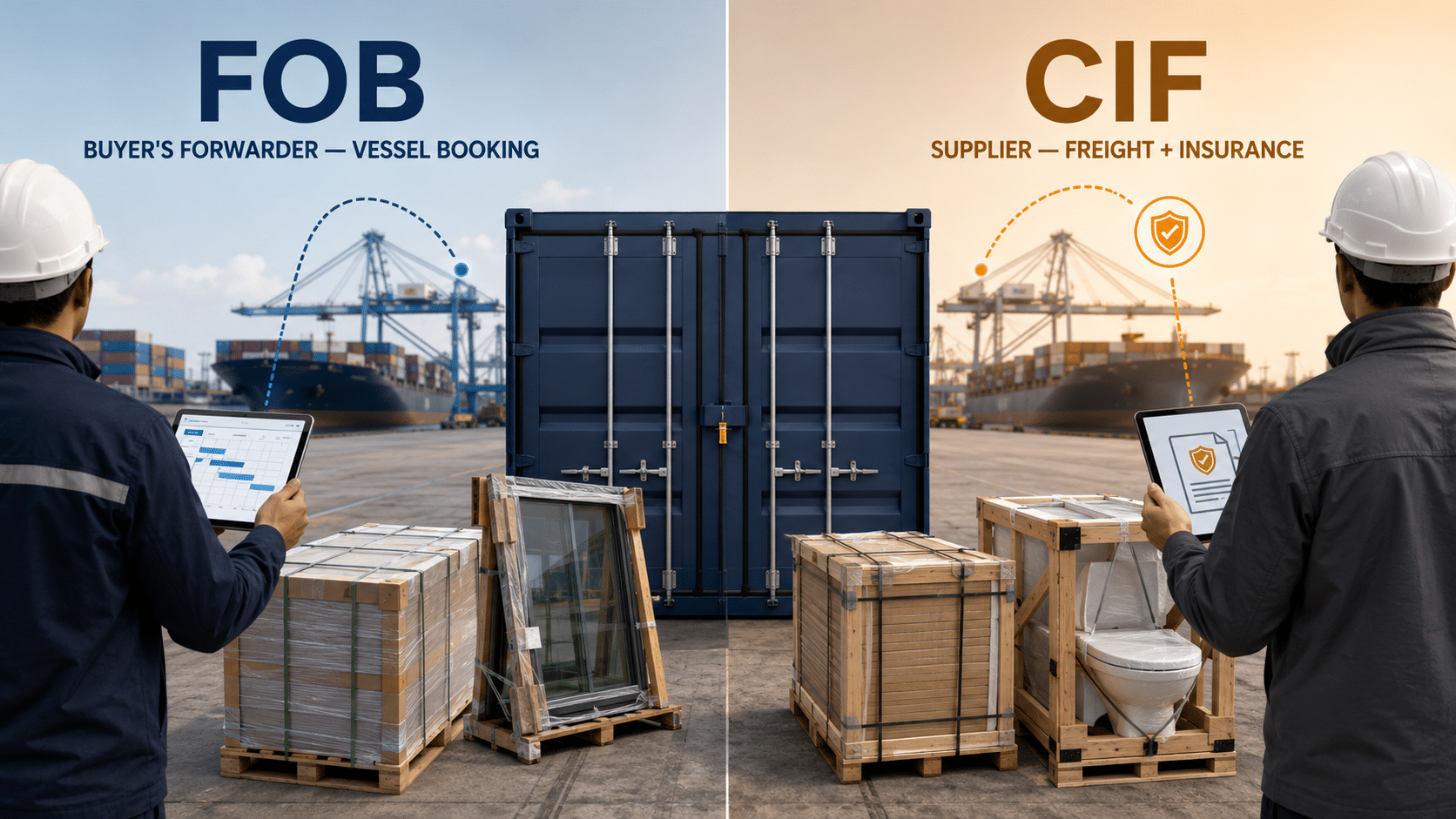
A practical buyer’s guide to cost, risk, insurance, port charges, container terms, and contract wording for imported project materials
Quick answer: FOB gives the buyer control of the main ocean carriage, while CIF requires the seller to contract and pay for freight and minimum cargo insurance to the named destination port. The critical point is that risk does not stay with the CIF seller until arrival. Under both FOB and CIF, risk normally transfers when the goods are on board the vessel at the port of shipment. Choose only after comparing the same packed scope, named ports, destination charges, insurance, schedule, and total landed cost.
The FOB vs CIF decision is not simply a choice between a lower supplier price and an easier shipping quote. For tiles, stone, windows, doors, cabinets, sanitary ware, lighting, furniture, and other project materials, the term affects who books the vessel, who pays the main freight, who arranges insurance, when risk transfers, and how much control the buyer has over routing and documentation. It does not replace a complete sales contract or a cargo-specific logistics plan.
Scope note: This guide uses the Incoterms® 2020 rules and focuses on port-to-port sea or inland-waterway shipments. FOB and CIF are not rules for air, road, rail, or general multimodal transport. Most building materials move in containers, so the later section also explains when FCA or CIP may describe the actual handover more accurately. Confirm the final term with the official ICC rules, your freight forwarder, cargo insurer, customs broker, and contract adviser.
Written by Winston
Project Director at Skyland Building · 10+ Years of Building Materials Experience
Updated August 2026 · 26-minute read
Key Takeaways
- Risk transfers at origin under both terms. FOB and CIF normally transfer risk when the goods are on board the vessel at the agreed port of shipment, not when the ship reaches the destination.
- The freight payer is different. The FOB buyer contracts and pays the main carriage. The CIF seller contracts and pays freight to the named destination port.
- CIF includes insurance, but only a minimum default. The buyer should review the clauses, insured amount, deductible, exclusions, claim route, and whether the cover suits fragile or high-value building materials.
- Neither term is normally door-to-door. Import clearance, duties, taxes, local delivery, site unloading, and many destination charges remain with the buyer unless the contract separately states otherwise.
- Incoterms® rules do not decide title or product quality. Ownership, payment, specifications, inspection, defects, delay, warranty, and remedies need separate contract clauses.
- Containerized cargo needs a mode check. When the seller hands a sealed container to a terminal or first carrier before it is on board, FCA or CIP may be more accurate than FOB or CIF.
FOB vs CIF at a Glance
| Comparison point | FOB | CIF |
| Full name | Free On Board | Cost, Insurance and Freight |
| Permitted transport mode | Sea or inland waterway only | Sea or inland waterway only |
| Delivery and normal risk-transfer point | Goods are on board the buyer-nominated vessel at the named port of shipment | Goods are on board the vessel at the port of shipment |
| Who contracts main carriage | Buyer | Seller |
| Who pays ocean freight | Buyer | Seller, to the named destination port |
| Cargo insurance obligation | No seller obligation; buyer normally arranges cover if required | Seller obtains minimum cover for the buyer’s risk |
| Export formalities | Seller | Seller |
| Import formalities and duties | Buyer | Buyer |
| Main practical difference | Buyer controls carrier, routing, and freight procurement | Seller manages freight procurement and minimum insurance |
Technical basis: ICC Incoterms® 2020. The named destination in CIF identifies where the seller must pay carriage, not where risk transfers.

The Point Most Buyers Miss: CIF Risk Does Not Stay With the Seller
CIF has two different locations in one transaction. The first is the delivery point at origin, where the goods are placed on board and risk normally transfers to the buyer. The second is the named destination port, to which the seller must contract and pay freight and insurance. The seller therefore pays farther than the point at which it carries risk.
Example: A contract states CIF Port of Los Angeles, California, USA, Incoterms® 2020, with Yantian identified as the port of shipment. The seller pays ocean freight and qualifying insurance to Los Angeles. However, once the goods are on board at Yantian, the buyer normally bears transit risk and would use the insurance document to pursue a covered loss.
Risk is also different from title. The original draft stated that title passes to the buyer under FOB and used title to decide who bears a sea-loss. Incoterms® rules do not determine ownership. The sales contract and applicable law must state when title passes, while the selected Incoterms® rule allocates delivery risk, specified costs, tasks, and formalities.
Payment, product compliance, approved samples, dimensions, finish, quality inspection, late delivery, defects, warranties, and remedies are also outside the limited job of an Incoterms® rule. Put those requirements into the purchase contract, technical schedules, inspection plan, and claim procedure.
What FOB Means for a Building Materials Importer
Under FOB, the supplier delivers the goods on board the vessel nominated by the buyer at the agreed port of shipment. The seller completes export formalities and bears the costs and risk required to reach that delivery point. The buyer contracts the main carriage and takes risk after delivery.
Seller Responsibilities Under FOB
- Provide the contracted goods, commercial invoice, and other agreed evidence of conformity.
- Check, pack, mark, and label the goods as required by the sales contract and transport method.
- Move the cargo to the named port of shipment and complete applicable export formalities.
- Deliver the goods on board the buyer-nominated vessel at the agreed place, point, and time.
- Notify the buyer that delivery has occurred and provide agreed shipping information and documents.
Buyer Responsibilities Under FOB
- Nominate the carrier or vessel and provide the seller with timely booking and loading instructions.
- Contract and pay for the main ocean carriage from the port of shipment.
- Arrange cargo insurance from the risk-transfer point if cover is required.
- Handle transit and import formalities assigned to the buyer, including duties and taxes.
- Pay destination charges, inland delivery, storage, unloading, and site handling unless separately included.
When FOB Usually Fits
FOB often suits an experienced importer with a reliable freight forwarder, direct access to competitive freight rates, and a need to control carrier selection or sailing schedules. It can also support multi-supplier projects when the buyer’s logistics partner coordinates consolidation, documents, container allocation, and destination delivery.
FOB control is valuable only when the buyer’s team can use it. A late vessel nomination, missed cut-off, incomplete booking instruction, or poorly coordinated consolidation can create origin storage, rebooking, and delay. Review the broader building-material transport process before treating FOB as an automatic cost-saving choice.
What CIF Means for a Building Materials Importer
Under CIF, the seller delivers the goods on board at the port of shipment, contracts and pays for carriage to the named destination port, and obtains the insurance required by the rule for the buyer’s transit risk. The buyer still takes risk at origin and remains responsible for import formalities.
Seller Responsibilities Under CIF
- Provide, check, pack, mark, and export-clear the contracted goods.
- Deliver the goods on board at the port of shipment within the agreed period.
- Contract and pay for carriage to the named port of destination.
- Obtain cargo insurance meeting the minimum CIF requirement unless broader cover is agreed.
- Provide the buyer with the agreed transport and insurance documents needed to receive the goods or claim from the insurer.
Buyer Responsibilities Under CIF
- Accept that risk normally transfers when the cargo is on board at the shipment port.
- Review the insurance certificate or policy instead of assuming all damage is covered.
- Complete import clearance and pay duties, taxes, and other import costs.
- Pay destination unloading or terminal charges not included in the seller’s carriage contract.
- Arrange local transport, storage, site access, unloading, inspection, and any covered-loss claim.
Why CIF Is Not Door-to-Door Delivery
The destination named in a CIF quotation is a port, not automatically the project site. CIF does not by itself include customs brokerage, duties, taxes, port storage, demurrage, detention, chassis or truck delivery, crane or forklift unloading, or delivery into the building. Some destination handling may be prepaid through the seller’s carriage contract, but other charges may be collected from the buyer or consignee. Obtain the carrier or destination agent’s written charge schedule before comparing CIF with FOB.
CIF can reduce the buyer’s booking workload for a straightforward port-to-port shipment. However, the seller normally selects and contracts the carrier unless the contract gives the buyer approval rights. Ask for the carrier, service, routing, transshipment plan, quote validity, expected schedule, destination agent, free-time assumptions, insurance evidence, and a list of charges excluded from the price.
FOB vs CIF Responsibilities by Shipment Stage
| Shipment stage | FOB | CIF | Buyer verification |
| Product checking, packing, marking | Seller | Seller | Approved specification, packing standard, labels, and evidence |
| Factory-to-port movement and export clearance | Seller | Seller | Named port, export documents, and schedule |
| Terminal handling and loading on board | Seller bears costs needed to deliver on board | Seller bears costs needed to deliver on board | Confirm actual carrier and terminal charge allocation |
| Main ocean carriage | Buyer contracts and pays | Seller contracts and pays to named destination port | Carrier, route, surcharges, validity, and transit assumptions |
| Cargo insurance | No seller obligation; buyer normally arranges | Seller obtains minimum cover for buyer’s risk | Clauses, amount, currency, deductible, exclusions, and claim rights |
| Risk during ocean transit | Buyer after delivery on board | Buyer after delivery on board | Exact shipment port, delivery evidence, and policy inception |
| Destination unloading and terminal charges | Buyer | Buyer unless included in seller’s carriage contract | Destination agent’s itemized local-charge sheet |
| Import clearance, duty, and tax | Buyer | Buyer | HS codes, permits, customs valuation, broker, and payment timing |
| Inland delivery, site unloading, and storage | Buyer unless separately contracted | Buyer unless separately contracted | Truck type, access, lifting, appointment, storage, and receiving plan |
Charge note: Incoterms® rules allocate specified costs, but the seller’s contract of carriage can affect which destination unloading or handling charges are prepaid. Obtain the actual booking and local charge schedule rather than relying on a generic table.
Are FOB and CIF the Right Terms for Containerized Building Materials?
FOB and CIF are maritime rules built around delivery on board a vessel. Most project materials, however, are stuffed into containers at a factory or consolidation warehouse and handed to a carrier or container terminal before the vessel is loaded. The seller may no longer control the container during the gap between terminal handover and on-board loading.
The ICC therefore indicates that FCA is typically more appropriate than FOB when goods are containerized. See the ICC Academy comparison of FCA and FOB. If the seller is to pay carriage and insurance for containerized or multimodal cargo, CIP may fit better than CIF and has a broader default insurance requirement under Incoterms® 2020.
- Review FCA instead of FOB when a sealed container is delivered to the buyer’s carrier at the factory, consolidation warehouse, inland terminal, or port terminal.
- Review CIP instead of CIF when the seller should pay freight and insurance and the movement includes truck, rail, terminal, and ocean legs.
- FOB or CIF may remain natural for bulk, breakbulk, or other cargo delivered directly on board, or when the parties deliberately choose the on-board point and understand the operational mismatch.
- Consider a D rule separately when the commercial intention is for the seller to bear risk to a named destination place. DAP, DPU, and DDP create different obligations and should not be selected without checking import, tax, unloading, and local-registration constraints.

Build an Apples-to-Apples Landed Cost Comparison
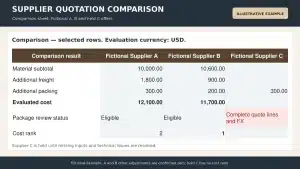
The cheaper quotation is not necessarily the cheaper import. Normalize both offers to the same product specification, quantity, packing, shipment window, container type, ports, service level, and destination assumptions. Then add every cost required to bring the materials to the site.
FOB landed cost = FOB product price + buyer-booked freight + cargo insurance + destination charges + customs clearance + duties and taxes + inland delivery + unloading, storage, and project risk allowances.
CIF landed cost = CIF product price + destination charges not included in the carriage contract + customs clearance + duties and taxes + inland delivery + unloading and storage + any insurance upgrade or uncovered risk allowance.

Ocean freight is only one part of total landed cost; origin, destination, customs, inland, and site costs must also be mapped.
| Cost item | FOB comparison | CIF verification | Evidence to request |
| Product and customization | Included in FOB price | Included in CIF price | Comparable BOQ, specifications, quantity, and exclusions |
| Export packing and labels | Confirm inclusion | Confirm inclusion | Packing method, materials, dimensions, weights, and package list |
| Origin inland and export costs | Seller to on-board delivery | Seller to on-board delivery | Named shipment port and written inclusions |
| Ocean freight and surcharges | Buyer forwarder quote | Embedded in CIF price | Carrier, service, route, validity, equipment, and surcharge basis |
| Insurance | Buyer policy quote | Minimum seller-arranged cover | Policy or certificate, clauses, amount, deductible, and exclusions |
| Destination terminal and documents | Buyer quote | May be partly prepaid or collected | Destination agent’s itemized local-charge sheet |
| Customs broker and inspections | Buyer | Buyer | Broker quotation, permits, examination, and document assumptions |
| Duties and taxes | Buyer | Buyer | HS classification and local customs calculation |
| Demurrage, detention, and storage risk | Buyer exposure | Buyer exposure at destination | Free time, daily rates, clearance plan, and contingency |
| Inland delivery and site handling | Buyer | Buyer | Truck, chassis, permits, access, crane/forklift, unloading, and storage |
| Damage, shortage, and replacement allowance | Buyer contract and insurance strategy | Buyer contract and insurance strategy | Inspection, spares, claims, replacement lead time, and responsibility |
Freight rates and carrier surcharges change. Record the quote validity, rate basis, container equipment, sailing assumption, peak-season or congestion surcharges, currency, and payment timing. Customs value, duty base, and tax treatment vary by jurisdiction, so use the destination customs broker’s calculation rather than a supplier estimate as the final answer.
Insurance for Fragile and High-Value Building Materials
CIF requires the seller to obtain insurance, but the default level under Incoterms® 2020 is minimum cover comparable to Institute Cargo Clauses (C). That default was designed around maritime commodity trade and may not match the loss patterns of glass, tiles, sanitary ware, stone, finished cabinetry, doors, lighting, or furniture. A CIF label is not proof that breakage, scratching, moisture, theft, partial loss, or every handling event is covered.
The official ICC summary confirms that CIF retains the minimum Clauses (C) default while parties may agree on broader cover. Review ICC’s Incoterms® 2020 insurance explanation and have a qualified cargo broker or insurer confirm what the actual policy covers for the route and products.
Insurance Questions to Resolve Before Shipment
- Which Institute Cargo Clauses or equivalent wording applies, and what extensions are included?
- What is the insured amount and currency, and who can make a direct claim?
- When does cover begin and end across factory, consolidation, terminal, sea, and inland legs?
- What deductible, exclusions, packing conditions, and notice deadlines apply?
- Are breakage, scratching, chipping, water damage, theft, partial loss, transshipment, and general average addressed?
- Which surveyor, carrier notices, photos, package records, and original documents will a claim require?
- Who pays an upgrade if the project requires broader cover than the CIF minimum?
Under FOB, bind the buyer’s insurance no later than the agreed risk-transfer point. Under CIF, obtain and review the insurance document before shipment or document release. In both cases, a cargo policy addresses covered transit loss; it does not replace the supplier’s obligations for specification, manufacturing quality, agreed packing, shortage, or pre-shipment damage.

Packaging, Container Loading, and Evidence
An Incoterms® rule does not provide a complete packing specification. The purchase contract should define material-specific protection, packed sizes and weights, package labels, handling limits, loading method, and inspection evidence. Insurance may respond to a covered event, but it cannot make weak packaging or a poor loading plan acceptable.
- Tiles and stone: confirm pallet or crate design, edge and surface protection, stacking limits, moisture protection, batch identification, and safe weight distribution.
- Glass and glazed assemblies: confirm engineered support or A-frame requirements, separators, restraint, lifting points, orientation, and no-load zones.
- Cabinets, doors, and furniture: protect faces, corners, hardware, glass, finished edges, and loose accessories; label packages to match rooms or installation zones.
- Sanitary ware and lighting: use component-specific cushioning and separation, retain model and quantity labels, and prevent heavy products from loading fragile cartons.
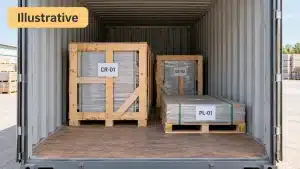
- Container evidence: record empty-container condition, loading sequence, blocking and bracing, package count, seal number, loading photos, and the final packing list.
The buyer should receive enough evidence to connect the approved product to the packed package and the sealed container. For high-risk shipments, define inspection hold points and whether an independent inspector must verify quantity, packaging, loading, seal, and document consistency.

Which Term Should You Choose?
There is no universal winner. The better term is the one that assigns each task to the party with the stronger capability, creates a transparent total cost, and matches the actual cargo handover. Use the following matrix as a screening tool, not as a substitute for route-specific advice.
| Project situation | Usually points toward | Reason | Critical check |
| Experienced importer with a trusted forwarder | FOB, or FCA for containers | Buyer can control carrier, freight, schedule, and insurance | Origin handover, booking instructions, and forwarder capability |
| Several suppliers need consolidation | FOB/FCA under buyer logistics control | One forwarder can coordinate warehouse, loading, and documents | Consolidation responsibility, cargo compatibility, and cut-off |
| One supplier and a simple port-to-port shipment | CIF may simplify booking | Seller combines freight and minimum insurance in the price | Carrier, route, insurance, destination charges, and local agent |
| Fragile or high-value custom materials | Either, with upgraded insurance and packing | The product risk matters more than the three-letter term alone | Coverage, exclusions, packing, surveys, spares, and replacement plan |
| Containerized or multimodal movement | Review FCA or CIP | Risk can transfer when the container reaches the first carrier or terminal | Actual handover point and transport document |
| Buyer wants seller risk to a destination or site | Neither FOB nor CIF | Both normally transfer risk at origin | Review an appropriate D rule and local import constraints |
| Schedule-critical project in a volatile freight market | Whichever party has better carrier access and accountability | Reliable execution may matter more than the initial rate | Booking rights, quote validity, routing, contingency, and delay allocation |
Decision rule: First decide where delivery and risk should transfer. Then assign freight to the party best able to manage it, insure the buyer’s actual exposure, and compare the final site-delivered cost.
A 7-Step FOB or CIF Selection Process
- Map the real transport chain. Identify the factory, consolidation point, export terminal, port of shipment, destination port, customs point, inland route, and site.
- Define the packed cargo. Confirm package count, dimensions, gross weight, fragility, stackability, special handling, and whether the load is FCL, LCL, breakbulk, or another method.
- Check whether the term matches the mode. Use FOB/CIF only for intended maritime delivery on board; review FCA/CIP for containers or multimodal handover.
- Request comparable quotations. Use the same specification, packing, quantity, shipment window, container, named ports, Incoterms® edition, and service assumptions.
- Build the landed-cost model. Add origin, freight, insurance, destination, customs, tax, inland, unloading, storage, damage, delay, and replacement exposure.
- Review control and claims. Confirm carrier selection, routing, insurance, loading evidence, document flow, survey, damage notice, and claim responsibilities.
- Write the agreement precisely. State the chosen rule, exact named port or point, Incoterms® 2020, separate shipment-port data for CIF where needed, and all contract obligations not governed by the rule.

Contract Wording and Shipping Documents
Avoid vague wording such as FOB China or CIF USA. The contract should name the port and, where possible, the exact terminal or point. It should also identify the applicable edition because commercial habits and domestic uses of FOB can differ from the ICC rule.
Illustrative FOB wording: FOB Yantian Port, Shenzhen, China, Incoterms® 2020. Add the exact terminal or loading point when it is known.
Illustrative CIF wording: CIF Port of Los Angeles, California, USA, Incoterms® 2020. The sales contract should also identify the agreed port of shipment and shipment schedule so the delivery and risk point is clear.
These examples are formatting illustrations, not route recommendations. Confirm official port names, terminal requirements, booking practice, and local import rules for the actual shipment.
What the Purchase Contract Should Add
- Product scope, drawings, dimensions, materials, finishes, quantities, tolerances, and approved samples.
- Packing method, labels, packed data, handling restrictions, container plan, and evidence requirements.
- Delivery period, booking notices, vessel or carrier data, permitted transshipment, and document deadlines.
- Freight inclusions, surcharges, quote validity, destination charges, free time, and excluded services.
- Insurance clauses, insured amount and currency, claimant, deductible, exclusions, extensions, and policy delivery.
- Inspection stages, acceptance criteria, nonconformity process, shortage, damage, and replacement responsibilities.
- Payment milestones, title transfer, governing law, force majeure, delay, warranty, limitation, and dispute terms.
Common Shipment Documents
The final list depends on the goods, origin, destination, carrier, payment method, and customs requirements. A typical project may use a commercial invoice, packing list, bill of lading, certificate of origin where required, CIF insurance policy or certificate, export or import permits, inspection records, loading photos, container seal record, wood-packaging evidence where applicable, and product-specific technical documents. Confirm the exact list with the carrier, customs broker, bank, insurer, and project team before shipment.
Common FOB and CIF Mistakes to Avoid
- Assuming the CIF seller bears transit risk until the destination port.
- Using title or payment timing to explain Incoterms® risk transfer.
- Describing FOB delivery at the vessel’s rail instead of when goods are on board.
- Using FOB or CIF for air, road, rail, courier, or general multimodal shipments.
- Writing FOB China or CIF USA without an exact named port and Incoterms® edition.
- Comparing an FOB product price with a CIF price without adding the same destination and site costs.
- Assuming every destination charge is included in CIF freight.
- Assuming minimum CIF insurance is all-risk cover suitable for fragile finished materials.
- Letting the Incoterms® term stand in for packing, inspection, quality, title, payment, or warranty clauses.
- Choosing FOB only because it looks cheaper without confirming the buyer’s forwarder capability and booking responsibilities.
- Choosing CIF only because it looks easier without reviewing the carrier, routing, local agent, insurance, and excluded fees.
- Failing to create a receiving and claim procedure before the container arrives.
FOB vs CIF Import Checklist
Before Requesting Quotations
- Issue one controlled BOQ and specification to every bidder.
- Confirm packed dimensions, weights, package count, fragility, and container method.
- Identify shipment port, destination port, final site, and required-on-site date.
- Confirm whether the cargo is actually delivered on board or first handed to a carrier or terminal.
- Ask the destination customs broker about import documents, HS classification, duties, taxes, and restrictions.
Before Signing the Purchase Order
- Compare FOB and CIF on the same scope, ports, Incoterms® 2020 edition, and validity period.
- Obtain the buyer forwarder’s complete FOB freight and destination quote.
- Obtain the CIF carrier, service, route, destination agent, and local-charge schedule.
- Review insurance clauses, insured amount, deductible, exclusions, and claim rights.
- Write packing, inspection, loading evidence, seal, and document requirements into the contract.
- State title, payment, quality, delay, defects, shortage, damage, replacement, and dispute terms separately.
Before Shipment
- Approve final products, quantities, packaging, labels, and packing list.
- Verify the booking, vessel or carrier, cut-off, routing, expected schedule, and consignee data.
- Bind FOB insurance or obtain and review the CIF insurance document before risk transfers.
- Record container condition, loading sequence, bracing, package count, and seal number.
- Check invoice, packing list, bill of lading instructions, origin documents, and other required records for consistency.
At Destination
- Track arrival, document release, customs clearance, free time, truck booking, site access, and unloading resources.
- Inspect the container, seal, package count, external condition, and visible damage before or during unloading where practicable.
- Record damage, shortage, wet packages, broken seals, and exceptions immediately with dated photos and written notices.
- Follow the carrier, insurer, supplier, and contract claim procedures within the required time limits.
How Skyland Supports Building Material Shipments
Skyland Building supports international project buyers with coordinated material sourcing, specification review, production follow-up, quality checks, export packing, consolidation where practical, loading coordination, and shipping communication. Buyers can begin with the complete sourcing guide or review role-specific support for contractors and builders.
- Review drawings, BOQ, product schedules, quantities, destination, and required delivery stages.
- Prepare quotations with the agreed Incoterms® rule, named port, packing scope, and stated exclusions.
- Coordinate product-specific packing, labels, packing lists, and pre-shipment evidence.
- Work with the buyer’s nominated forwarder under an agreed buyer-controlled shipment.
- Coordinate seller-arranged freight when it is expressly included in the confirmed commercial scope.
- Support loading records, shipping documents, and communication needed for receiving preparation.
Service boundary: Skyland’s exact responsibility depends on the confirmed quotation and contract. Skyland does not replace the ICC rulebook, carrier, freight forwarder, cargo insurer, customs broker, local tax adviser, engineer, or legal counsel. The buyer should have the appropriate professionals approve the final Incoterms® rule, import eligibility, customs treatment, insurance, route, and site delivery plan.
Planning an import? Send Skyland your drawings or BOQ, product list, packed or estimated quantities, destination country and port, target delivery date, and preferred Incoterms® option. The first step is to define a comparable scope and identify missing logistics information before confirming the price.
Frequently Asked Questions
What is the main difference between FOB and CIF?
Under FOB, the buyer contracts and pays for the main ocean carriage. Under CIF, the seller contracts and pays for freight and minimum insurance to the named destination port. Under both, risk normally transfers when the goods are on board at the port of shipment.
Which is cheaper, FOB or CIF?
Neither is always cheaper. Compare the same goods and packing, then add freight, insurance, destination charges, customs, duties and taxes, inland delivery, unloading, storage, and risk allowances. A lower quotation can produce a higher final site cost.
Does CIF include import customs clearance, duties, and taxes?
No. Under CIF, the buyer is responsible for import formalities, duties, and taxes. The buyer should also confirm destination terminal, document, storage, and inland charges because CIF is not automatically door-to-door.
Who bears the risk if cargo is damaged at sea under CIF?
The buyer normally bears the risk after the goods are delivered on board at the port of shipment. The CIF seller arranges qualifying insurance so the buyer or another insured party can pursue a covered loss. Contract claims for defective goods or non-compliant packing are separate questions.
Does FOB include cargo insurance?
FOB does not require the seller to insure the cargo. Because the buyer takes risk after on-board delivery, the buyer normally arranges cover from that point through the intended destination.
Can FOB and CIF be used for container shipments?
They are maritime rules and are widely quoted for containers, but the ICC indicates that FCA is typically more appropriate than FOB when the seller hands the container to a terminal before on-board loading. Review CIP when the seller should pay freight and insurance for a containerized or multimodal movement.
Is CIF better for a first-time importer?
CIF may reduce booking work, but it does not remove the need to manage risk, insurance review, import clearance, destination charges, local delivery, and receiving. A first-time buyer should compare a full FOB forwarder quote with an itemized CIF offer before deciding.
What destination charges can appear under CIF?
Depending on the carriage contract and port, the buyer may face terminal handling, document or release fees, storage, demurrage, detention, customs examination, broker fees, and inland delivery costs. Request an itemized local-charge sheet from the destination agent.
Can the Incoterms® rule be changed after the order is placed?
Yes, if both parties agree, but the change can affect price, booking, insurance, documents, payment terms, and customs data. Record it through a formal contract or purchase-order amendment before shipment.
How should FOB or CIF be written in a purchase order?
State the three-letter rule, exact named port or point, and edition, for example FOB [named port of shipment], Incoterms® 2020, or CIF [named port of destination], Incoterms® 2020. Also specify the shipment port for CIF and separately define packing, insurance, documents, schedule, and destination charges.
Conclusion
For importing building materials, the FOB vs CIF choice should follow the actual delivery point, logistics capability, cargo risk, and total landed cost. FOB gives the buyer main-carriage control; CIF makes the seller pay freight and minimum insurance to the destination port. Both normally pass risk at origin. Define the named place precisely, check whether a container term such as FCA or CIP fits better, and use a complete contract for everything the three-letter rule does not cover.
Next Steps for Your Project
Topic hub: Shipping & Delivery Guides
Relevant product pages: Custom Cabinetry · Aluminum Windows & Doors · Luxury Sanitary Ware Systems
Related guides: Consolidated Shipping for Building Materials · Transporting Construction Materials
Related service: Consolidation & Shipping