
A practical guide for developers, contractors, architects and homeowners—from supplier verification and technical specifications to quality control, consolidated shipping and project delivery.
Written by Winston
Project Director at Skyland Building · 10+ Years of Building Materials Experience
Updated July 2026 · 14-minute read
Brand note: Skyland Building is a project-focused sub-brand of George House Material, created to support international building projects with coordinated product sourcing, design review, production follow-up, quality control, packing and shipping.
Introduction
Sourcing building materials from China can provide access to a broad manufacturing base, flexible customization and competitive project pricing. However, a successful order depends on much more than finding the lowest quotation. Buyers must align architectural drawings, local building requirements, technical specifications, samples, production schedules, inspections, packaging and international logistics before goods leave the factory.
This guide explains how to source building materials from China through a controlled, step-by-step process. It is written for villa, apartment, hotel and commercial projects that may involve several product categories, including windows and doors, kitchen cabinets, wardrobes, tiles, sanitary ware, stairs, lighting, furniture, flooring, stone and soft furnishings.
Key Takeaways
- Prepare architectural drawings, a BOQ and destination-market requirements before requesting final quotations.
- Compare suppliers using the same specification sheet rather than comparing unit prices alone.
- Verify factory capability, relevant test documentation, production capacity and similar-project experience.
- Approve physical samples, finishes and shop drawings before mass production begins.
- Link payment milestones to documented production progress and pre-shipment inspection results.
- Plan packaging, container consolidation and site delivery around the construction schedule.
- Use one coordinated project team when multiple product categories must fit together on site.
Why Source Building Materials from China?
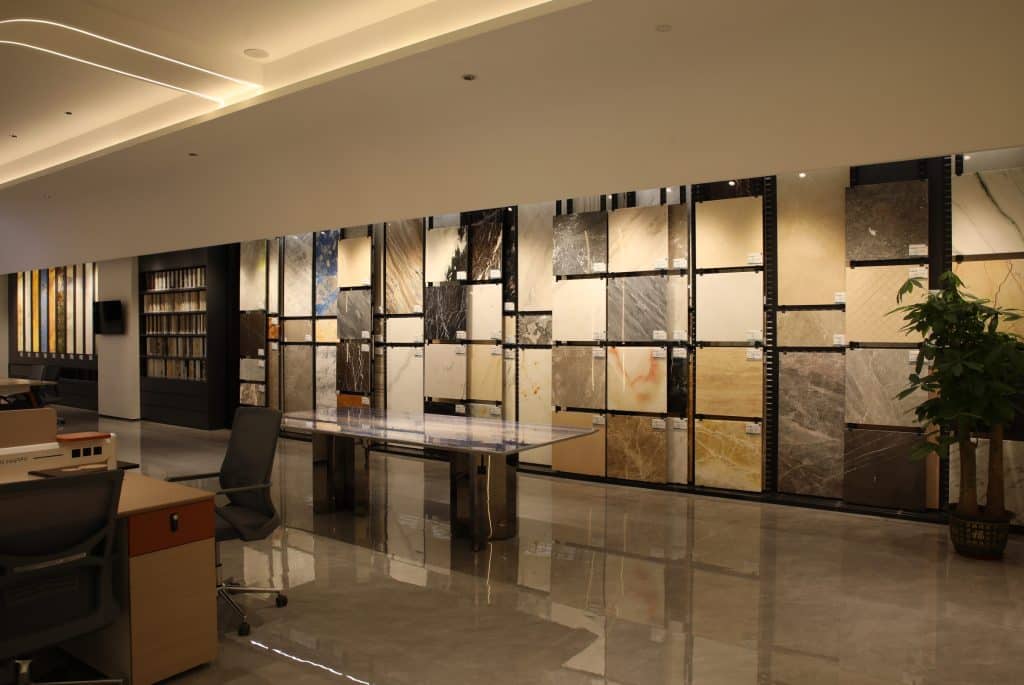
China has established manufacturing clusters for most architectural and interior product categories. Guangdong is especially strong in ceramics, furniture, cabinetry, sanitary ware, aluminum systems and architectural hardware, while other regions have developed expertise in steel, glass, flooring, stone and prefabricated components. Working within these manufacturing ecosystems can shorten supplier search time and simplify access to supporting materials and components.
The main advantage is not simply lower cost. International buyers can combine design flexibility, production capacity and a wide selection of finishes within one sourcing program. This is particularly useful for projects that require coordinated colors, dimensions and installation interfaces across several categories.
Important: A supplier’s standard product should never be assumed to comply automatically with your local building code. Required performance and documentation must be confirmed by the project architect, engineer, local consultant or relevant authority before ordering.
What Building Materials Can Be Sourced?
Common project categories include:
- Aluminum windows, sliding doors, folding doors, entrance doors and glass systems
- Kitchen cabinets, wardrobes, vanities and other custom joinery
- Porcelain tiles, natural stone, sintered stone and wall finishes
- Sanitary ware, faucets, shower systems and bathroom accessories
- Wood flooring, stairs, balustrades and architectural metalwork
- Lighting, switches, sockets and smart-control products
- Loose furniture, curtains, rugs, wall panels and decorative finishes
Buyers can review Skyland’s coordinated building material product categories to understand how multiple products can be planned within one project scope.
Step-by-Step Building Materials Sourcing Process

1. Prepare drawings and a preliminary BOQ
Provide architectural plans, elevations, room schedules and a bill of quantities where available. If quantities are not final, identify the project stage and clearly mark items that require supplier take-off or design development.
2. Define technical and compliance requirements
List dimensions, materials, finishes, hardware, performance ratings, installation conditions and destination-country requirements. Product specifications should be detailed enough for every bidder to quote the same scope.
3. Shortlist suitable manufacturers
Select factories based on product specialization, project scale, export experience, production capacity, documentation and similar-project references—not only quoted price.
4. Request comparable quotations and samples
Issue the same inquiry package to shortlisted suppliers. Ask them to separate product price, optional items, tooling, packaging, inland transport, taxes and international freight where applicable.
5. Review samples and finish schedules
Evaluate physical samples for color, texture, material grade, edge quality and construction. Record every approved sample with a code, date and signed reference so that it can be checked against production.
6. Approve shop drawings and interfaces
Confirm opening sizes, cabinet modules, appliance clearances, stair connections, tile layouts, plumbing points and other interfaces. Approved shop drawings should become the production reference.
7. Confirm contract and payment milestones
The purchase agreement should define scope, specifications, approved samples, lead time, inspection requirements, packaging, Incoterm, warranty and remedies for non-conforming goods.
8. Monitor production
Request regular progress updates tied to measurable milestones. Complex custom products may require checks at raw-material, assembly, finishing and packing stages.
9. Inspect, label and consolidate
Complete pre-shipment inspections before releasing the final balance. Products should be labeled by building, floor, room or installation zone and then consolidated according to the loading plan.
10. Ship and prepare for site delivery
Coordinate export documents, customs requirements and arrival dates with the local broker and construction program. Installation drawings and packing lists should reach the site team before the container arrives.
How to Find and Verify Suppliers
Check factory capability, not only company profiles
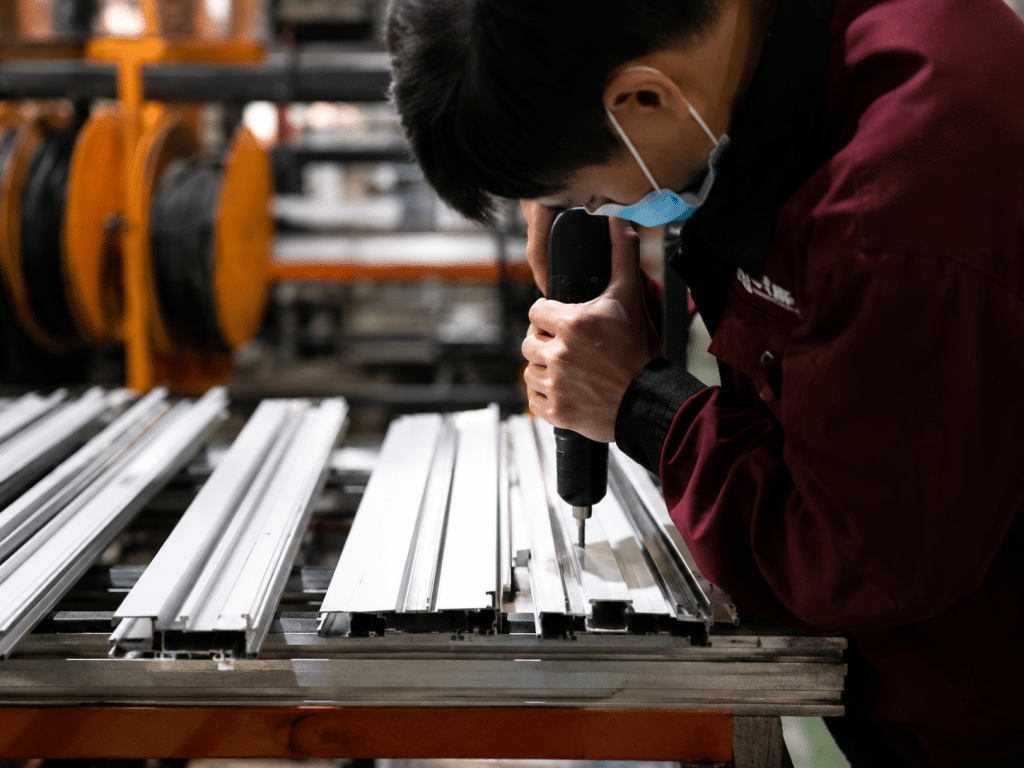
Request business registration information, factory location, production-line details, quality-control procedures, typical monthly capacity and references for comparable projects. A trading company can still provide value when it has strong technical and coordination capabilities, but its role should be transparent. For custom products, confirm which facility will actually manufacture the order.
Use digital platforms and factory visits for different purposes
B2B platforms and online directories are useful for building an initial supplier list. Trade shows, showroom visits and factory inspections provide stronger evidence of material quality, production organization and management capability. For high-value or highly customized categories, a physical visit or independent factory audit is worth considering before a major deposit is paid.
Watch for early warning signs
- Technical questions are answered vaguely or repeatedly redirected to price.
- The supplier cannot provide relevant test reports or explain which standard was used.
- The quotation changes frequently without a documented specification change.
- Production lead times appear unrealistic for the level of customization.
- Company bank details do not match the contracting entity.
- The supplier refuses reasonable sample, drawing or inspection procedures.
Samples, Specifications and Shop Drawings
Physical samples are one of the most reliable ways to evaluate color, texture, finish and construction before production. Digital images can support communication, but screen color and lighting are not reliable enough for final approval of stone, wood veneer, tile glaze, fabric or painted metal.
Every approved finish should be recorded in a finish schedule. Natural materials may also require range samples, slab photographs, batch confirmation or vein mapping because one small sample cannot represent all natural variation.
| Document | Primary purpose | What to verify |
| Architectural drawings | Define openings, spaces and interfaces | Latest revision, dimensions and site conditions |
| BOQ / quantity schedule | Define product scope and quantities | Unit, quantity, inclusions and exclusions |
| Technical specification | Define material and performance | Thickness, grade, finish, hardware and test criteria |
| Finish schedule / sample record | Control visual consistency | Sample code, supplier, date and approval status |
| Shop drawings | Convert design into manufacturing details | Dimensions, interfaces, tolerances and installation |
| Purchase agreement | Bind commercial and technical obligations | Price, lead time, inspection, packing and warranty |
Quality Control and Local Compliance
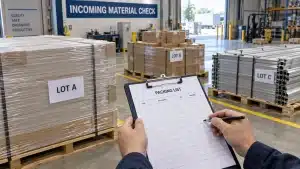
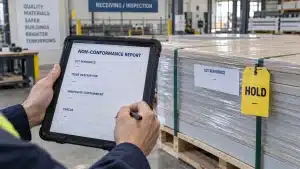
Quality control should be planned before production, not added at the end. The inspection standard, acceptable tolerances, sample references and reporting format should be written into the order documentation. Depending on the product, checks may include dimensions, material grade, surface finish, color consistency, hardware, assembly, functional testing, quantities, labels and packaging.
Required documentation varies by destination and product. It may include CE marking, ASTM test reports, ISO management-system certificates, AS/NZS reports or product-specific fire, structural, thermal, acoustic, water-efficiency or electrical compliance documents. These terms should not be treated as interchangeable: ASTM usually refers to standards or test methods, CE is an EU conformity marking, and ISO may relate to either management systems or technical standards.
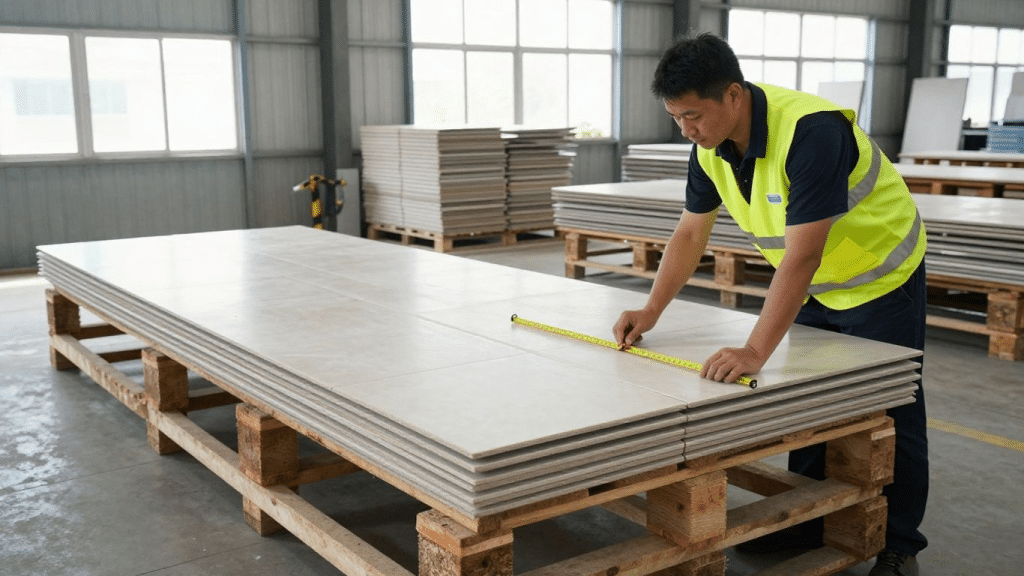
Dimensional inspection should be completed against approved specifications before packing and final payment.
Pre-shipment inspection checklist
- Product type, model, dimensions and quantity
- Material, color, finish and approved-sample match
- Hardware brand, configuration and operating function
- Surface defects, edge quality and assembly accuracy
- Accessories, spare parts and installation components
- Package strength, moisture protection and internal cushioning
- Room or zone labels, packing-list references and crate numbers
- Loading sequence, container condition and loading photographs
Pricing, Payment Terms and Financial Risk
The lowest unit price is rarely the lowest landed project cost. Compare quotations using the same scope and include packaging, inland transport, inspection, bank charges, freight, insurance, import duties, customs fees, local delivery and potential installation costs. Differences in hardware, material thickness or finish grade can make apparently similar quotations fundamentally different.
Telegraphic transfer (T/T) is common and often uses a deposit followed by milestone or balance payments. The specific structure should reflect order value, customization and risk. Corporate bank details must match the contracting entity, and any change to payment information should be verified through an independent communication channel.
Letters of credit can provide additional documentary control for large orders, but they increase cost and administrative complexity. Whatever payment method is selected, final balance payment should be connected to agreed documentary milestones and satisfactory inspection results rather than an informal production update alone.
Packaging, Consolidation and International Shipping
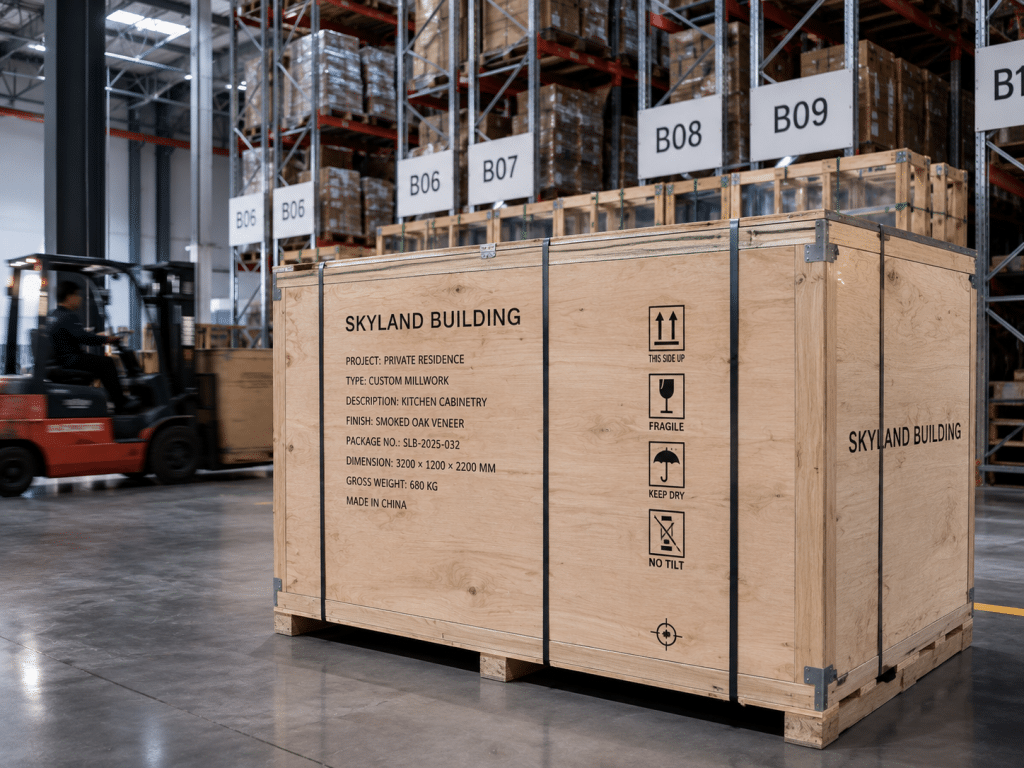
Building materials require category-specific packaging. Large stone or glass may need reinforced A-frames; cabinetry and interior wood products need moisture protection and corner reinforcement; sanitary ware and lighting require internal cushioning; and long aluminum profiles must be protected from bending and surface abrasion.
- Use reinforced crates or A-frames for heavy slabs, glass and fragile oversized items.
- Add moisture barriers and edge protection for cabinets, doors and flooring.
- Separate finished surfaces with non-abrasive protective materials.
- Label every package by product, room, floor or installation zone.
- Prepare a loading plan that considers weight distribution and unloading sequence.
Full Container Load (FCL) is often more cost-effective and lower risk for large or heavy building-material orders, while Less than Container Load (LCL) may suit smaller shipments. The correct choice depends on cargo volume, weight, handling risk, destination charges and project timing. Consolidating products from several factories can reduce repeated handling and simplify delivery, but the consolidation warehouse must inspect package condition and maintain accurate records.
Incoterms such as EXW, FOB, CIF and DDP determine the division of cost, responsibility and risk between buyer and seller. They do not replace a complete contract. Buyers should also confirm cargo insurance, destination charges, customs duties, product HS codes and import documentation with a qualified freight forwarder or local customs broker.
Common Sourcing Mistakes to Avoid
Requesting quotations before specifications are ready
This produces prices that cannot be compared and usually leads to later variations.
Choosing a supplier on price alone
Lower prices may hide changes in material grade, thickness, hardware, finish, packaging or testing.
Approving production through chat messages only
Final specifications, samples and drawings should be recorded in controlled documents.
Ignoring local compliance until goods are finished
Non-compliant products may fail inspection or require expensive site modifications.
Skipping pre-shipment inspection
Defects are easier and less expensive to correct before final payment and export.
Planning shipping separately from construction
Materials that arrive too early create storage risk; late materials can stop site progress.
Using generic package labels
Unclear identification increases unloading time and the risk of products being installed in the wrong area.
How Skyland Supports Multi-Category Projects
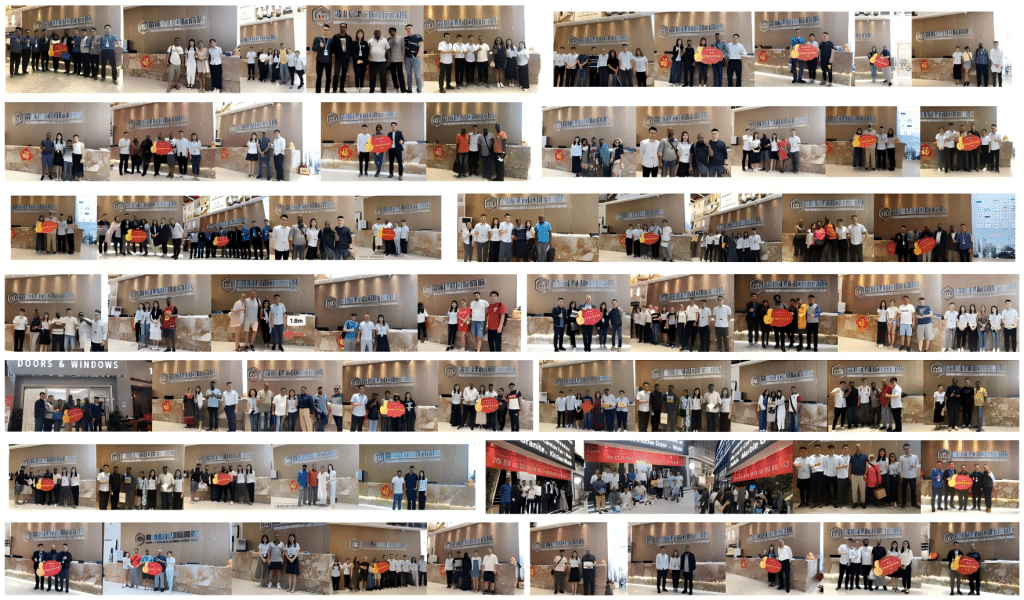
Skyland Building is the project-focused sub-brand of George House Material. The Skyland team supports international clients who need several building-material categories coordinated under one project workflow.
Instead of treating every product as a separate purchase, the team reviews the architectural scope, identifies required information, coordinates supplier quotations, follows sample and drawing approvals, monitors production, organizes inspection and plans consolidated packing and shipping. This approach is especially valuable when dimensions and finishes must coordinate across windows, doors, cabinetry, stone, tiles, sanitary ware, stairs, lighting and furniture.
Typical support can include:
- Architectural drawing and preliminary material-scope review
- Product selection and quotation coordination across categories
- 2D/3D design support and product shop-drawing coordination
- Material sample and finish-schedule management
- Production follow-up and quality inspection coordination
- Package labeling, warehouse consolidation and container planning
- International shipping coordination and remote installation guidance
Review completed global building-material projects to see how different product scopes are applied in villas, apartments and commercial spaces.
Building Materials Sourcing Checklist
| Stage | Confirm before moving forward |
| Inquiry | Latest drawings, BOQ, target products, destination and required timeline |
| Quotation | Same specifications, inclusions, exclusions, Incoterm and lead time |
| Supplier approval | Factory identity, capacity, relevant documentation and references |
| Pre-production | Signed samples, finish schedule, shop drawings and contract |
| Production | Progress reporting, inspection points and change-control records |
| Pre-shipment | Final inspection, quantities, labels, packing and balance milestone |
| Shipping | Loading plan, export documents, insurance, customs and site delivery |
Frequently Asked Questions
What should I prepare before requesting a quotation?
Provide the latest architectural drawings, a preliminary BOQ or material list, destination country, preferred finishes, performance requirements and target schedule. If information is incomplete, clearly identify which items require supplier recommendations or quantity take-off.
How can I compare quotations from different suppliers?
Issue the same specification sheet to every supplier and compare material grade, dimensions, hardware, finish, testing, packaging, lead time, warranty and Incoterm in addition to unit price.
How do I know whether a Chinese supplier is reliable?
Verify the legal entity, manufacturing location, relevant production capability, documentation, similar-project experience, sample quality and willingness to accept reasonable inspection procedures.
How can I make sure tiles, stone or wood match the design?
Approve physical samples and, where needed, range samples, batch photographs, slab layouts or vein mapping. Record approvals in a finish schedule that can be checked during production and inspection.
Do Chinese building materials automatically meet my local code?
No. Compliance depends on the product and destination. Requirements must be confirmed by your architect, engineer, local consultant or authority and then written into the supplier specification.
Is it normal to pay a deposit before production?
Yes, deposits are common for raw-material purchasing and production scheduling. Verify the contracting entity and bank details first, and connect later payments to agreed milestones and inspection results.
Should I use FCL or LCL shipping?
FCL is often suitable for large or heavy orders and reduces repeated handling. LCL can be practical for smaller quantities. Compare total destination cost, volume, weight, damage risk and schedule before deciding.
Can products from multiple factories be shipped together?
Yes. A consolidation warehouse can receive, check, label and load products from several suppliers. Accurate package records and a coordinated loading plan are essential.
When should I avoid placing orders?
Plan carefully around the Lunar New Year and other major factory shutdown periods. Confirm both production and shipping schedules well in advance because material supply, labor and freight capacity may be affected.
Can Skyland provide a preliminary project quotation?
Yes. Send the available drawings, BOQ or product list, destination and expected schedule. The team can identify missing information and coordinate an initial quotation or budget range based on the current project stage.
Conclusion
Successful building-material sourcing is a controlled project process, not a simple product search. Clear specifications, verified suppliers, approved samples, coordinated shop drawings, staged inspections and planned logistics reduce the risk of costly changes after goods reach the site.
For multi-category projects, a single coordination workflow can also prevent gaps between design, manufacturing and installation. This is where a project-focused sourcing partner adds the most value: every supplier may produce its own item, but the finished building must work as one system.
Planning a building project?: Send Skyland your architectural drawings, BOQ or material list. The project team can help review the scope, coordinate quotations, confirm samples and drawings, follow production, organize inspection and plan consolidated international shipping.
Get a Preliminary Project Quote
Next Steps for Your Project
Topic hub: Procurement & Sourcing Guides
Relevant product pages: Custom Cabinetry · Aluminum Windows & Doors · Luxury Sanitary Ware Systems
Related guides: How to Choose a One-Stop Building Materials Supplier · Whole-House Building Materials RFQ
Related service: Project Material Coordination