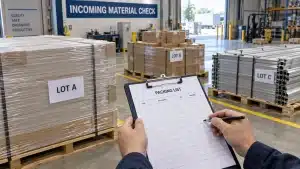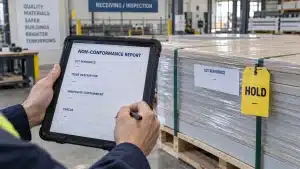

A One-Stop Building Materials Supplier coordinates several material categories and the technical, quality, packing, and delivery tasks that make those categories work together. For a villa, apartment, hotel, or commercial fit-out, the right partner can replace a chain of unrelated purchase orders with one controlled procurement plan. The model is valuable only when the supplier can prove category expertise, design coordination, documented inspections, transparent landed-cost assumptions, and a workable after-sales process.
This buyer’s guide explains what “one-stop” should include, when it is the right sourcing model, how to evaluate a supplier, what to send for a meaningful quotation, and which warning signs to avoid.
Written by Winston
Project Director at Skyland Building · 10+ Years of Building Materials Experience
Updated July 2026 · 14-minute read
Key Takeaways
- Define the supplier’s scope against your drawings and bill of quantities (BOQ); do not accept “we supply everything” as a scope definition.
- Check whether one team can coordinate dimensions, finishes, interfaces, samples, shop drawings, production, quality control, packing, and delivery.
- Verify test reports and certificates against the exact product, configuration, and destination requirements—not a similar model.
- Compare total landed and installed cost, not only the quoted unit price.
- Connect procurement milestones to the construction schedule, especially for custom and long-lead items.
- Agree on inspection evidence, spare quantities, damage reporting, replacements, and installation support before paying the production deposit.
What Is a One-Stop Building Materials Supplier?
A one-stop supplier is a project procurement partner that manages multiple material categories through one coordinated commercial and technical workflow. The company may manufacture some categories directly and manage qualified partner factories for others. What matters is not whether every product comes from one factory; it is whether one accountable team controls specifications, approvals, production status, inspections, packing data, and delivery interfaces across the package.
This is different from a retail store, a catalog broker, or a general contractor. A retailer sells standard products, a broker may introduce factories, and a general contractor manages site construction. A capable integrated supplier sits between the design team, factories, freight partners, and site team so that purchased products fit the drawings and arrive with usable documentation.
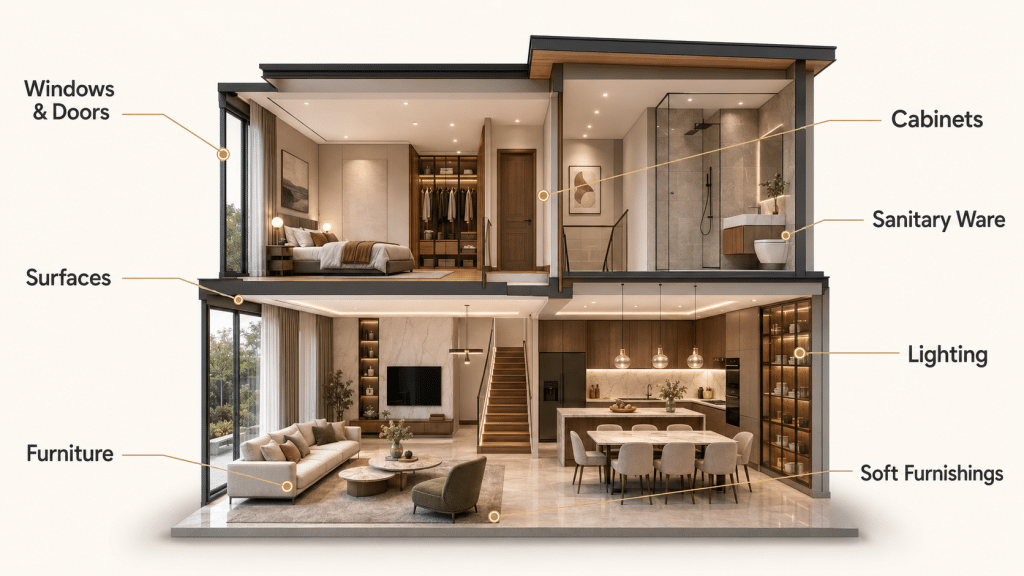
| Project system | Typical categories | Interfaces to confirm |
| Building envelope | Aluminum windows and doors, glazing, entrance systems | Opening sizes, glass build-up, hardware, drainage, finish, local performance requirements |
| Interior joinery | Kitchen cabinets, wardrobes, vanities, interior doors | Site dimensions, appliance clearances, plumbing/electrical points, hardware, finish samples |
| Surfaces and finishes | Tile, stone, wood flooring, wall panels, soft finishes | Substrate, thickness, slip or moisture requirements, shade/batch control, pattern and transitions |
| Fit-out and furnishing | Stairs and railings, sanitary ware, lighting, furniture, soft furnishings | Clearances, voltage and controls, mounting points, dimensions, finish coordination, installation sequence |
Scope boundary: “One-stop” does not automatically include concrete, reinforcement, structural steel, complete MEP systems, appliances, or site installation. Confirm included and excluded categories in writing. Local architects, engineers, contractors, and code professionals still retain their project responsibilities.
When Is One-Stop Sourcing the Right Model?
The model is usually most useful when a project has several interdependent categories and the buyer needs one coordinated procurement plan.
- A new villa, apartment development, hotel, resort, office, restaurant, or full-home renovation with multiple finish and fit-out packages.
- Custom products that must be produced from drawings, such as windows, doors, cabinets, wardrobes, stairs, stone, or fitted furniture.
- An overseas project that needs consolidated communication, inspections, export packing, shipping documents, and phased deliveries.
- A design-led project where colors, materials, hardware, dimensions, and room-by-room selections must remain consistent.
- A buyer who has drawings and a realistic approval process but does not want to manage a large group of separate factories.
When a Specialist or Local Supplier May Be Better
- The requirement is a small quantity of one standard, locally available product.
- A regulated or life-safety package must be supplied or installed by an approved local specialist.
- The project schedule cannot accommodate sampling, shop drawings, customization, international freight, and customs clearance.
- The proposed one-stop partner cannot name a responsible category owner, show technical evidence, or separate assumptions and exclusions in the quotation.
How to Choose a One-Stop Building Materials Supplier: 7 Criteria
A long catalog is not proof of integration. Evaluate how the supplier converts project information into approved, traceable, and deliverable products.
1. Confirm Product Scope and Cross-Category Integration
Start with a scope matrix based on the BOQ, room schedule, door/window schedule, finish schedule, and drawings. Every line should identify the product, quantity, specification status, responsible party, required approval, production lead time, delivery phase, and any interface with another trade.
Then test integration with real examples: Do cabinet dimensions reflect appliance data? Do vanity drawings align with plumbing points? Do floor transitions account for tile and wood thicknesses? Do window openings, glass specifications, hardware, and façade finishes agree? The ability to resolve these interfaces is more important than the number of catalogs a supplier can send.
2. Test Design and Technical Coordination
Ask who reviews drawings, raises requests for information (RFIs), prepares or coordinates shop drawings, tracks revisions, and records approvals. For custom work, the supplier should have a defined design-freeze point: the stage at which dimensions, finishes, hardware, performance requirements, and interfaces are approved for production.
Useful evidence includes sample shop drawings, a finish schedule, a hardware schedule, an approval register, and a revision log with personal or confidential details removed.

3. Verify Samples, Quality Control, and Compliance Evidence
Quality control should begin before mass production. Agree on the approved sample or mock-up, measurable acceptance criteria, inspection stages, photo or video evidence, defect handling, and any third-party inspection requirement. For visible finishes, record color, texture, sheen, grain direction, batch, and allowable variation. For fitted products, record critical dimensions and hardware.
Compliance documents must match the actual product and project requirement. Check the tested model or assembly, size or configuration, issuing laboratory, referenced standard, report date, and scope. A certificate for a similar product is not automatically evidence for the item being purchased. The local design or compliance team should confirm what documentation is required before production.

4. Review Manufacturing Control and Project Management
Request a project organization chart and a milestone schedule. You should know the commercial contact, technical coordinator, category owners, quality-control contact, and logistics contact. For each category, ask whether production is direct or through a partner factory, how factory changes are approved, and how status is reported.
A workable schedule shows approvals, sample confirmation, shop-drawing sign-off, material purchasing, production, inspections, packing, consolidation, booking, and estimated dispatch. It should also identify dependencies and long-lead items rather than giving one unsupported delivery date for the entire package.
5. Compare Total Landed and Installed Cost
A coordinated supplier may reduce management and consolidation costs, but it is not automatically the lowest-priced option. When you source building materials from China, compare quotations on the same specification, quantity, currency, Incoterm, destination, and service scope.
Build a total-cost comparison that includes:
- Base product price, tooling or customization, samples, spare quantities, and category-specific accessories.
- Design or shop-drawing services, inspections, third-party testing, and quality documentation.
- Export packing, inland transport, consolidation, freight, insurance, duties and taxes, customs handling, last-mile delivery, unloading, and storage.
- Installation labor, site modification, wastage, delay risk, and the cost of replacing damaged, incorrect, or non-compliant goods.
The quotation should identify assumptions, exclusions, alternates, payment milestones, quotation validity, and what happens if the drawings or quantities change.
6. Examine Packing, Consolidation, and Delivery Planning
A logistics plan should follow the site sequence, not just factory completion dates. Doors, cabinets, sanitary ware, lighting, stone, and furniture may require different protection, handling, storage, and arrival windows. Consolidate only when products are compatible and the schedule supports it; holding a finished category for months can cancel the freight benefit.
Ask for packaging standards, crate or carton labels, room and product codes, packing lists, gross and net weights, loading photos, container plans, document responsibilities, and procedures for arrival inspection. The site team should be able to trace each package to a room, elevation, opening, or item number without opening every crate.

7. Define After-Sales and Installation Support
Before production, document who answers installation questions, which manuals and drawings will be supplied, how missing or damaged items must be reported, what evidence is required, the response process, and how replacement production and freight are handled. Also agree on spare parts, touch-up materials, hardware lists, and closeout documents.
Remote installation guidance can reduce avoidable mistakes, but it does not replace qualified local installers or local professional supervision. Responsibility for site measurements, substrate readiness, safety, and code-compliant installation must be clearly allocated in the contract.
How the One-Stop Procurement Process Should Work
The exact sequence varies by project, but the control points should be visible before an order is placed.
- Project brief and document review. Share drawings, BOQ, schedules, style references, performance requirements, destination, budget framework, and target dates.
- Scope matrix and RFIs. The supplier identifies included categories, missing information, interfaces, assumptions, exclusions, and long-lead risks.
- Budgeting and preliminary selection. Comparable options are organized by specification, finish, quantity, price basis, and lead time—not only by appearance.
- Samples, mock-ups, and approvals. Physical or controlled digital samples are reviewed, comments are recorded, and selected finishes become the approval reference.
- Shop drawings and design freeze. Critical dimensions, hardware, interfaces, performance details, and finish schedules are approved for production.
- Production and inspections. Milestones, in-process checks, pre-shipment inspections, deviations, corrective actions, and final evidence are documented.
- Packing, consolidation, and shipping. Packages are protected, labeled, recorded, loaded, and dispatched according to the agreed site sequence and shipping terms.
- Arrival, installation support, and closeout. The buyer checks packages promptly, reports issues, uses the supplied technical documents, and closes replacement or spare-part items.
One-Stop Supplier vs. Multiple Suppliers
| Decision area | One coordinated supplier | Multiple specialist suppliers |
| Communication | One project channel and consolidated status reporting | More direct specialist access, but more contacts and follow-up |
| Design interfaces | One team can coordinate cross-category dimensions and finishes | Buyer or consultant must resolve interfaces between vendors |
| Technical depth | Varies by category; category owners must be verified | Potentially stronger depth within each specialist package |
| Quality control | A unified inspection and evidence format is possible | Separate standards, inspectors, and reporting formats may apply |
| Logistics | Potential for phased consolidation and unified packing data | Independent shipments offer flexibility but can multiply bookings and fees |
| Pricing | May reduce duplicated services; unit price may not be the lowest | Competitive category pricing is possible, with higher coordination burden |
| Accountability | One commercial escalation point if the contract is clear | Responsibility can be harder to assign at interfaces |
The right model depends on scope, risk, schedule, and internal resources. A hybrid approach is also valid: use one integrated supplier for coordinated architectural and interior packages while retaining approved local or specialist suppliers for regulated, structural, or site-critical work.
What to Send for an Accurate Project Quotation
A quotation is only as reliable as the information behind it. Send the following in one organized project pack:
- Current drawings: architectural plans, elevations, sections, reflected ceiling plans, interior drawings, and relevant details.
- Schedules and quantities: BOQ, room schedule, door/window schedule, finish schedule, and known quantities.
- Design intent: reference images, material palette, target style, preferred colors, and quality level.
- Technical requirements: dimensions, performance criteria, local code or tender requirements, approved brands if any, and required reports.
- Interfaces: appliance data, plumbing and electrical points, floor build-ups, structural openings, mounting conditions, and installer constraints.
- Commercial framework: target budget or option levels, currency, quotation basis, required payment terms, and decision dates.
- Logistics information: delivery country and city, site access, unloading limits, storage conditions, desired delivery phases, and target installation dates.
- Decision process: who approves design, samples, shop drawings, substitutions, inspections, and change orders.
If information is missing, the supplier should issue assumptions and RFIs instead of presenting an apparently final price that will change after deposit.
Red Flags to Avoid
- A final-looking price is issued before the supplier reviews drawings, quantities, destination, specifications, and interfaces.
- The company promises that every product meets “all international standards” but cannot link reports to the exact proposed item.
- There is no written sample, shop-drawing, substitution, or design-freeze approval process.
- The quotation hides brands, materials, thicknesses, hardware, glass build-ups, finishes, accessories, assumptions, or exclusions.
- No one is clearly responsible for technical coordination, quality control, packaging, logistics, or after-sales issues.
- Production and inspection evidence is limited to generic factory or lifestyle images that cannot be tied to the order.
- The supplier pressures the buyer to pay a production deposit before specifications and responsibilities are sufficiently defined.
- The contract has no procedure for non-conforming, missing, damaged, delayed, or replacement goods.
How Skyland Building Supports Multi-Category Projects
Skyland Building supports residential and commercial buyers with integrated building materials solutions. Depending on the confirmed project scope, categories may include aluminum windows and doors, wood or metal doors, kitchens and wardrobes, flooring, stairs, tile, sanitary ware, stone, lighting, furniture, and soft furnishings.
The coordination pathway can cover project review, material selection, 2D/3D or shop-drawing support where applicable, samples and approvals, production coordination, quality checks, export packing, shipping support, and installation guidance. Every project should still define its exact inclusions, technical responsibilities, required documents, and local compliance checks.
For a role-specific overview, see Skyland’s guidance on building materials for developers.
Start with the project documents. Send your current floor plans, BOQ or room schedule, finish references, destination, and required delivery stages. The first objective should be a clear scope and missing-information list—not an unsupported final price.
Conclusion
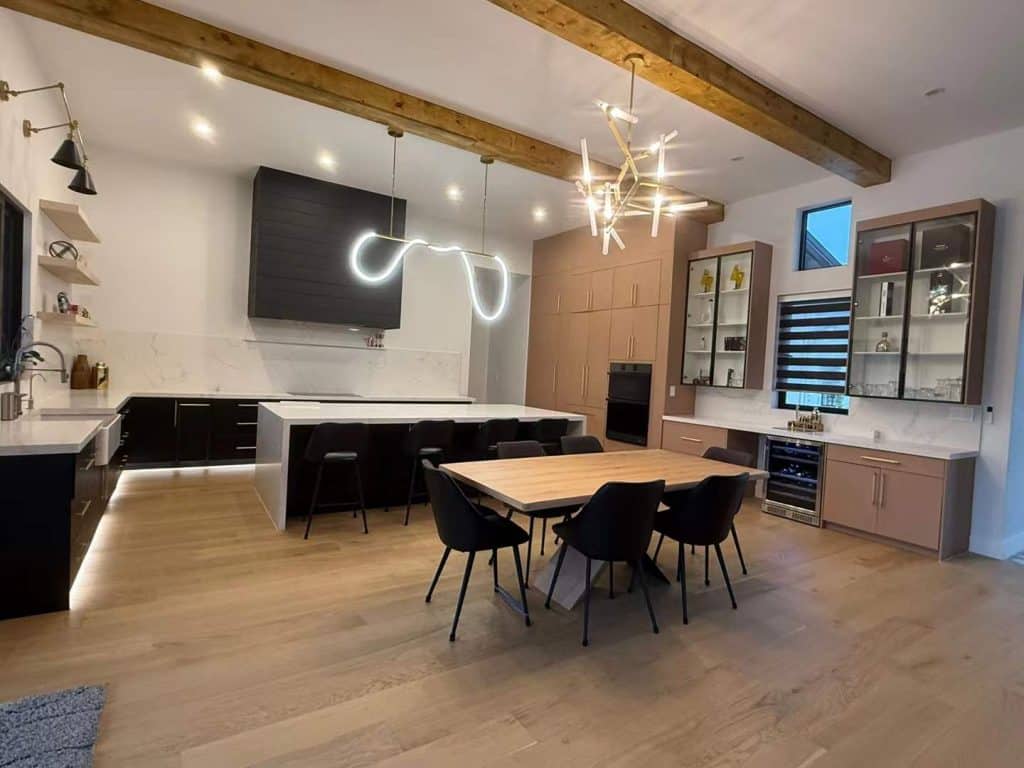
The best One-Stop Building Materials Supplier is not the company with the longest catalog or the lowest headline price. It is the partner that can define scope, coordinate interfaces, document approvals, control production and quality, explain total cost, plan packaging and delivery, and respond when something changes. Evaluate those systems before signing a contract, and centralized procurement can become a practical way to reduce project complexity without giving up technical control.
Frequently Asked Questions
What does a one-stop building materials supplier do?
It coordinates multiple material categories under one project workflow. Depending on the contract, that may include product selection, technical review, samples, shop drawings, production follow-up, quality control, export packing, consolidated or phased shipping, documentation, and installation guidance.
What building materials can be sourced through one supplier?
Common project packages include windows and doors, cabinetry and wardrobes, flooring, stairs, tile, stone, sanitary ware, lighting, furniture, and soft furnishings. The exact scope varies. Structural materials, MEP systems, appliances, site works, and local installation should never be assumed unless they are expressly included.
Is one-stop procurement always cheaper than using several suppliers?
No. It can reduce duplicated coordination, inspections, packing, and shipping activity, but unit prices may not always be the lowest. Compare total landed and installed cost on the same specifications, quantities, Incoterms, service scope, and risk assumptions.
How can I verify material quality before shipment?
Approve representative samples or mock-ups, define measurable acceptance criteria, require in-process and pre-shipment inspection evidence, and use a qualified third-party inspector when the project risk justifies it. Confirm that reports and certificates apply to the exact product or assembly being purchased.
How do I confirm products meet local building requirements?
Provide the project specifications and destination requirements early. Ask for product-specific reports, then have the local architect, engineer, contractor, consultant, or authority confirm whether the evidence is acceptable. A supplier’s general certificate statement is not a substitute for project-specific compliance review.
Can products be customized from architectural drawings?
Many categories can be customized in size, finish, configuration, hardware, or performance. Custom production should begin only after site information, shop drawings, samples, interfaces, tolerances, and approval responsibilities are sufficiently defined.
When should I involve the supplier in the project?
Involve the supplier early enough to identify long-lead items and coordination risks, but do not freeze procurement before the design team has provided usable information. Early technical review is most valuable before tender or purchase decisions become difficult to change.
What information is needed for a reliable quotation?
Send current drawings, BOQ or schedules, quantities, style and finish references, performance or code requirements, appliance and MEP interface data, destination, delivery phases, budget framework, and target dates. Missing information should be listed as assumptions or RFIs.
Next Steps for Your Project
Topic hub: Procurement & Sourcing Guides
Relevant product pages: Custom Cabinetry · Aluminum Windows & Doors · Architectural Ceramics
Related guides: How to Source Building Materials from China · Whole House Building Materials Checklist
Related service: Project Material Coordination