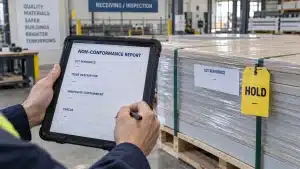

A construction supplier prequalification checklist converts supplier claims into an auditable decision before a purchase order or subcontract is awarded. It helps procurement, technical, quality, commercial, and project teams compare suppliers against the same package-specific requirements instead of relying on price, reputation, or a generic company profile alone.
This guide belongs to Skyland Building’s Procurement & Sourcing resource hub and is designed for contractors, developers, consultants, and multi-category project teams.
Written by Winston
Project Director at Skyland Building · 10+ Years of Building Materials Experience
Updated September 2026 · 25-minute read
Key Takeaways
A construction supplier prequalification checklist should help a project team verify capability before commercial commitments are made. The strongest process combines objective evidence, consistent scoring, and scheduled follow-up.
Define project-specific requirements before inviting supplier submissions.
Separate non-negotiable compliance checks from weighted evaluation criteria.
Review legal, financial, operational, quality, safety, and supply chain evidence.
Record exceptions, risk ratings, mitigation actions, and approval conditions.
Renew supplier information regularly rather than treating approval as permanent.
Construction supplier prequalification checklist at a glance
Use the following control points as the front page of the review. Detailed evidence requirements and decision rules are explained in the sections that follow.
| Review area | Evidence to verify | Decision test |
|---|---|---|
| Project scope | BOQ, drawings, specifications, quantities, interfaces | Can the supplier quote and deliver the defined package without unresolved scope gaps? |
| Legal identity | Registration, ownership, licenses, tax details, address | Does every record identify the same legal entity and operating location? |
| Financial reliability | Financial statements, credit references, insurance, guarantees | Can the supplier fund production and accept the project’s commercial terms? |
| Capacity and schedule | Workforce, equipment, output, order book, lead-time plan | Is committed capacity available for the required volume and dates? |
| Quality control | QMS, ITP, inspection records, NCRs, calibration evidence | Can the supplier prevent, detect, record, and close nonconforming work? |
| Safety | Policy, training, incidents, corrective actions, site controls | Are safety risks controlled and records credible for the work involved? |
| Relevant experience | Comparable projects, references, delivery history | Has the supplier completed similar products, volumes, and markets? |
| Supply chain and logistics | Critical sources, packing, Incoterms, route, contingency plan | Are dependencies visible and recoverable if a source or shipment fails? |
| Commercial readiness | Quotation assumptions, exclusions, warranty, payment terms | Are cost, responsibility, change, and warranty exposures understood? |
| Approval record | Scores, exceptions, mitigations, owners, expiry date | Can an independent reviewer understand why the supplier was approved? |
Decision rule: A low total price does not compensate for a failed legal, safety, sanctions, or other mandatory gate. Keep pass or fail gates separate from weighted scoring.
When supplier prequalification is required
The depth of the review should match the package risk. A short desk review may be sufficient for a low-value repeat purchase, while a new factory, custom product, critical path package, or high-value order normally requires stronger evidence and independent verification.
- Before inviting final quotations from suppliers that have not worked on the project before
- Before awarding a critical-path, custom-made, regulated, or high-value material package
- When a supplier changes its factory, ownership, key subcontractor, product system, or production route
- When an approval expires or performance, quality, safety, or financial signals materially change
Prequalification establishes whether a supplier may proceed. A deeper building material supplier audit verifies selected claims through records, interviews, and site evidence.
Define the scope and scoring criteria before reviewing suppliers
Prequalification is most useful when it reflects the work actually being procured. A supplier for a small interior package does not need the same review as a manufacturer supporting several buildings, phased deliveries, or highly regulated systems. Before requesting documents, establish what the supplier must deliver, where, in what quantities, and under which contract conditions.
Match requirements to the project’s trade, size, and delivery model
Start with the project package rather than a generic form. Define the trade, product categories, quantities, technical standards, delivery sequence, installation interfaces, and approval gates that will shape the supplier’s obligations. A useful procurement review may begin with drawings, room lists, or an incomplete BOQ, but missing information should be identified rather than silently filled with assumptions.
For material packages, BOQ and RFQ review can help teams examine quantities, specifications, accessories, alternatives, and quotation assumptions before supplier responses are compared. That work belongs early in the process because unclear scope produces unreliable capacity and price assessments later.
Separate mandatory pass/fail checks from weighted criteria
Some requirements should be treated as gates. An expired license, missing insurance, or inability to meet a required code obligation may disqualify a supplier regardless of its price or past performance. Other factors, such as relevant experience, delivery performance, communication, and geographic coverage, can be scored comparatively.
Keep those two groups visibly separate in the form. Otherwise, a strong commercial proposal may obscure a compliance failure, while a minor weakness may be mistaken for a reason to reject an otherwise suitable supplier.
Set evidence standards, review owners, and approval thresholds
Every answer should have a defined evidence standard. Decide whether the reviewer needs a current certificate, an independently prepared statement, a signed policy, a reference call, a site observation, or a project-specific sample. Assign an owner for each review area so that finance, procurement, quality, safety, and project delivery do not assume someone else has checked the same item.
Approval thresholds should also be agreed in advance. For example, a supplier might pass only when all mandatory items are complete and its weighted score exceeds a set level, while a conditional approval may require documented corrective action before purchase release.
Create a consistent scoring and decision record
A scoring record should make the decision explainable months later. Use the same question wording, evidence fields, scoring scale, reviewer comments, and decision categories for every supplier in the same package. The record should preserve the submitted document version and note where evidence was unavailable, outdated, or limited in scope.
Consistency does not mean ignoring project context. It means documenting why the same rule was applied differently, when a project-specific exception was approved, and who accepted the residual risk.
Example scoring model and approval thresholds
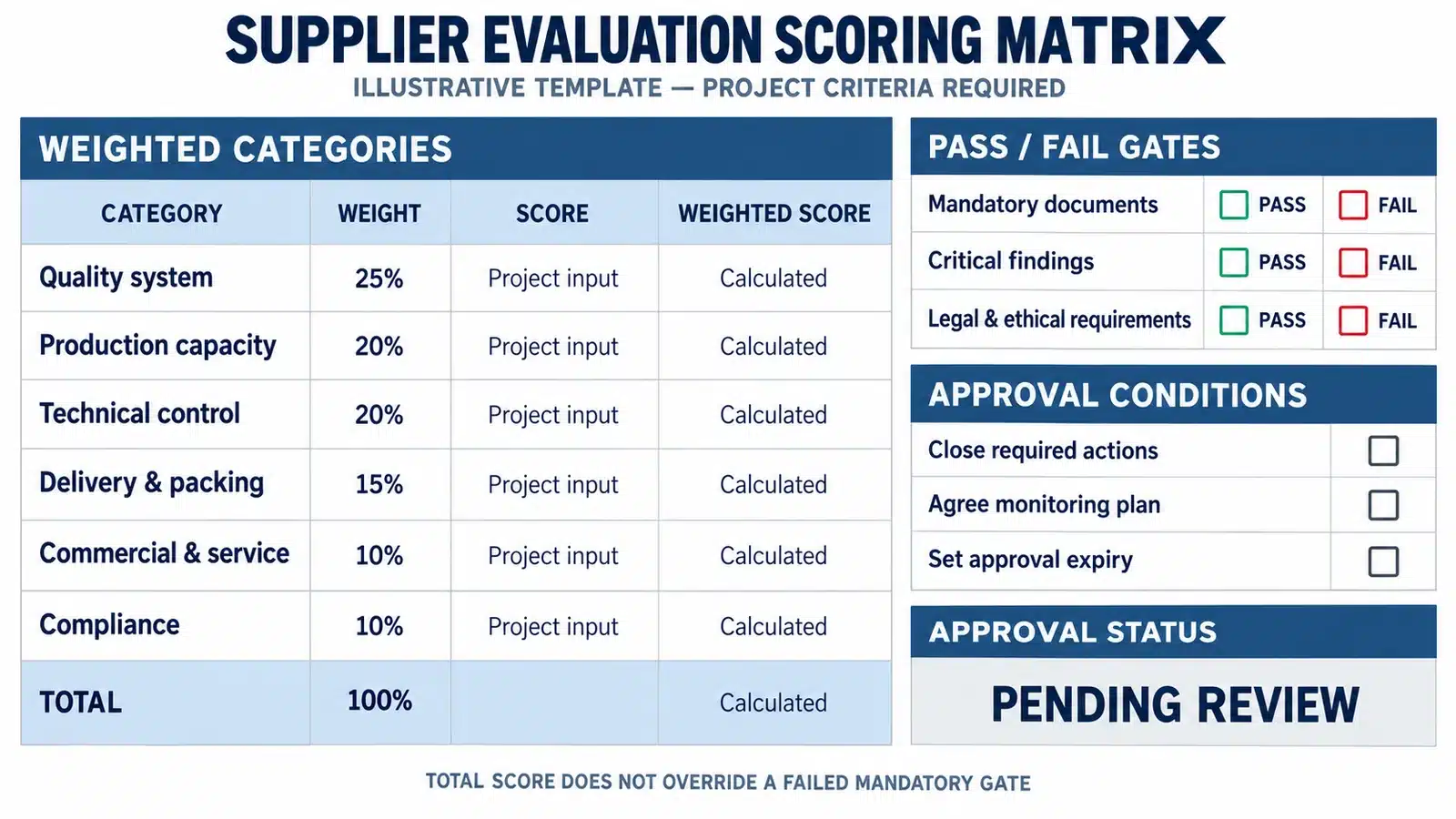
The following 100-point model is an example, not a universal rule. Adjust the weights before supplier responses are opened so that scoring reflects the package risk rather than the evaluator’s preference after review.
| Scored category | Weight | Typical evidence |
|---|---|---|
| Legal and compliance | 15 | Registration, licenses, insurance, policy records |
| Financial and commercial | 15 | Financial capacity, credit, quotation and contract readiness |
| Capacity and schedule | 20 | Resources, production plan, order book and lead-time evidence |
| Quality management | 15 | QMS, ITP, inspections, NCR closure and calibration |
| Safety management | 10 | Training, incidents, corrective actions and site controls |
| Relevant experience | 10 | Comparable products, projects, clients and references |
| Supply chain and logistics | 10 | Sources, packing, transport route and contingencies |
| Communication and document control | 5 | Submittals, revision control, response times and ownership |
| Total | 100 | Weighted score calculated only after mandatory gates pass |
Suggested decision bands
| Status | Example threshold | Required action |
|---|---|---|
| Approved | All gates pass and 80–100 | Record approval scope, owner, validity period, and monitoring controls |
| Conditionally approved | All gates pass and 65–79 | Close named gaps by due date before the related risk is released |
| Rework and resubmit | Evidence is incomplete | Do not award until missing records are reviewed and rescored |
| Not approved | A mandatory gate fails or residual risk is unacceptable | Record the reason and stop the award unless formally reconsidered |
Worked scoring example
A hypothetical aluminum window supplier passes every mandatory gate and scores 76. The technical submission is acceptable, but current system test reports and a confirmed production slot are still missing. The correct decision is conditional approval with two named actions, owners, and deadlines—not an unconditional award and not a higher score based on verbal assurances.
Common scoring error: Never average away a failed mandatory requirement. A strong factory tour, competitive price, or good reference does not cancel a failed legal, sanctions, safety, or project-specific compliance gate.
Verify the supplier’s company and compliance documents
Document review is the first test of whether a supplier can manage controlled information. Ask for current records, compare names and addresses across documents, and confirm that the entity submitting a quotation is the same entity that would sign the contract and issue invoices. A clean document set is not proof of performance, but inconsistencies at this stage deserve resolution before technical or commercial evaluation proceeds.

Confirm legal identity, ownership, and registration details
Request the supplier’s full legal name, registration number, registered address, trading names, ownership details, and authorized signatory information. Match these details against the quotation, insurance certificate, tax records, banking information, and proposed contract party. Where ownership or control has changed recently, record the date and request an updated organization chart or supporting explanation.
This check also helps identify whether a local office, parent company, distributor, and manufacturer are separate entities. Each may carry different obligations, warranties, or liabilities, so the contract should not blur those relationships.
Review licenses, certifications, and trade-specific qualifications
Licenses should be checked against the actual scope, jurisdiction, and validity period. Certifications need similar scrutiny: confirm the issuing body, certificate number, covered facility or product, applicable standard, and expiration date. Do not treat a broad company profile as evidence that a particular facility, product line, or installation team is qualified.
Jurisdiction-specific requirements should be checked against the project location, contract, and applicable authority. Treat them as package gates where relevant, but do not apply a generic contractor credential list to every material supplier.
Check insurance coverage, limits, and expiration dates
Collect certificates and policy details for the risks relevant to the engagement. Review general liability, workers’ compensation, automobile, professional liability, product liability, cargo, and other required coverage as applicable. Compare policy limits, named insureds, exclusions, territorial limits, and expiration dates with the contract requirements.
Insurance should be checked again before mobilization, shipment, and renewal. A certificate received during prequalification can become inadequate before the supplier performs its most consequential obligation.
Collect policies for safety, quality, environmental, and ethical conduct
Ask for the policies and procedures that govern the supplier’s work, not just a signed statement that they exist. Review responsibility, training, incident reporting, document control, environmental controls, anti-bribery expectations, and reporting channels. For higher-risk suppliers, request records showing that these policies are implemented through audits, toolbox talks, corrective actions, or management reviews.
A practical review sequence is easier to administer when each document has an owner and a status:
Legal and registration records are checked against the contracting entity.
Licenses, certifications, and insurance are checked for scope and validity.
Safety, quality, environmental, and ethics policies are reviewed for implementation evidence.
Missing or conflicting records are assigned an owner and due date.
This sequence keeps document collection from becoming a storage exercise. It turns each submission into evidence that can support, limit, or delay approval.
Assess financial stability and commercial reliability
Financial review should answer a practical question: can the supplier remain capable throughout the project, including periods of advance purchasing, delayed payment, price movement, or increased production demand? The review does not need to expose every private detail, but it should be proportionate to contract value, lead time, dependency, and potential replacement cost. Keep sensitive information restricted to authorized reviewers and record conclusions rather than circulating unnecessary raw data.
Request financial statements and credit information
Request recent financial statements appropriate to the supplier’s size and ownership structure, along with credit information where permitted. Look for the ability to fund labor, materials, tooling, freight, and working capital while the project moves through its payment cycle. Compare the reporting period with the planned award date; old information may not reflect current conditions.
For smaller businesses, alternative evidence may include management accounts, bank references, trade references, or a parent-company guarantee. Any substitute should be recorded with its limitations so the approval decision does not imply a level of assurance the evidence cannot support.
Review payment history, liens, defaults, and litigation
Search for indicators that could interrupt performance or create claims exposure. Relevant checks may include payment history, tax or trade liens, judgments, insolvency filings, defaults, material litigation, and repeated disputes with customers or subcontractors. A single dispute is not automatically disqualifying, but the nature, value, age, and management response matter.
Ask the supplier to explain significant adverse findings and compare its explanation with available records. Evasive answers, unexplained changes in banking details, or pressure to bypass normal commercial controls should be treated as risk signals.
Evaluate bonding capacity, guarantees, and insurance requirements
Where bonding, guarantees, retainage, advance payments, or performance security are required, confirm that the supplier can meet them under the proposed contract. Request current single-project and aggregate capacity where relevant, together with the amount already committed. Check whether a guarantee is issued by a financially acceptable entity and whether its wording matches the contract.
These requirements should be evaluated before award, not after a supplier has been selected. If the supplier cannot meet the security structure, the project team may need a different commercial arrangement, additional controls, or another source.
Compare pricing assumptions, exclusions, and contract readiness
Price comparison is meaningful only when quotations use a comparable scope and commercial basis. Normalize quantities, freight, duties, taxes, packaging, installation, testing, samples, approvals, warranties, escalation, and delivery points. The lowest quoted amount may exclude an accessory, approval service, or logistics responsibility that another supplier has included.
A simple comparison record can expose those differences without pretending that every risk has a precise monetary value.
| Review area | Question to resolve | Evidence to retain |
|---|---|---|
| Scope | Are quantities, specifications, and interfaces aligned? | Controlled BOQ, drawings, and quotation |
| Logistics | Who carries packing, freight, duties, and delivery risk? | Incoterms, delivery schedule, and exclusions |
| Commercial terms | Can the supplier accept the required payment and warranty terms? | Marked contract and clarification log |
| Change exposure | What assumptions could increase the final cost? | Pricing notes, allowances, and alternatives |
After normalization, record both the adjusted comparison and the reasons for each adjustment. This creates a defensible commercial decision and gives the contract team a focused list of points to close.
Evaluate production capacity and operational capability
Capacity is more than a statement about annual output. The review should connect available people, equipment, facilities, materials, technology, and logistics to the specific project schedule. A supplier may have sufficient theoretical capacity but still lack the right production slot, skilled supervision, approved raw materials, or shipping route when the project needs them.

Confirm workforce size, skills, supervision, and labor availability
Ask how many people are assigned to the relevant facility, shift, trade, and project function. Confirm the availability of supervisors, engineers, quality personnel, dispatch staff, and installation teams where applicable. Review turnover, subcontracted labor, training, language needs, and planned absences when the schedule is tight.
The useful question is not simply how many employees the supplier has. It is whether the proposed team has the skills and authority to make decisions, resolve nonconformities, and maintain output through the planned production period.
Review equipment, facilities, technology, and material access
Verify the equipment needed for the stated scope, including capacity, maintenance condition, calibration, tooling, backup arrangements, and ownership. Review facility layout, storage, environmental controls, loading areas, and material segregation. For custom or multi-category packages, check how drawings, revisions, samples, production records, and packing information are controlled.
A site review should distinguish between equipment that exists, equipment that is shared across projects, and equipment that is only promised for later purchase. The distinction can materially change both schedule confidence and replacement options.
Test the supplier’s ability to meet schedule and volume demands
Convert the project program into measurable production and delivery requirements. Ask for a proposed manufacturing schedule, approval milestones, batch sizes, inspection points, and shipment sequence. Then test whether the supplier’s current workload, planned maintenance, holidays, and material lead times leave enough float for revisions or rejected work.
Use the construction procurement schedule guide to connect approvals, purchasing, production, inspection, shipping, and site delivery. The supplier’s promised dates should be tied to clear release conditions rather than treated as isolated commitments.
Examine logistics, lead times, contingency plans, and geographic coverage
Review the route from source to site, including consolidation points, ports, carriers, customs responsibilities, warehouse capacity, and final-mile access. Confirm realistic lead times for raw materials, production, inspection, packing, and transport. Ask what happens if a key machine fails, a material is delayed, a shipment is damaged, or a border route closes.
A credible contingency plan names an action, an owner, and a decision point. It may involve alternate material sources, approved substitute products, reserve capacity, split shipments, or an agreed escalation path, but it should never depend on an undocumented promise.
Review quality, safety, and past performance
Past performance provides context for the documents and promises in a submission. Review experience that resembles the proposed work in scale, technical complexity, delivery model, and client expectations. Then test whether the supplier’s quality and safety systems produce records that are timely, complete, and useful to the project team.
Analyze relevant project experience and references
Request a short list of comparable projects with scope, value range, delivery dates, location, role, and client contact details. References should be recent enough to reflect the current organization and specific enough to confirm the supplier’s actual responsibilities. Ask about changes, delays, defects, communication, closeout, and whether the client would appoint the supplier again.
Do not count a logo or a general portfolio as proof of relevant capability. The strongest reference is one that can explain how the supplier handled the same kind of constraints the new project will face.

Examine quality management processes and nonconformance records
Review inspection and test plans, incoming material controls, calibration records, document control, sample approvals, traceability, and corrective-action procedures. Ask for anonymized nonconformance examples and examine whether root causes were identified and verified as closed. A high number of findings is not automatically worse than a low number if the reporting culture and corrective process are more transparent.
For material packages, define pre-shipment acceptance criteria against purchase orders, technical documents, approved samples, quantities, dimensions, condition, labeling, and packing. The supplier review should confirm who approves those criteria and who can stop a shipment when they are not met.
For package-specific controls, connect the supplier review to a building material inspection and test plan so hold points, acceptance criteria, records, and responsibilities are agreed before production.
Before dispatch, use the pre-shipment inspection checklist to verify quantity, workmanship, labeling, packing, and release records.
Measure safety performance, incidents, and corrective actions
Request safety statistics for a defined period and clarify the reporting basis. Review recordable incidents, lost-time cases, near misses, regulatory notices, training records, and open corrective actions where relevant. Ask whether the figures cover direct employees, temporary labor, subcontractors, and the facilities proposed for the project.
Numbers need context. A supplier with few reported incidents may have weak reporting, while a supplier with more reported near misses may have a stronger observation program. The review should therefore consider trends, investigation quality, and whether corrective actions were implemented and checked.
Validate delivery performance, communication, and dispute history
Confirm on-time delivery, completeness, damage rates, response times, change handling, and document accuracy. Ask references and internal stakeholders whether the supplier communicated problems early or allowed missed dates to become emergencies. Review claims, disputes, warranty calls, and unresolved commercial issues for patterns rather than isolated anecdotes.
A supplier that communicates a constraint early may be easier to manage than one that repeatedly gives optimistic dates without evidence. That distinction belongs in the written evaluation, even when the final score remains subjective.
Identify supply chain, legal, and project risks
Supplier risk rarely sits inside one company. Manufacturers, distributors, subcontractors, raw-material producers, freight providers, and financial guarantors can all affect the project outcome. Map those relationships before approval, then connect each dependency to an owner, a mitigation, and a trigger for escalation.
Map subcontractors, manufacturers, distributors, and critical dependencies
Ask who will perform each material or service obligation and whether the proposed supplier is a manufacturer, reseller, integrator, or coordinator. Identify the facilities that will actually produce the goods, the parties that control technical data, and any subcontractors requiring separate approval. Contract language should make responsibility clear even when several entities contribute to one package.
This is especially important for custom products. A change in manufacturer or component source can affect dimensions, finish, testing, warranty, and approval status, so substitutions should not occur informally.
Assess single-source exposure, material shortages, and lead-time risk
Identify items that rely on one factory, one raw material, one carrier, one port, or one specialist. Then ask how quickly an alternative could be qualified and whether the substitute would require design approval, testing, or a revised budget. Long lead times should be visible in the procurement schedule before they become a site delay.
Risk is higher when the dependency is both critical and difficult to replace. In that case, consider early purchasing, reserved capacity, dual sourcing, safety stock, approved alternatives, or a documented recovery plan.
Screen for conflicts of interest, sanctions, fraud, and regulatory issues
Use proportionate checks for ownership, related parties, conflicts of interest, sanctions, bribery, fraud, modern slavery, export controls, and other applicable legal requirements. Confirm who introduced the supplier, who benefits from the award, and whether any decision-maker has a personal or financial connection. Escalate unusual payment instructions, altered bank details, false certificates, or requests to avoid written records.
Legal screening should be coordinated with counsel where the jurisdiction, ownership structure, or transaction raises a specialist issue. Procurement teams should document the check without making unsupported legal conclusions.
Document risk ratings, mitigation actions, and escalation triggers
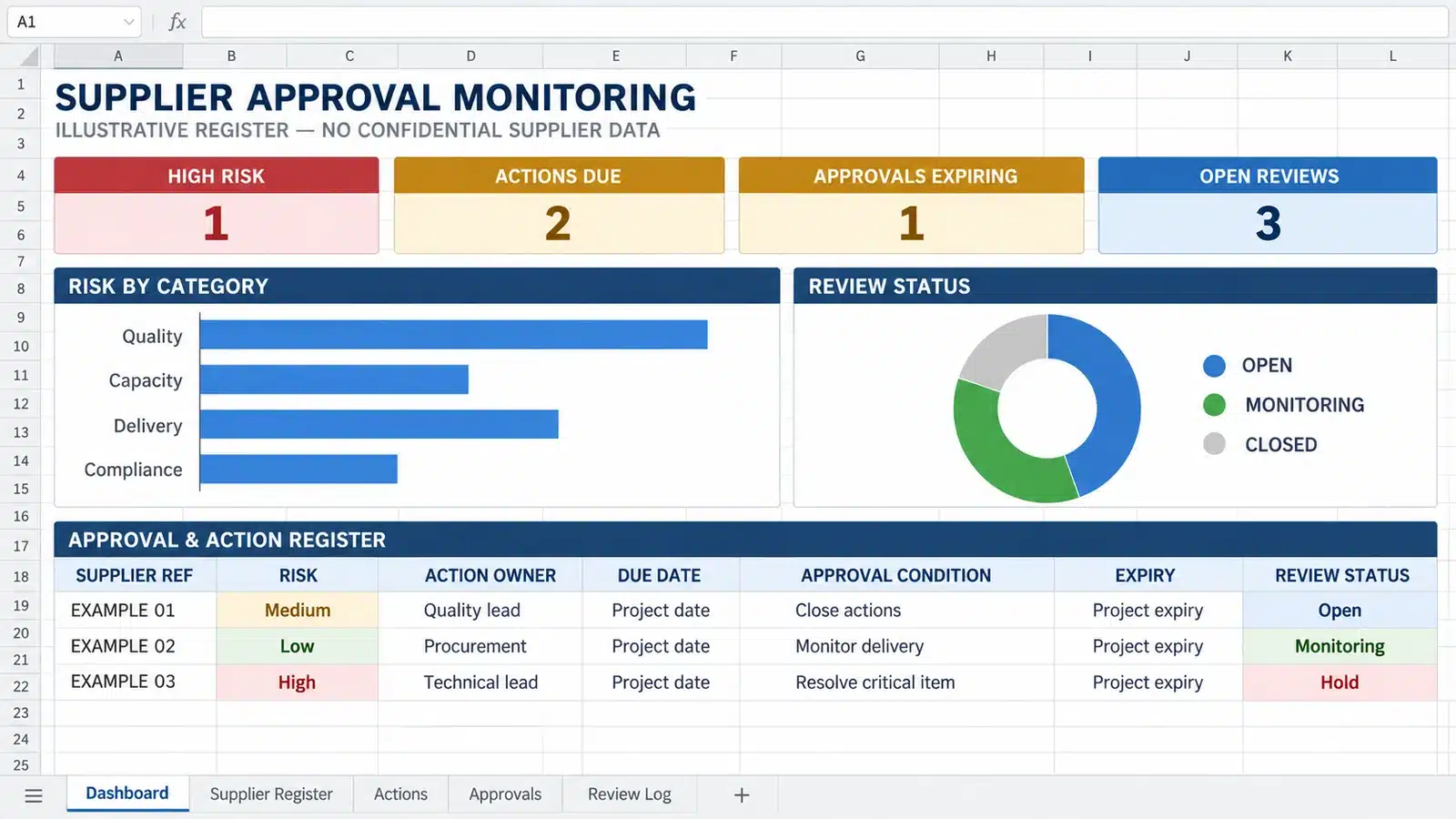
A risk register should state the event, cause, consequence, likelihood, owner, treatment, and trigger. Ratings are more useful when tied to a decision: monitor, mitigate before award, approve conditionally, or reject. Revisit the rating when the supplier changes factory, ownership, key personnel, subcontractor, material source, or delivery route.
The goal is not to eliminate every uncertainty. It is to ensure that the project team knows which uncertainties it has accepted and what evidence would require a new decision.
Supplier prequalification workflow and approval maintenance
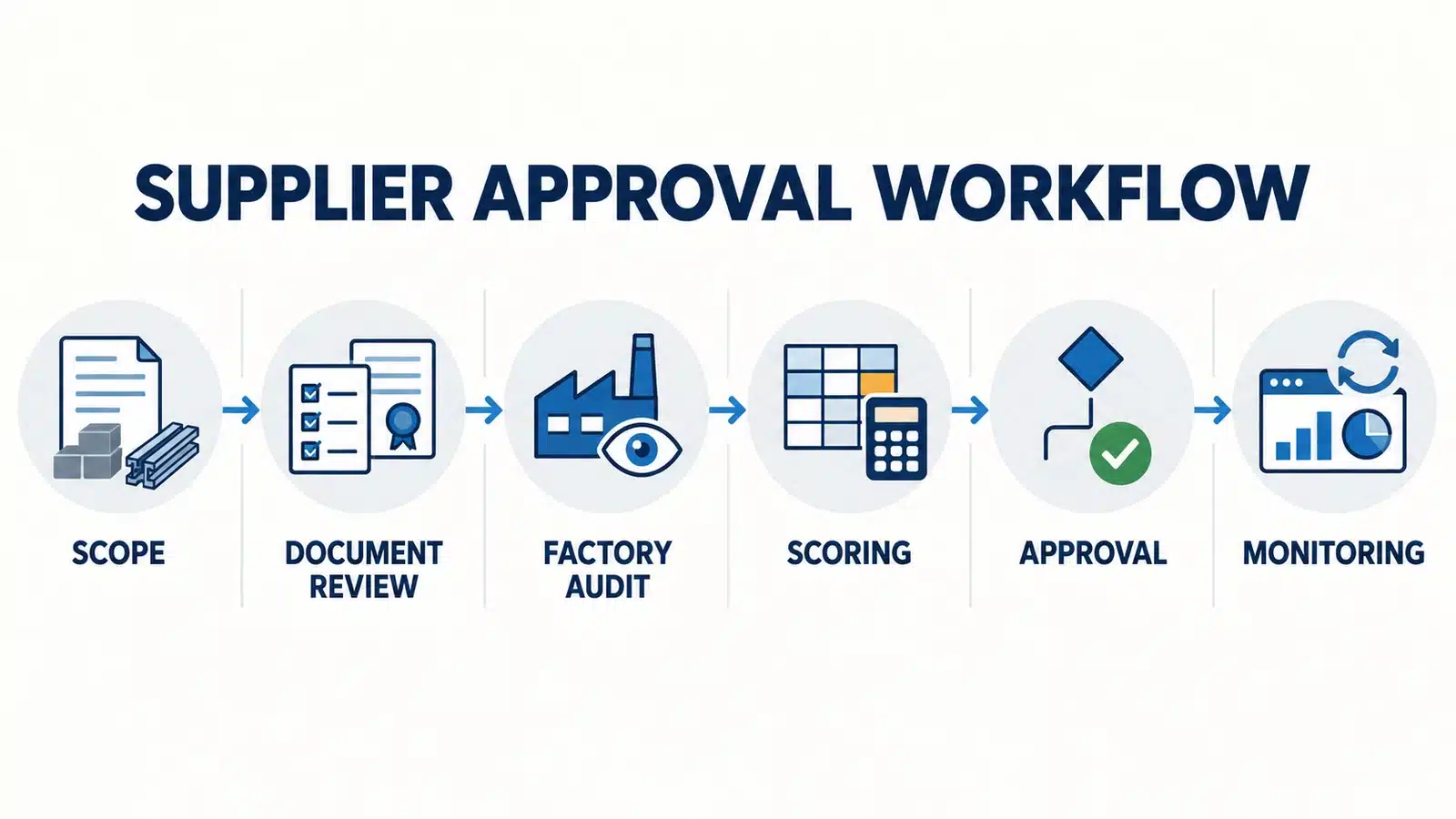
A controlled workflow keeps evidence, decisions, and handover responsibilities visible from first screening through post-award monitoring.
- Define the package scope, risk level, mandatory gates, weights, evidence, and reviewers
- Issue the same controlled checklist and submission deadline to every candidate
- Complete the desk review and log missing, expired, inconsistent, or unverifiable evidence
- Use clarifications, interviews, references, samples, or a factory visit to close material gaps
- Score the supplier, record residual risks, and obtain approval from the named authority
- Transfer conditions into the purchase order, submittal register, ITP, inspection plan, and schedule
- Monitor performance and trigger renewal when approval expires or risk changes
A well-run process is controlled without becoming needlessly heavy. Give suppliers clear instructions, allow questions through a recorded channel, set submission deadlines, and use a single register for evidence, clarifications, findings, and decisions. The approval record should remain useful after the tender, when the project team is managing production, deliveries, changes, and closeout.
Build a standardized construction supplier prequalification checklist
Organize the checklist by legal identity, compliance, finance, capacity, quality, safety, experience, supply chain, and commercial terms. Define the required evidence, response format, reviewer, status, score, and follow-up date for each question. A purpose-built supplier audit checklist can support a traceable review of identity, factory capability, quality controls, findings, and corrective actions.
Keep the form proportional to risk. A short, well-designed checklist is more reliable than a long questionnaire that reviewers complete inconsistently or suppliers answer without evidence.
Conduct interviews, site visits, and reference checks
Use interviews to test the logic behind the written submission. Ask the proposed project team to explain schedule controls, escalation routes, document revisions, material substitutions, inspection hold points, and recovery actions. Site visits can then verify facilities, equipment, storage, housekeeping, staffing, and records against those explanations.
Reference checks should be conducted by someone who understands the project’s risk profile. Capture the date, contact, questions asked, answers received, and any follow-up needed rather than relying on an informal impression.
Record clarifications, exceptions, and conditional approvals
Every clarification should be linked to the relevant question or document version. Record whether the answer changes the score, closes a gap, creates a condition, or requires contract language. Conditional approval should name the missing action, responsible party, due date, and consequence if it remains incomplete.
This prevents a provisional decision from quietly becoming an unconditional award. It also gives the project team a practical handover from procurement into delivery control.
Set renewal dates and monitor changes after approval
Approval should have an expiry or review date based on project duration and supplier risk. Recheck insurance, licenses, financial condition, safety performance, key personnel, facilities, subcontractors, ownership, and critical material sources at appropriate intervals. Trigger an interim review when a supplier reports a major incident, misses a critical milestone, changes its manufacturing location, or proposes a significant substitution.
The final record should show the original approval, later updates, open actions, and the person who authorized continued use. That history protects the project from relying on information that was accurate only at the time of the initial review.
Checklist fields to retain in the supplier record
A usable register should let another reviewer reconstruct the decision without searching through email threads. Keep the supporting files in controlled folders and capture the following fields in the master checklist.
| Field | What to record |
|---|---|
| Supplier identity | Legal name, trading name, registration number, address, ownership, contacts |
| Package and scope | Trade, products, quantities, interfaces, locations, exclusions, bid revision |
| Requirement | Question, pass or fail gate or weight, requested evidence, reviewer |
| Evidence status | Received, missing, expired, inconsistent, verified, not applicable |
| Score and rationale | Raw score, weighted score, evidence reference, reviewer explanation |
| Exception | Gap, assumption, deviation, affected scope, risk rating |
| Mitigation | Action, owner, due date, verification method, escalation trigger |
| Decision | Approved scope, conditional approval, rework, not approved, approving authority |
| Validity | Approval date, expiry date, renewal trigger, next review date |
| Performance history | Quality, safety, delivery, claims, changes, corrective actions |
Supplier approval should remain evidence-based
A construction supplier prequalification checklist is most effective when it connects evidence to a project decision. By defining the scope, testing documents and capacity, reviewing performance and dependencies, and maintaining approval after award, project teams can make supplier selection more consistent without losing sight of practical delivery risk.
Frequently Asked Questions
What is construction supplier prequalification?
It is a structured review of a supplier’s legal standing, compliance, financial condition, capacity, quality, safety, experience, and risk before the supplier is invited to bid or awarded work.
Which documents should a construction supplier submit?
Typical submissions include registration records, licenses, certifications, insurance, financial information, safety records, quality procedures, project references, organization details, and relevant policies. The exact list should reflect the package and jurisdiction.
Should every requirement be scored?
No. Mandatory legal, safety, insurance, and technical requirements are often best handled as pass/fail gates. Experience, delivery history, capacity, communication, and commercial readiness can usually be weighted and scored.
How often should supplier prequalification be renewed?
Renewal timing depends on risk, project duration, and the validity of the evidence. Annual review is common, with earlier reassessment after major incidents, ownership changes, financial concerns, facility changes, or significant performance issues.
What is the difference between prequalification and a supplier audit?
Prequalification usually determines whether a supplier is eligible for consideration before award. An audit is a deeper examination of processes, facilities, records, and implementation, often performed before approval or when risk warrants additional verification.
Can a supplier receive conditional approval?
Yes, when the remaining issues are understood, limited, and assigned clear corrective actions. The approval should state the deadline, owner, required evidence, and consequence if the condition is not closed.
How should supplier risk be monitored after approval?
Maintain a live record of insurance, licenses, performance, incidents, schedule changes, substitutions, financial concerns, subcontractors, and critical dependencies. Define escalation triggers so a material change prompts a new review rather than being discovered during a crisis.
Related products, guides, services, and project case
Use the links below when the supplier review moves from general capability into product-specific evidence, project controls, and delivery execution.
Relevant product packages
- Review profiles, glazing, hardware, system tests, fabrication capacity, and installation interfaces for aluminum window and door systems.
- Check board substrates, finishes, hardware, shop drawings, samples, packaging, and factory QC for custom cabinetry.
- Verify multi-SKU scheduling, finish consistency, accessory completeness, testing, and packing for luxury sanitary ware systems.
Related guides and services
- Confirm submitted claims through the building material supplier audit checklist.
- Align scope, alternates, exclusions, and commercial assumptions with BOQ and RFQ review.
- Coordinate submittals, samples, production, inspections, and delivery through project material coordination.
- See how multi-category selection, customization, production, inspection, and shipping connect in the Kenya apartment materials project.
Plan supplier qualification with Skyland
If you are qualifying suppliers for a hotel, apartment, villa, or commercial project, Skyland can review the package scope, coordinate product evidence, and connect approval conditions to production, inspection, packing, and delivery controls. Send your BOQ, drawings, or product list for a project-specific review.